Where to find Chinese ion desulfurizer exporters?
2026-01-30
If you're looking for Chinese suppliers of ion desulfurizers, the first thing you come across is a sea of information, half of which is out of date and the other half leads to companies that actually do anything but specialized equipment. Many people immediately look into large B2B catalogs and wonder why the responses come with template offers from traders, and not from engineers. I went through this myself.
Why common areas often don't work
I'll start with the obvious: Alibaba or Made-in-China. There really are manufacturers there, but upon request?ion desulfurizer? Everything falls out - from spare parts to universal installations. The key problem is that this equipment is often part of large production lines, and the companies that actually design and manufacture it are not always actively promoting it on common platforms. They work through design institutes or directly with industrial customers.
I remember spending a month corresponding with the ?manufacturer? with gold status on Alibaba. Everything looked solid: certificates, photos of workshops. But when I asked for a detailed diagram of the module layout for a specific task of flue gas desulphurization, they sent me a general brochure in Chinese. It turned out they were just collectors. The experience is bitter, but instructive: statuses at sites for complex equipment are not a guarantee.
Hence the conclusion: you need to look not just for a factory, but for a company withproject experience. This changes the approach to search. It is worth paying attention to organizations that are part or partners of large chemical or environmental holdings. They usually have their own R&D and publish not just catalogs, but descriptions of completed projects, sometimes even with technical reports.
Industry-specific resources and how to read them
Here the situation is more interesting. There are industry portals dedicated to chemical equipment or treatment technologies. But there are pitfalls here too. Many sites simply aggregate news, and company contacts lead to outdated or corporate emails, to which you can wait weeks for a response.
What worked for me personally? Search by technical articles or patents. Chinese companies seriously involved in development often publish materials at specialized conferences or in industry magazines. When you see a company name in this context, you can be sure that they have real engineering experience. Yes, it’s slower than just writing to the chat on the site, but it cuts out the intermediaries.
Another point is language. Many really strong manufacturers have Russian or English versions of their sites, but their content is a direct translation from Chinese, sometimes unreadable. This, oddly enough, could be a good sign. A too slick, marketing site is often created for the general market, but a “technical” site is often created for the general market. accent, where it is clear that they did not put much effort into the translation, but real diagrams and parameters are laid out - a more promising target for contact.
Case Study: Chengdu Yizhi Technology Co.
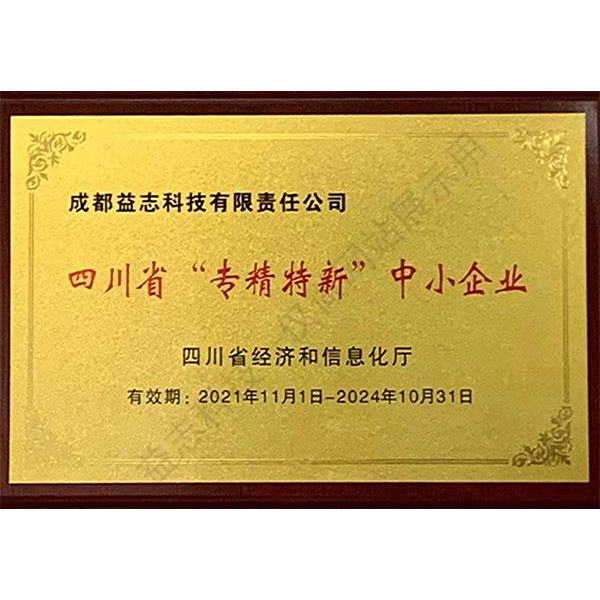
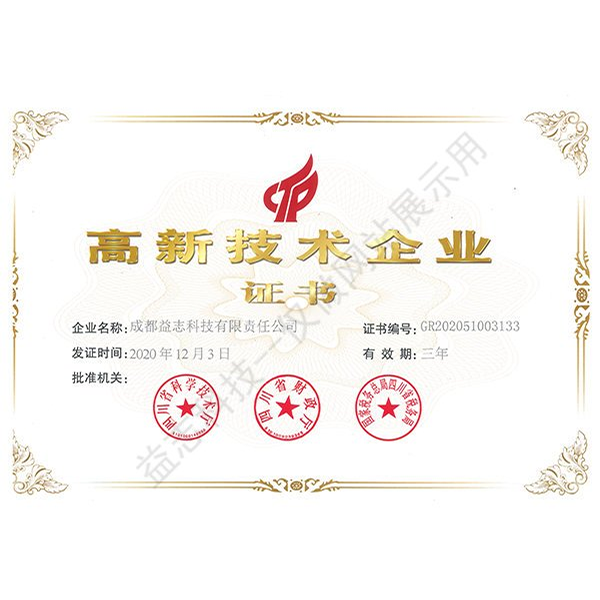
I came across this company precisely through a mention in materials about the modernization of gas purification plants.Chengdu Yizhi Technology Co., Ltd.is a design institute established by Chengdu Huaxi Chemical Technology Co., Ltd. in 2013. The registered capital of 120 million yuan is a figure that already speaks of serious intentions and resources. Such institutions rarely “stick out” on the first pages of search for general queries.
Their websiteyzkjhx.ruis a good example of what I talked about above. The information is presented rather dryly, with an emphasis on technical details. It is clear that the resource is aimed at the professional circle, and not at attracting mass clients. They position themselves precisely as a design and engineering structure, which is critically important for equipment such as ion desulfurizers. After all, you don’t just need to buy an installation, but integrate it into the existing technological process.
When working with such organizations, it is important to immediately prepare detailed technical specifications. My first request to them was too general, and in response I received a standard set of documents. But when I described specific conditions (gas composition, required degree of purification, temperature conditions), the dialogue went completely differently. Questions began on their part, requests for clarification - this is exactly what is needed to ensure competence.
What to ask a potential supplier to avoid making mistakes
Based on my experience, I have created a short list of what you need to find out first, in addition to price and timing. First, be sure to ask aboutimplemented projectsin your region or with similar conditions. Not just a list, but preferably contacts for feedback (although Chinese companies do not always provide them, but you can ask for a photo or video from the object).
Secondly, clarify who will lead the project on their part. Sales manager or process engineer? If it is an engineer who contacts you, this is a great sign. You can immediately discuss nuances that the manager simply will not understand.
Third, don't hesitate to ask about technology weaknesses or the limitations of their equipment. An honest supplier will always tell you, for example, about the sensitivity of certain sorbents to humidity or the need to pre-clean gas from dust. If the answer is only “everything is perfect, we have the best?”, this is a reason to be wary.
Logistics, adaptation and other “non-obvious” ones. stages
Let's say you find a reliable manufacturer. But the story doesn't end there. Delivery of large equipment is a separate task. It is important to discuss in advance in what form it will be delivered: fully assembled modules or disassembled units for on-site assembly. The cost of transportation and the need to attract installers from the supplier depend on this.
An often overlooked issue is the adaptation of documentation and software (if any). Make sure that passports, diagrams and operating instructions will be provided in Russian (or the language you need), and that their translation will not be done by an online translator, but by technical specialists. It is better to write this down in the contract right away.
And the last thing that is rarely thought about at the beginning: service and supply of consumables. Check to see if the supplier has a spare parts warehouse in your region or partners. How quickly can they respond to a breakdown? Are they ready to carry out commissioning and training of your staff? The answers to these questions will show how committed the company is to long-term cooperation, and not to a one-time sale.
Instead of a conclusion: where to start your search today
To summarize my experience, is it worth starting with a request?Chinese exporter of ion desulfurizers?, but with a deep dive into industry specifics. Look for scientific articles or reports on the implementation of such systems. Pay attention to the names of the development companies in these materials.
Then check not so much the main pages of their sites, but rather sections like ?Research? (R&D), ?Completed projects? or ?Technical support?. The presence of such sections is a good filter. And, of course, as is the case withChengdu Yizhi Technology, look for design institutes or engineering divisions of large industrial groups.
Searching is a process that requires time and patience. It is much more profitable to spend a month searching for a real specialist than to spend years dealing with problems caused by unsuitable equipment. Good luck and may your installation run like clockwork.