Cheap nitrogen production by adsorption: prospects?
2026-03-21
When you hear “cheap nitrogen?”, you immediately think about cryogenics or membranes. Adsorption? It is often perceived as an expensive toy for high purity. But there is a nuance here that is not talked about much: cheapness is not only about the capital costs of installation, but about the cost of a cubic meter of gas at the outlet over the entire service life. This is where adsorption technologies, especially heatless cycle adsorption (SCA), can provide surprises. Much depends on the correct calculation and, more importantly, on understanding real, and not ideal, operating conditions.
Where do the real savings lie?
The main myth is that adsorption plants are always more expensive than membrane ones. If you compare the bare price tags for equipment of low and medium productivity, this is often true. But if you dig deeper into operation, the picture changes. The key parameter is the cost of compressed air. Adsorption consumes less of it per unit of product at high purities, say, 99.5% and above. With increasing purity, membranes sharply lose efficiency; they need much more source air. It turns out that at the start you pay less for the membrane unit, but then for decades you overpay for electricity to the compressor. It turns out to be a double-edged sword.
Another point is the durability of zeolite. Everyone is afraid that it needs to be changed often. In practice, with proper preliminary air purification (and without this, no system works normally), the lifespan of the adsorbent can be 8-10 years. I have seen installations where, after 7 years of operation, the decline in productivity was in the range of 5-7%. But the membranes are sensitive to oil and condensate, and their service life may unexpectedly decrease due to problems with the filters. The risk is higher.
And the third point is flexibility. Modern control units allow the adsorption unit to operate in standby mode with minimal consumption when production is idle. The membrane, in fact, works constantly as long as there is pressure at the inlet. For workshops with variable load, this is a direct saving.
Pitfalls that are not written about in brochures
Now about the sad stuff. Cheapness easily turns into high cost at the design and installation stage. The most common mistake is saving on the air preparation system. They install cheap coalescing filters that do not provide the required dew point. Water vapor kills zeolite much faster than the promised 10 years. I saw a case at one food plant: after two years, the zeolite became unusable because the customer insisted on reducing the cost of the filter package. As a result, the adsorbent was completely replaced; all the savings were doubled.
The second problem is universal solutions. There is no magic solution “for all occasions?”. For 99.9% and 99.999% purity, the column configuration, dimensions, and cycle times will be different. Attempts to take the “reinforced” version for high purity, but using it for low purity is an overpayment and suboptimal consumption. You need to clearly understand the terms of reference. Sometimes clients demand cleanliness “with a reserve”, and then pay for years for interest that they don’t need.
And, of course, the service. An adsorption unit is not a refrigerator; it cannot simply be turned on and forgotten. It is necessary to monitor pressure differences, change filter elements in a timely manner, and check the operation of valves. Without this, there will be no cheapness in the future.
Practical experience: when adsorption takes off
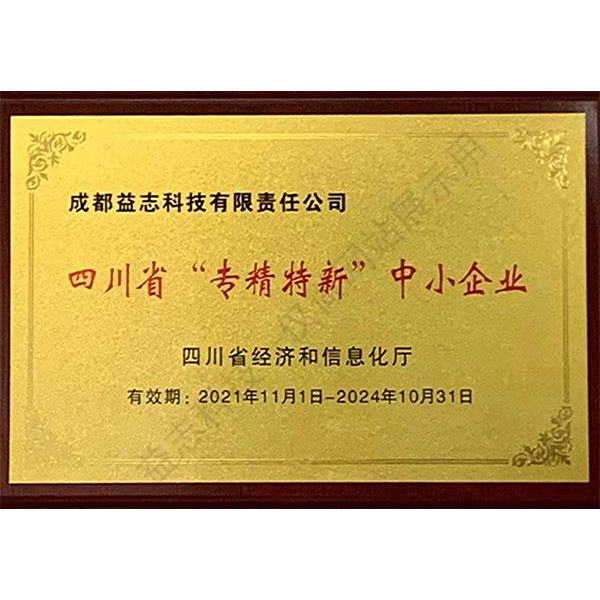
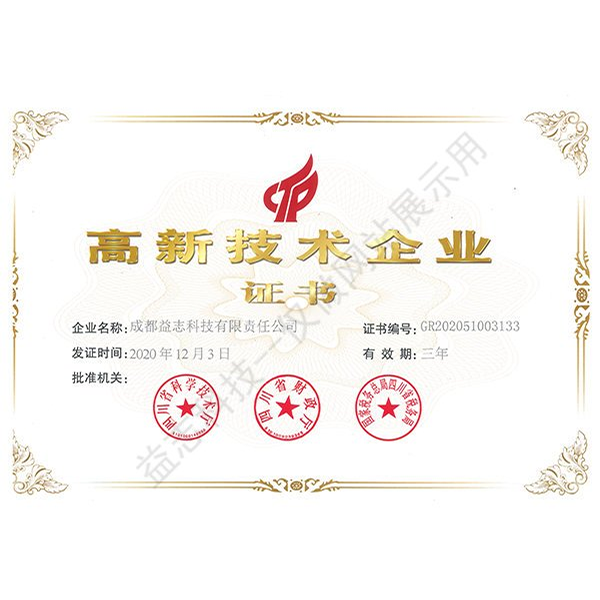
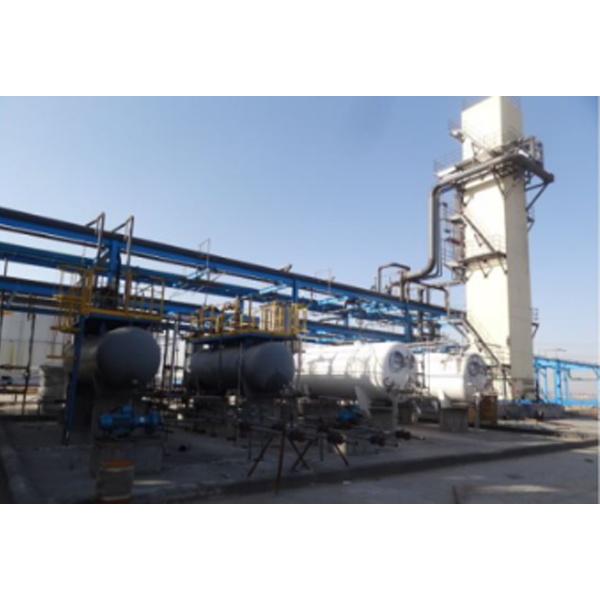
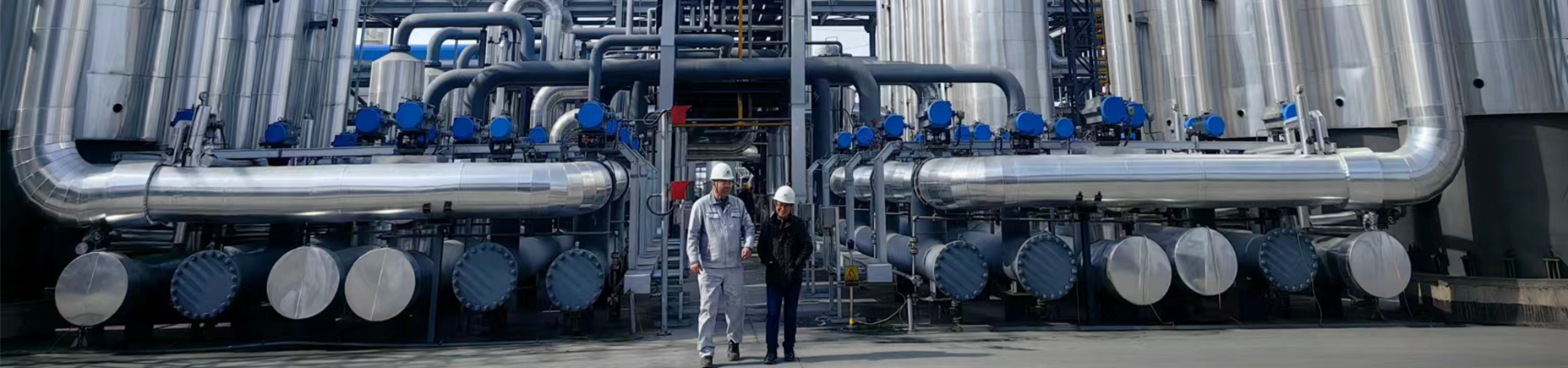
Let me give you an example from a recent project where we worked with Chinese colleagues, in particular, with an engineering companyChengdu Yizhi Technology Co.. Their websiteyzkjhx.ruwell known to those looking for solutions in the field of gas separation. This is a design institute with a significant authorized capital, createdHuaxi Technology. They proposed a scheme for a metalworking plant that needed 99.999% pure nitrogen for soldering. Volume - about 100 Nm3/h.
Initially, a cryogenic plant was considered, but it was not suitable due to uneven daily consumption. The membranes fell off due to high purity. We settled on a two-column KBA installation. The trick was in the details: they used not the standard 13X zeolite, but its modification with more selective properties, which made it possible to reduce air consumption. Plus, we integrated a system for energy recovery of exhaust pressure - this gave about another 5% savings on compression.
Result? Capital costs turned out to be 15-20% higher than for the membrane version for such purity. But the estimated cost of a cubic meter of nitrogen over 5 years is 30% lower. The customer, who was initially skeptical about the “complex?” adsorption, after a year of operation he admitted that the choice was correct. He was especially pleased with the stability of cleanliness, which is critical for the quality of soldering.
And when should you not get involved?
Adsorption is not a panacea. There are scenarios where it can be used for “cheap?” nitrogen will be a loser. The first is very small volumes, up to 10-15 Nm3/h. Here, membranes or even cylinders are often more profitable due to their simplicity and low initial price. The second is when you need 95-98% purity. Here the membranes are unrivaled in terms of total cost of ownership.
Another critical factor is the quality of the power supply. Frequent surges and shutdowns kill valve automation. Repairs can be expensive and time-consuming. In conditions of an unstable network, it is sometimes more logical to choose a simpler, albeit less effective, scheme.
And finally, the lack of qualified personnel on site. If there is no person at the plant who can look into the control panel once a week and check the error logs, then it is better to choose the most “oak” one. and a solution that can be maintained remotely, even if it is more expensive to operate. Otherwise, you will save on equipment, but go broke on calls to service engineers.
Looking to the Future: Where Technology is Heading
The prospects, in my opinion, are connected not with revolution, but with evolution. Firstly, these are materials. Development of new adsorbents with greater capacity and selectivity. For example, the same MOFs (metal-organic frameworks) promise a reduction in energy consumption, but so far they are incredibly expensive for industry. We are waiting for the price to drop.
Secondly, intelligent control. Algorithms that analyze consumption, temperature, air humidity in real time and adjust adsorption cycles. This can provide additional savings of 5-10%, which is huge amounts on a yearly scale. Some manufacturers, includingChengdu Yizhi Technology Co., are already implementing similar systems in their projects, as can be seen from their latest implementations.
And thirdly, hybrid systems. Not “either/or”, but symbiosis. For example, the first stage is membrane (for rough cleaning up to 98-99%), the second is adsorption (for final cleaning up to 99.999%). This can optimize overall costs for some specific tasks. While such schemes are rare, interest in them is growing.
So, returning to the main question: there are prospects for cheap nitrogen production by adsorption, and they are quite tangible. But the key word here is not “cheap”, but “optimal”. There is no universal answer. It is necessary to consider each specific case down to the smallest detail: from the air quality in the workshop to the work schedule and qualifications of the mechanics. Only then can we talk about true economics. Otherwise, it’s just a game of numbers on paper that will end in an unexpected expense. As often happens.