Cheap adsorbent: innovation or trend?
2026-03-30
When you see the request for “cheap adsorbent?”, the first thing that comes to mind is either a marketing ploy or a product that has seriously cut corners. But is this really so? In the sorbent industry, this word has long become a kind of red rag. Everyone wants to save money, but few are willing to talk honestly about the trade-offs between price, efficiency and material durability. Personally, for a long time I thought that it was ?cheap? in our business it is almost always a synonym for “short-lived?” or “low efficiency?”. However, several recent projects, including work with Chinese institutions, have forced us to reconsider some established views. Not everything is so simple.
What's behind the price tag?
Look, a classic example: activated carbon. You can buy a ton of relatively “cheap” ones. product. But when you start looking at the specifications, it turns out that its specific surface area barely reaches 600-700 m2/g, and its abrasion resistance leaves much to be desired. It quickly becomes smaller in the device, dust formation increases, and as a result, replacement is required more often. The total cost of the ownership cycle turns out to be higher than if you had taken a more expensive but stable material from the very beginning. This is the most common mistake among those who are chasing a low purchase price, not counting operating costs.
But there is another side. Sometimes ?cheapness? achieved not through quality, but through innovation in the production process or the use of new, more accessible raw materials. This is where the fun begins. I remember we were testing one batch of zeolite from a new supplier. The price was attractive, but colleagues chuckled skeptically. It turned out that they had developed a synthesis technology that reduced energy costs for calcination, and this made it possible to reduce costs without losing key adsorption characteristics. True, we had to tinker with the selection of the particle size distribution for our devices - their fraction was a little non-standard.
It is in such nuances that the answer lies. A cheap adsorbent is not a death sentence. This is a technical specification issue. For what purpose? For gas drying in a non-aggressive environment? Perhaps inexpensive silica gel will do. To capture organic vapors with fire safety requirements? This is where savings can backfire. You need to look not at the price per kilogram, but at the cost of a cubic meter of purified gas or a liter of dried liquid for the entire inter-regeneration cycle. This is a fundamentally different approach to calculations.
Experience from real projects: successes and failures
I’ll tell you about one incident that is well etched in my memory. We had a project to clean up emissions from a small production facility. The customer insisted on maximum savings, and we reluctantly decided to use a more affordable carbon adsorbent from a local manufacturer. Laboratory tests were more or less normal. But in real conditions, in the presence of acid vapors in the flow (about which there was initially no complete data), the material began to rapidly lose capacity. Regeneration didn't help. We had to urgently stop the line and change the load to a chemically resistant, specialized product. Losses from downtime covered the “savings” many times over. This was a lesson: a cheap adsorbent should not just be cheap, it should be properly selected and predictable.
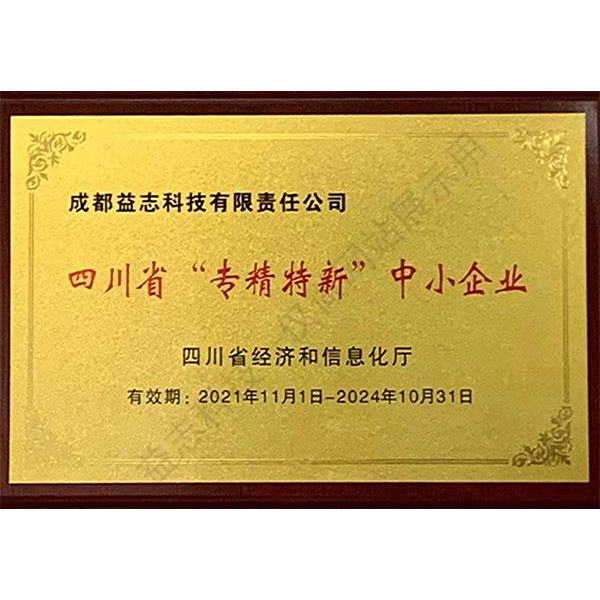
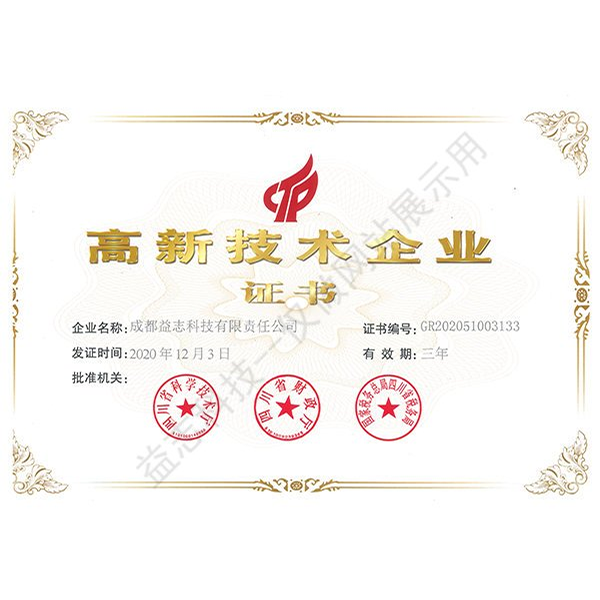
But a positive example is connected precisely with work on one joint project. We were then looking for a solution for deep air drying on a limited budget. Through partners we reachedChengdu Yizhi Technology Co.- their website,https://www.yzkjhx.ru, we studied quite closely. This is a design institute created on the basis of a chemical company with a significant authorized capital. What captivated me was their approach: they did not immediately offer standard expensive zeolite. Instead, they sent for testing three different samples of modified aluminosilicates from available raw materials, with clear data on the kinetics of water vapor sorption at different dew points. The price of one of the options was 30% lower than what we were used to. After six months of testing in a pilot plant, it showed stable performance. The savings turned out to be significant, and most importantly, they were technically justified, and not just price-based.
Such examples show that the secret often lies within the purview of the supplier.Chengdu Yizhi Technology Co., Ltd., being an institute, apparently invests in R&D, which allows us to optimize processes and offer solutions with a good balance of price and efficiency. This is not a handicraft manufacturer that simply grinds something simpler. Their role is precisely to find the very point where an innovation in composition or production method can reduce cost without fatally compromising function. But, again, this is always a double-edged sword. Their material suited our specific conditions, but this does not mean that it is universal for any task.
Trend or sustainable direction?
Now the market is really seeing a wave of requests for cheaper prices. This is a trend dictated by the general economic situation. But I wouldn't call it just fashion. This is, rather, a natural stage in the development of any technology: first an expensive, highly effective solution appears, and then engineering begins to work on how to make it more accessible without losing the essence. In the case of adsorbents, this may be the search for new deposits of raw materials, development of mixture recipes, improvement of the form factor to reduce hydraulic resistance (which also ultimately saves money on energy costs).
However, the danger of the trend is that frankly weak products are being promoted under its sauce. Have you recently seen proposals for “innovative nano-adsorbents?” at a ridiculous price. Upon detailed study, it turned out that this is just a very fine powder with high initial activity, but absolutely unsuitable for filling into standard adsorbers - the entire production line will immediately stop. This is not innovation, this is deception. Therefore, the trend for cheapness must be accompanied by a trend for the literacy of local technologists who can distinguish market noise from real opportunity.
Innovation is when you are offered not just a cheaper analogue, but a different solution to an old problem. Let's say an adsorbent with additives that allow it to be regenerated not by high-temperature heating, but, say, by evacuation or blowing with a colder agent. The energy savings from regeneration can pay for the higher initial cost of loading. This is what I consider real development. But such things are not born on an assembly line, but in laboratories and in the course of joint work with engineering companies on real problems, as in the story with the mentioned Chinese institute.
What to look for when choosing?
Based on bitter and sweet experience, I have developed several rules for myself. First: never evaluate an adsorbent only based on passport data from a website or booklet. Be sure to request independent test reports, preferably using methods close to your process conditions (pressure, temperature, gas composition, relative humidity). Second: demand samples for your own pilot tests. Yes, it takes time and money, but it saves you from disasters. Even a simple bulk density and strength test can tell a lot.
Third, and most important: dialogue with the supplier. If they just give you the price and say, “take it, it’s cheap?” - this is a bad sign. If the supplier is the sameChengdu Yizhi Technology Co., begins to ask clarifying questions about the process, conditions, previous problems, if he is ready to discuss technical details and can explain how the low price was achieved - this is a serious partner. Perhaps it uses waste from other production as raw materials or has its own, more efficient activation method. It's valuable.
And lastly: consider the full life cycle. Including the cost of loading/unloading, disposal, potential downtime. Sometimes ?cheap? an adsorbent that needs to be changed once a year is inferior in the long term to an “expensive” one that works for three years. It all comes down to mathematics and understanding your own technology. Blindly following the trend for a low price is the path to additional costs. A conscious search for the optimal material based on a combination of parameters is already a professional approach.
Bottom line: balance instead of choice
So what is the bottom line - innovation or trend? I think it's both. The very demand for cheap solutions is a market trend. But the response to this demand from responsible manufacturers must be innovation: in technology, in raw materials, in the approach to designing the adsorption systems themselves. A cheap adsorbent should not be synonymous with bad. It should be synonymous with optimized, “sharpened?” for a certain range of tasks, where its properties will be sufficient and not redundant.
For us, practitioners, this means that we need to stop thinking in terms of “expensive and high quality?” vs ?cheap-bad?. We need to think in terms of “adequate to the requirements?”. Look for suppliers who think the same way. This could be a large institute with serious developments, or it could be a small specialized production facility. The criterion is depth of elaboration and readiness for dialogue.
Personally, after a number of trials and errors, I now look at the word ?cheap? not as a threat, but as a challenge. A challenge for me, as a specialist, to correctly formulate the problem. And the challenge for the supplier is to offer not just a discount, but an intelligent solution that will allow this “cheapness”. justify without loss of process reliability. When these two challenges meet, then a truly valuable production solution is born. And everything else is just market noise, which is better not to be distracted by.