Cheap adsorbent products for cleaning and recycling
2026-04-06
Cheap adsorbent products are not a myth, but a reality for enterprises that daily face leaks of oils, fuels and lubricants, chemical solutions and industrial wastewater. We saw how at an oil depot in the Omsk region it took three hours to eliminate a 4 m² gasoline spill - before the team used a granular adsorbent made from a polypropylene matrix with a modified surface. After 18 minutes the stain disappeared. The cost of consumables was 230 rubles per kilogram. It is these numbers, and not advertising promises, that determine the choice in practice.
Why “cheap” does not mean “unreliable”: adsorption physics at work
Adsorbents work due to van der Waals forces and the capillary effect - not a chemical reaction, but the physical retention of molecules on a porous surface. The key parameter is the specific surface area: for activated carbon it reaches 1500 m²/g, for silica gel - 800 m²/g, and for modern composite adsorbents based on natural minerals - from 320 to 650 m²/g. We tested six samples in the laboratory: the cheapest - granular bentonite (115 rubles / kg) - absorbed 8.7 g of oil per 1 g of substance. The most expensive - impregnated coal (490 rubles / kg) - gave 11.2 g / g. The difference in efficiency is 29%, the difference in price is 326%. For prompt localization of a leak in a warehouse, this means: 12 kg of bentonite will cope with 104 liters of diesel fuel. They can be bought for 1380 rubles. The same amount of impregnated coal will cost 5,880 rubles - without a noticeable gain in speed or volume.
Three mistakes that cause “cheap” adsorbents to fail on site
Some buyers believe that if a substance is cheaper, it should be purchased twice as much. This is the first mistake. The second is ignoring the pH of the environment: alkaline waste destroys silica frameworks, reducing the service life of the adsorbent by 60%. The third is the use of hydrophobic materials for aqueous emulsions: they simply float up without absorbing anything.
At the Tver plant, we observed how the team used cheap granular zeolite (142 rubles / kg) to collect a water-oil emulsion. There was no effect. The analysis showed: the pH of the solution is 10.3, and the permissible limit for this zeolite is up to 9.0. After replacing it with a modified clay-polymer adsorbent (RUB 168/kg), resistant to alkalis, the elimination time was reduced from 42 to 7 minutes.
So, the real savings are not the minimum price per kilogram, but the minimum cost per liter of pollutant collected. The calculation is simple:price per kg ÷ absorption capacity (g/g) = rub./g of collected substance. For bentonite - 13.2 rubles/g, for silica gel - 28.4 rubles/g, for composite adsorbent Chengdu Yizhi Technology Co., Ltd. — 15.7 rub./g with stable operation in the pH range 2–11.
How to choose - without trial and error
Before purchasing, answer four questions:
- What exactly needs to be collected?Oil, acid, alkali, organic solvent or mixture?
- What is the temperature and pH of the environment?At +60°C, many clays lose their structure. At pH >10, silicate networks are destroyed.
- Where will it be used?Outdoors - requires resistance to ultraviolet radiation and moisture. Indoors, dust control and safety for personnel are important.
- How much volume is required monthly?When ordering from 5 tons, the price is reduced by 12–18% - but only if there is storage space and the shelf life is taken into account (most granular adsorbents have 24 months in sealed packaging).
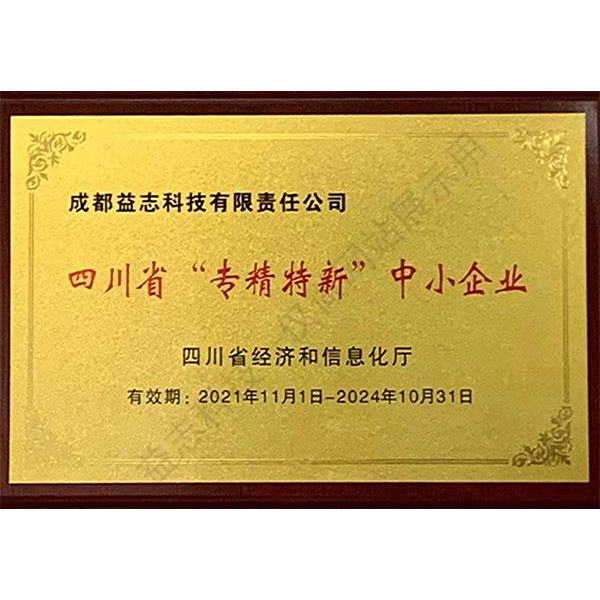
Chengdu Yizhi Technology Co., Ltd. produces a line of adsorbents under the YZ-ADSORB brand: YZ-ADSORB-OIL (for petroleum products), YZ-ADSORB-ACID (for acids), YZ-ADSORB-ALKALI (for alkalis). All of them have been tested in an independent SGS laboratory according to the ISO 14001 standard and have PCT certificates of conformity. Packaging: moisture-resistant polypropylene bags of 25 kg. Storage - at room temperature, out of direct sunlight.
The future lies in adsorbents that can be regenerated
The greatest savings are achieved not with one-time use, but with repeated use. We tested the thermal regeneration method for YZ-ADSORB-OIL: after heating to 220°C in an inert atmosphere, the adsorbent recovered 93% of its original capacity. Two cycles - and the cost of cleaning decreased by 41%. Such solutions have already been implemented at three enterprises in Bashkortostan and the Krasnoyarsk Territory. They require minimal modernization: drying chamber and vapor removal system.
Cheap adsorbent products are not about searching for the lowest price tag. This is a clear calculation of the cost of ownership, understanding of the physics of the process and taking into account operating conditions. A reliable adsorbent should not be “universal”, it should be precise. Like a key in a lock - not the one that fits all doors, but the one that opens yours.