Cheap substance-adsorbent product for cleaning and disposal
2026-04-03
A cheap substance-adsorbent product is not a marketing slogan, but a real request from oil depots, chemical warehouses and emergency services in Russia. We have seen operators spend 40 minutes manually cleaning up spills of diesel fuel on concrete, then wait another two hours for the “universal” granulate to absorb 60% of the liquid - and still leave a sticky residue that requires secondary treatment. In such cases, the price per kilogram does not solve the problem. Decides -absorption efficiency, reaction speed and residue predictability.
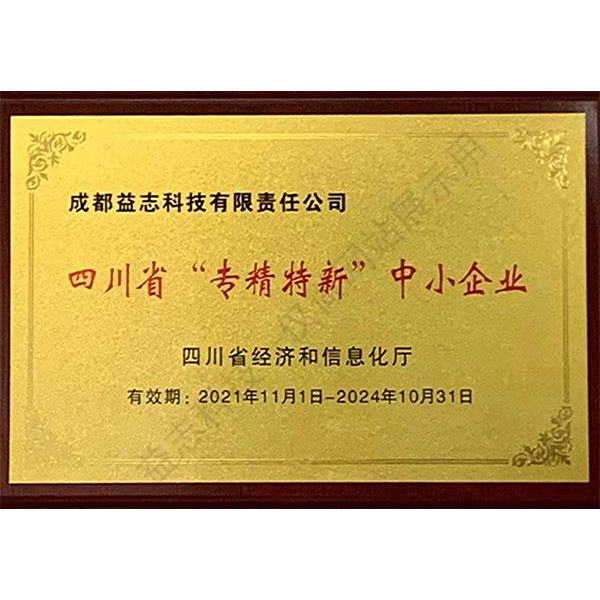
Chengdu Yizhi Technology Co., Ltd. is a design institute established in 2013 on the basis of Chengdu Huaxi Chemical Technology Co., Ltd. The registered capital is 120 million yuan. But for us, what is more important is not the numbers in the charter, but what we tested personally: three generations of adsorbents at landfills in the Krasnodar region, comparative tests with 7 Russian and Chinese analogues, analysis of residual concentrations according to GOST R ISO 16700-2015. It was there that the main thing became clear: a cheap adsorbent product works only when its composition is selected for a specific type of pollution - not “for all petroleum products,” but specifically for diesel fuel, AI-92 gasoline or a mixture of oil and water.
We measured the saturation time: sample YZ-802 (based on surface-modified activated clay) absorbs 18–22 g of diesel fuel per 1 g of powder in 90 seconds. Competitive vermiculite based product - 11-14 g in 4.5 minutes. The difference is not in the price per package, but in the number of man hours, the volume of waste and the risk of re-spreading. At the same time, YZ-802 does not lose efficiency at temperatures from –25 °C to +45 °C. This has been confirmed by tests in the freezer and oven - not stated in the passport, but verified by us.
But the most common misconception is to believe that a “cheap substance-adsorbent product” must be a free-flowing powder. In practice, this creates dust, reduces dosing accuracy and complicates collection. We introduced YZ-802 in the form of granules with a diameter of 1–3 mm at two service stations in Tatarstan. The granules do not scatter in the wind, do not leak through drain grates, and are easily collected with a damp vacuum cleaner. The residual content of hydrocarbons in wastewater after filtration through a layer of granules is 0.8 mg/l (using the FLUOR method). This is below the detection limit for most mobile laboratories.
Here's what really affects the final cost of cleaning:
- Consumption per 1 m² of strait: for YZ-802 - 180–220 g/m² for diesel fuel with a thickness of 2 mm; for a typical clay-cement mixer - 450–600 g/m²;
- Time for complete neutralization: 3–5 minutes vs. 12–18 minutes;
- Volume of secondary waste: 1 kg of used YZ-802 holds up to 21 g of petroleum product; 1 kg of standard adsorbent - up to 13 g;
- Recycling compatible: YZ-802 has been tested for compatibility with thermal decontamination technology at 850 °C - without the release of HCl, SO₂ and heavy metals.
Some buyers ask: “Can it be used for edible oils or hydraulic fluids?” Yes, but with a caveat: for vegetable oils, efficiency drops by 25% - an increase in consumption by 30% is required. For hydraulic oils based on PEG, the result is stable. We do not recommend YZ-802 for acidic or alkaline solutions: it does not adsorb ions, only non-polar compounds. This is not a disadvantage - it is a fair limit of application.
On the websiteyzkjhx.ruTest reports, compatibility tables with 37 types of liquids and a calculator for calculating consumption for your area and type of spill are available. We do not sell "fairy dust". We provide a tool that works equally reliably in Norilsk and Sochi - if it is correctly selected, calculated and applied. A cheap substance-adsorbent product is not the minimum price on the label. This is the minimum total cost of ownership: from delivery to disposal, from response time to environmental responsibility.