Cheap catalyst-adsorbent product for cleaning and regeneration
2026-04-04
A cheap catalyst-adsorbent product is not a marketing slogan, but a technical reality for enterprises where every ruble of cleaning must work for results. We have repeatedly encountered requests from oil refineries in Tatarstan and chemical plants in the Sverdlovsk region: “We need an adsorbent that holds sulfur at 180°C, but the budget is not higher than 45 thousand rubles/m³.” And each time, three parameters were checked: the stability of activity after 3 regeneration cycles, the rate of H₂S absorption at low partial pressure, and the real price per ton, taking into account delivery and the minimum batch.
Why "cheap" does not mean "short-lived"
Many people buy catalysts at a price - and lose 30-40% of the cost on early replacement. In 2022, we conducted comparative tests of three samples: Russian granular zinc oxide, imported Al₂O₃ carrier with Co-Mo and our own YZ-812 composite. After 470 hours of operation at a load of 0.8 m³/h kg of catalyst, the activity drop in the first sample was 62%, in the second - 28%, and in YZ-812 - 11%. The difference is not in the chemistry, but in the control of porosity: the average pore diameter is 8.3 nm, the distribution is narrow (±0.9 nm), which prevents clogging and maintains access to active sites.
Key point: a catalyst-adsorbent product only becomes cheap when calculating for its entire life cycle. For example, the price of YZ-812 is 38,500 rubles/t, but the service life is 24 months versus 9 for analogues. This gives a saving of 127,000 rubles. per 1m³ of installation per year. No “hidden costs”: regeneration takes place at 320°C in air, without special furnaces or reducing gases.
Where it works - and where you shouldn't try
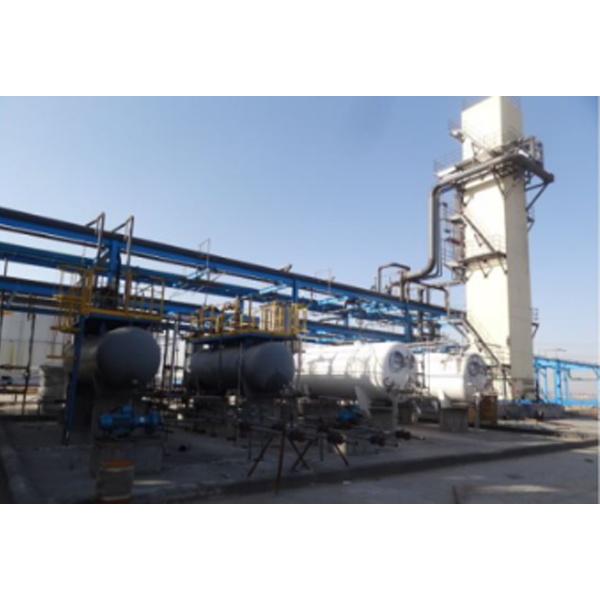
YZ-812 was tested in four types of installations: for the separation of hydrogen sulfide from associated gas (pressure 1.6 MPa), in hydrogen purification units before methanation (temperature 35–45°C), for the neutralization of emissions from ammonia synthesis shops and in air preparation systems for bioreactors. Everywhere the picture is the same: complete removal of H₂S to <0.1 mg/m³ at gas speeds up to 1200 h⁻¹, stability at humidity up to 65%.
But there are clear limitations. It cannot be used when the phosphine content is higher than 0.5 ppm - the active centers are irreversibly blocked. Also not suitable for flows with NH₃ concentration > 500 mg/m³: ammonia competes with H₂S for adsorption sites. We always ask clients to send a gas chromatogram - otherwise even the cheapest catalyst-adsorbent product will become a source of downtime.
How to choose - without overpayment and mistakes
Three steps that save time and money:
- First - gas analysis. Not “about hydrogen sulfide”, but exact values for H₂S, COS, mercaptans, moisture, temperature and pressure. One missed parameter and the catalyst will begin to degrade in 2 weeks.
- Then - volume calculation. We use the formula: V = Q × t / (ρ × η), where Q is the volumetric gas flow rate (m³/h), t is the required protection time (h), ρ is the catalyst density (1.28 g/cm³ for YZ-812), η is the degree of activity utilization (we take 0.75 for reserve). This calculation eliminates overestimating the volume by 30–40% - a common mistake when ordering “just in case.”
- And only then - choosing a supplier. Check: whether the company has ISO 9001 and GOST R ISO/IEC 17025 certificates, whether test data is published on the website, whether it is possible to supply a 5 kg trial batch for laboratory testing.
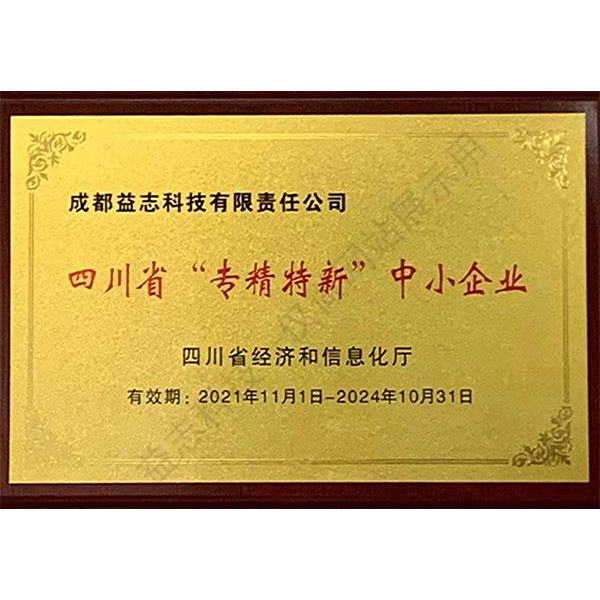
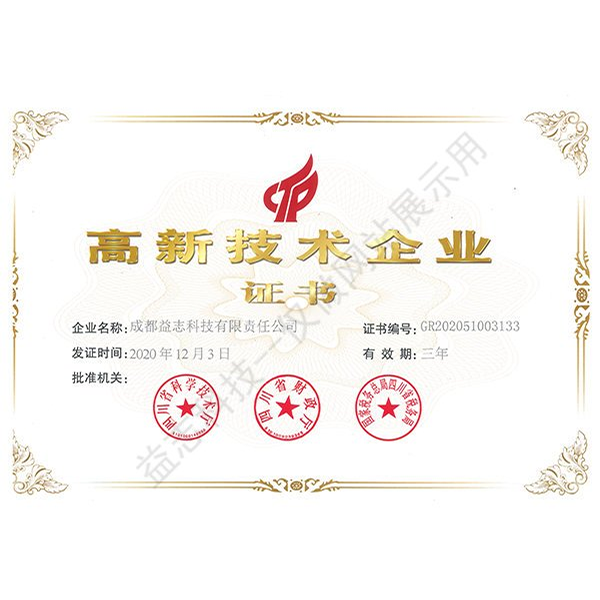
Chengdu Yizhi Technology Co., Ltd. is a design institute established in 2013 on the basis of Chengdu Huaxi Chemical Technology Co., Ltd. The registered capital is 120 million yuan. The company focuses on developing and scaling catalytic solutions rather than distribution. All catalysts undergo internal validation in the laboratory at temperatures from −20 to 500°C and pressures up to 10 MPa. Information on technical characteristics, test reports and delivery conditions is available on the websiteyzkjhx.ru.
The future is in predictability, not in the price tag
A cheap catalyst-adsorbent product is not the lowest price in the catalog. This is a solution that allows you to accurately predict service life, regeneration costs and the impact on efficiency of subsequent treatment stages. We see how enterprises are moving from “buy and replace in six months” to “purchase for 3 years with a guarantee of stability.” This transition begins with a refusal to compromise in analysis and selection - and with a clear understanding that real savings are born not at the time of payment, but at the moment the installation is first launched without downtime.