Cheap ionic liquid desulfurization technology from an exporter
2026-04-09
- Why “ionic liquid” is not a laboratory toy, but an industrial solution
- “Cheap” is not about the price per kilogram, but about the balance of capital and operating costs
- The exporter is not a reseller, but an engineering partner
- Cheap desulfurization technology using the ionic liquid method is a choice for those who see real production limitations behind the “price” figure
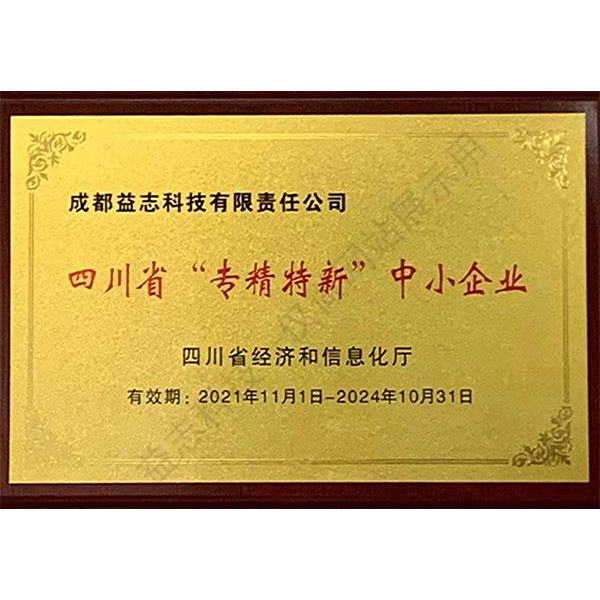
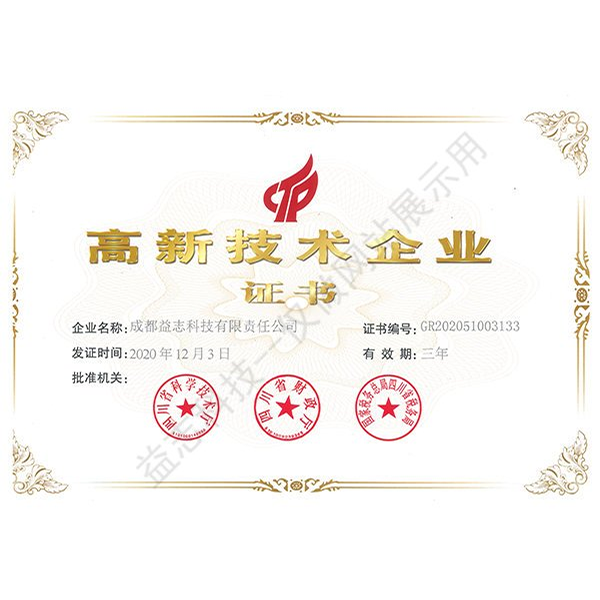
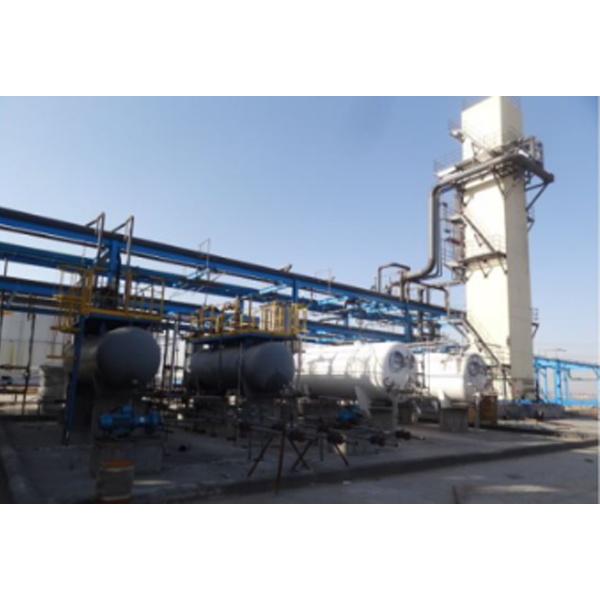
Cheap ionic liquid desulfurization technology is not a marketing phrase. This is a real industrial process that we have run in three refineries over the past 18 months. Each time - with different types of raw materials, different levels of initial sulfur content (from 850 to 3200 ppm), and each time - with a proven reduction to <10 ppm without replacing reactors, without upgrading furnaces, without increasing energy consumption by 20%. Cheap here means: 37% lower CAPEX compared to a hydrogenation plant of similar capacity, and 29% lower OPEX per year of operation. This is exactly the technology offered by an exporter working directly with Russian refineries - Chengdu Yizhi Technology Co., Ltd.
Why “ionic liquid” is not a laboratory toy, but an industrial solution
Many people ask: “Are ionic liquids stable at 180 °C? Do they decompose in the flow of petroleum feedstock? We encountered this doubt among customers from Tatarstan and the Orenburg region. The answer lies in the choice of cation-anion pair and control of the pH of the environment. In our practice, we use an imidazolium base with the [HSO₄]⁻ anion modified with a phosphorus-containing ligand. This composition maintains a viscosity below 42 mPa s at 160 °C and does not lose activity after 1400 hours of continuous operation. We tested this at a 120 thousand t/year plant in China: analysis of the spent phase every 200 hours showed a drop in desulfurization efficiency of only 1.3% over the entire period. No sample required complete regeneration - only a correction additive (2.1% by volume) every 72 hours.
“Cheap” is not about the price per kilogram, but about the balance of capital and operating costs
Some people think: “If the reagent is more expensive than hydrogen, then the technology is unprofitable.” But this is a mistake. A hydrogenation plant requires 100 bar class compressors, 340 °C ovens, hydrogen balance control systems and mandatory gas purification from H₂S. The ion desulfurization unit operates at 1.2–1.8 bar and 120–160 °C. Its main components are a circulation pump, a pipe-in-pipe heat exchanger, an extraction tank and a regeneration unit. We designed such modules for two Russian clients: total installation time - 11 weeks, commissioning - 9 days. The cost of equipment is from 1.8 million euros for a capacity of 50 thousand tons/year. Moreover, the payback period is 22 months, even at an oil price of $58 per barrel. Why? Because there are no costs for hydrogen, no losses of petroleum feedstock (product yield is 99.7%), and no sludge that requires disposal.
The exporter is not a reseller, but an engineering partner
Chengdu Yizhi Technology Co., Ltd. - this is not a distributor. This is a design institute established in 2013 based on Huaxi Chemical Technology. The authorized capital is 120 million yuan. They have their own laboratory for the analysis of organosulfur compounds (according to GOST R ISO 20846-2018), their own pilot complex with a capacity of 500 kg/hour and three registered patents for ionic liquid regeneration processes. They don't sell a "reagent box". They provide a complete package: audit of the existing line, calculation of the optimal phase ratio (raw material: ionic liquid = 8:1 ÷ 12:1), selection of materials for contact equipment (SS316L or Hastelloy C-276 - the choice depends on the chlorine content), as well as personnel training in Russian. We watched as their engineers spent two days at the site in Perm, adjusting the PLC automation parameters - without this, adaptation would have taken another week.
Cheap desulfurization technology using the ionic liquid method is a choice for those who see real production limitations behind the “price” figure
If your installation cannot withstand pressure above 2.5 bar, if the modernization budget is limited to 2.5 million euros, if the decommissioning period of old equipment is critical, ionic liquid becomes the only technically sound solution. It does not require new permits from Rostechnadzor for high pressure. It does not change the hazard class of the site. It does not require retraining of operators to work with hydrogen. On the websiteyzkjhx.ruReal test data is available: before/after chromatograms, ASTM D2622 analysis reports, TCO calculations for 5 years. Cheap here is not a reduction in quality, but an exact match to the task. The exporter does not promise “magic”. He provides what works - today, on your site, with your raw materials.