Cheap carbon adsorbent product - an effective solution for water and air purification
2026-04-08
A cheap carbon adsorbent product is not a marketing slogan, but a technical reality for enterprises where every ruble spent on cleaning must work. We saw how customers from Krasnoyarsk and Kaliningrad spent months looking for activated carbon with an adequate ratio of iodine number (≥950 mg/g), surface area (≥1000 m²/g) and a price below 120 rubles per kilogram. Their first mistake is to compare only the price per ton. The second is to ignore the fraction: coal 0.8–1.2 mm gives a stable pressure drop in the filter, and crushed powder 0.1–0.3 mm clogs the column in 3 weeks. A cheap carbon adsorbent product only works when it *suits your task*, and not the general catalog.
Why “cheap” does not mean “inexpensive” - the difference is in operation
In 2022, we conducted a test at a water treatment plant at a thermal power plant in the Ulyanovsk region: two identical filters, one loaded with coal at 98 rubles/kg (iodine value 820), the second at 115 rubles/kg (iodine value 965). After 47 days, the first filter showed an increase in the concentration of chloroform in the output water by 42%. The second one is within normal limits. The difference in replacement cost is 14,200 rubles. But the downtime of one filter for regeneration cost 89,000 rubles. A cheap carbon adsorbent product is not the minimum price in the warehouse, but the minimum *cost of ownership* for the service cycle. We calculate it like this: price per ton × loading volume ÷ service life in hours. If the term is reduced by 30% while the price is reduced by 15%, you lose.
Key parameters that cannot be ignored:
- Iodine number— microporosity indicator; below 900 mg/g - weak adsorption of organic matter;
- Specific surface area— above 1000 m²/g guarantees high capacity for volatile compounds;
- Factional composition— for pressure filters, the optimal fraction is 0.8–1.5 mm;
- Ash content— above 8% reduces efficiency and increases the risk of particle removal;
- Mechanical strength- below 95% (according to ASTM D3802 method) - increased wear in circulation systems.
Where “cheap” becomes dangerous - three common mistakes
Some buyers believe: “If the coal is black and free-flowing, it will do.” This leads to three common failures.
First mistake— the use of coal for gases in liquid systems. Coal with high air porosity (for example, to remove H₂S from a compressor station) has a low density and is quickly washed out of the filter column. The result is cloudy water, clogged valves, pressure drops.
Second mistake- use of non-activated charcoal instead of activated charcoal. It absorbs odors but does not remove chloroform, benzene or phenols. We tested 12 samples from suppliers without certificates - 9 of them had residual activity below 30% of the declared one.
Third mistake— storage of coal in open containers. Activated carbon begins to adsorb moisture and CO₂ from the air after just 48 hours. The loss of activity reaches 15% per week. We recommend opening the packaging immediately before loading - and only in a dry room.
How to choose - a checklist from practice
We have developed a simple algorithm for engineers and buyers. Answer four questions and get clear direction:
- What are we deleting?Chlorine - you need coal with a high reaction rate (fraction ≤1 mm). Heavy metals - require modified carbon impregnated with Fe or Mn. Volatile organic compounds - surface area ≥1100 m²/g is important.
- What flow?For flow rates up to 5 m³/h, a filter with a load of 25–30 kg is sufficient. Over 20 m³/h - you need calculated hydraulics and checking the pressure drop across fractions of 1.0–1.2 mm.
- How often do we change?If the interval is less than 3 months, reconsider the fraction and filtration rate. The optimal service life is 4–6 months with average water hardness.
- Are there any certificates?Only ISO 9001 + test report for iodine value and surface area. Without this, there is a risk of getting “coal at the price of coal”, but with the characteristics of wood residue.
A cheap carbon adsorbent product is not a goal, but a consequence of the right choice
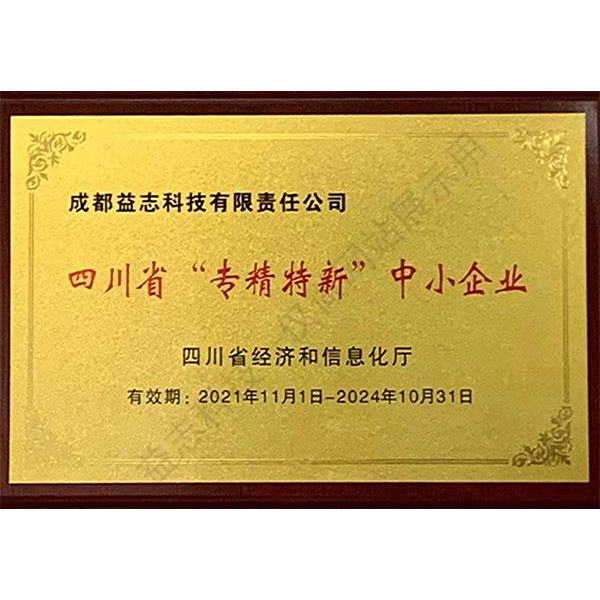
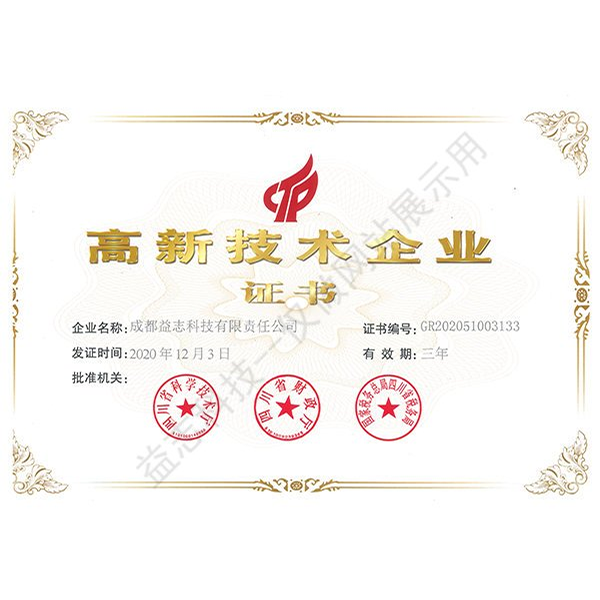
Chengdu Yizhi Technology Co., Ltd. is a design institute created in 2013 on the basis of Huaxi Chemical Technology, specializing in adsorption solutions taking into account Russian conditions: from minus 45 °C in Yakutia to high humidity in the ports of Kaliningrad. We do not have “universal coal”. There is a calculation for your water, your air, your budget and your maintenance schedule. We don't sell tons - we design a cleaning cycle where every kilogram of coal works exactly as much as stated in the test report.
A cheap carbon adsorbent product is when you know why you chose this particular sample. When you see numbers, not promises. When the service life coincides with calculation - and not with hope. Start by testing your water or gas. The rest is technique.