Cheap air adsorbents: who exports?
2026-03-31
When people talk about cheap adsorbents, many people immediately think about activated carbon in bags from China. But this is just the tip of the iceberg, and often a road to nowhere. In fact, under ?cheap? Anything can be hidden: from really working options to outright slag, which, not only cannot be absorbed, but cannot stop collecting dust. And the main question is who supplies these volumes to the market and, more importantly, who does it consistently and with understanding, and not just drives tons.
What does "cheap" really mean? in our field
Here we must immediately divide. There is a low price per kilogram per big bag, and there is a low cost per unit of absorbed substance or per service life. The first is often a trap. I once took a shipment of zeolite from Southeast Asia, and according to the documents, everything was fine. In fact, the humidity went off scale, the bulk density floated, and in the adsorber it compacted into a monolith within a month. Cheap? On paper - yes. In fact, a simple installation and reboot cost many times more.
So when I hear a request forcheap adsorbents, I always clarify: for what task? For drying compressed air in a small workshop? Or to capture organic vapors in chemical production? Because in the first case, simple aluminum oxide can work, but in the second, specific carbon or modified zeolite is needed. And their ?cheapness? - the concept is very relative.
Another point is logistics. A cheap sorbent, but which can be transported far away by sea, can ultimately give such a price “to the door” that local offers will seem golden. You constantly encounter this when working with CIS countries: you wait and wait for a container, and then customs nuances come up. So the exporter must not only have a price, but also have well-functioning channels.
Key players in the export field: not only China
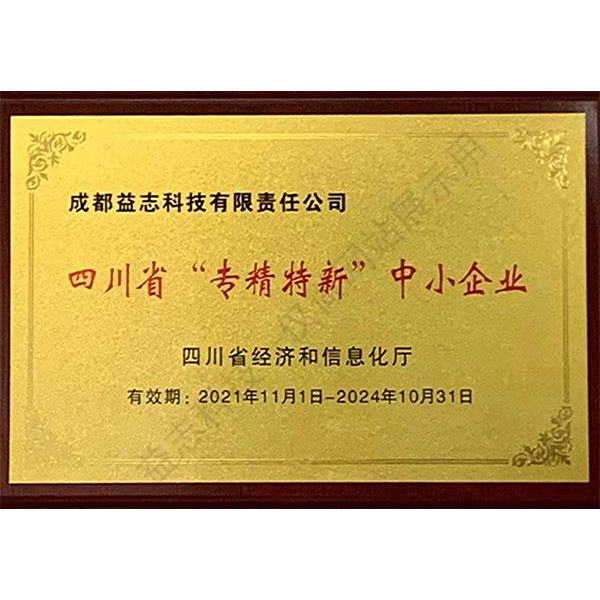
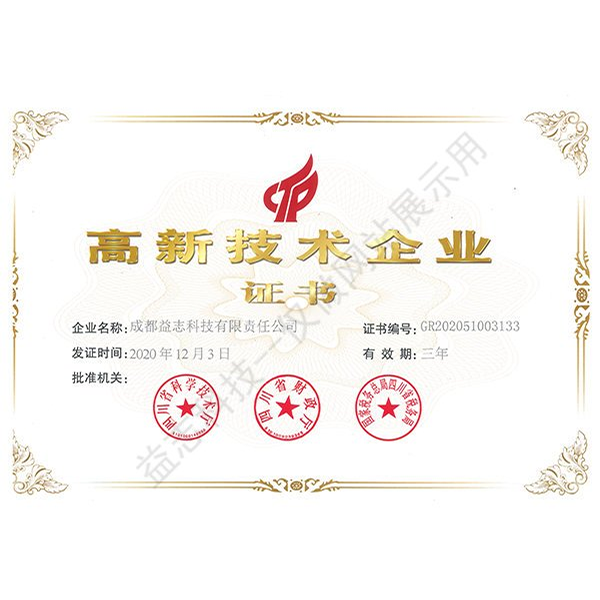
Yes, China is a huge hub. But there is a gradation there too. A bunch of small factories that work “from scratch”, without particularly bothering with controlling the fractional composition or the strength of the granules. And there are large manufacturers, often with their own research and development centers, that started exporting not yesterday. Here, for example,Chengdu Yizhi Technology Co.- this is not just a merchant. This is a design institute created by a chemical company. When you see that the authorized capital is 120 million yuan, and they have been in business since 2013, this already hints at serious capacities and, what is important, at the approach to developing the adsorbents themselves for the task. Their websiteyzkjhx.ru- this is not just a business card, you often see technical notes and case studies there. This is an indirect sign that the company gets to the bottom of things and is not just reselling bags.
But besides China, they are actively imported from India, Turkey, and there are their own manufacturers in Eastern Europe. Everyone has their own profile. Indians often rely on activated carbons from coconut shells, while Turkish ones are strong in natural zeolites. The question is how well their products live up to their claims. I remember how we tested one Turkish batch of zeolite for air drying: the sorption capacity for water was good at the start, but after several regeneration cycles it dropped sharply. It turned out that they were saving money on raw materials. So there is discord between exporter and exporter.
Pitfalls when choosing a supplier
The first is certificates. There may be beautiful papers in English, but if they do not contain key parameters for you (say, dynamic adsorption capacity for a specific substance under certain conditions), then they are just papers. It is necessary to demand test reports, preferably from independent laboratories. Or randomly test it yourself. We once ordered a trial batch of carbon for solvent recovery from a new vendor. According to the specifications, everything matched. But in practice, the heat of adsorption turned out to be so high that overheating began during loading. It's good that they reacted in time. The exporter then shrugged, saying that such concentrations were not calculated.
The second is packaging. It would seem like a small thing. But ifair adsorbentscome in multi-layer paper bags without proper waterproofing, and the path ran through a humid climate, you can get stone instead of a bulk product. And this is a common problem with cheap supplies: they save on packaging. The big players are the sameChengdu Yizhi Technology Co., they usually use big bags with an internal polyethylene liner, which is a must have for hygroscopic materials.
Third is technical support. An exporter who can advise on loading issues, calculating time to breakthrough, recommendations for regeneration - this is already a level. This suggests that they have encountered real-world applications. When from the siteyzkjhx.ruYou can request not just a price list, but also a technical specification for selection - this is valuable.
Is it worth chasing the lowest price? Experience of failure
I'll tell you with my own example. We had a project - a system for cleaning ventilation emissions from a paint and varnish area. We decided to save on sorbent and took the same “cheap” one. coal from a little-known exporter. The price was tempting. Result: the time of the protective layer turned out to be half the calculated time; replacing cartridges was required not once every six months, but every two months. Plus, due to the high ash content, problems began with the fans. Savings on purchases resulted in increased operating costs and downtime. I had to urgently reboot the system with already proven material, but more expensive.
This is a classic mistake.Cheap adsorbentsoften have a high content of dust fraction (which is bad for flow resistance), heterogeneous granulometry or low mechanical strength. In rotary adsorbers or in systems with vibration regeneration, such material is quickly abraded into dust. And now you are no longer replacing the spent sorbent, but catching its remains throughout the entire gas cleaning system.
Therefore, now our principle is to first consider the total cost of ownership, and not the price per ton. Sometimes it is better to pay 20-30% more, but get material with guaranteed and stable characteristics from a reliable exporter who is responsible. Like the same large design manufacturing institutes that value their reputation.
What to watch today and tomorrow
Now the trend is not just to sell bags of sorbent, but to offer a solution. This is especially evident among serious exporters. That is, they not only select the type of adsorbent for you, but they can also offer a scheme for its regeneration and disposal, and calculate the economics. This is the next level. Do you see that the company is likeChengdu Yizhi Technology Co., positions itself as an institute - this says a lot. They most likely conduct R&D, adapting compositions for new tasks, for example, for capturing specific volatile organic compounds or mercury vapor.
Another point is ecology and recycling. Spent sorbent is often a waste, and sometimes dangerous. Advanced exporters are already thinking about this and can offer sorbents with the possibility of subsequent regeneration on site or that are less dangerous for disposal. This also adds cost, but in the long run it is more profitable for customers.
So who exports truly working people?cheap air adsorbents? This is not one player, but several types. Large chemical holdings with a full cycle and R&D. Specialized factories that have been polishing one technology for decades. And, oddly enough, there are some trading houses that do not just resell, but have strict input control and full-time technologists. We need to look for them. Look not only at the price in FOB incoterms, but at the history, at the portfolio of completed projects (it’s good if the website has a section with cases, like onyzkjhx.ru), willingness to provide in-depth technical data. Because in our work there are no trifles, and the stingy, as we know, pays twice. And more often - three times, taking into account the cost of stopping production.