Cheap air adsorbents: exporter and innovation?
2026-03-31
When they talk aboutcheap adsorbents, many people immediately think of low quality or banal silica gel. But in reality, especially in industrial exports, cheapness is not so much a question of raw materials as of logistics, delivery form and, what is often overlooked, adapting the product to a specific task. This is where the difference lies between just a seller and someone who can be a partner.
What does "cheap" really mean? in our field
It is clear that everyone wants to save money. But if a client from metallurgy askscheap adsorbentto capture oil vapors from compressor stations, and they bring standard granules for air drying - this is a failure. Cheapness should be meaningful. Often it is achieved not due to the quality of the active component, but by eliminating the “excess”. For example, many processes do not require an adsorbent in a reactive form of high purity—a stable sorption capacity for target impurities and resistance to dust clogging is sufficient.
We started out supplying standard zeolites and activated carbons. And we were faced with the fact that clients from the CIS often purchased batches and then complained about a rapid loss of efficiency. It turned out that the problem was not in the material itself, but in the fact that it was not regenerated in the required mode. I had to learn to supply not just bags of powder, but basic technological maps - simple diagrams of how to restore the sorbent on site. This immediately reduced operating costs for the client, which became our real “cheapness”.
One painful example is an attempt to offer a very cheap lignin sorbent for purifying emissions from paint and varnish production. The price was fantastic and the lab tests were good. But in real conditions, with changes in temperature and humidity in the workshop, the material began to sinter in the apparatus. It turned out to be more expensive: stopping the line, unloading, recycling. Conclusion: innovations for the sake of low prices must be tested in conditions as close as possible to “field” ones.
The role of the exporter: to be a warehouse or an engineer?
Many companies position themselves asadsorbent exporter, but are essentially repackers. Their strength lies in well-functioning logistics and the availability of goods in a warehouse in the EU or Russia. This is important, but not enough for complex problems. The real value comes when the exporter can conduct a preliminary audit of the problem, select or modify the material, and provide technical support.
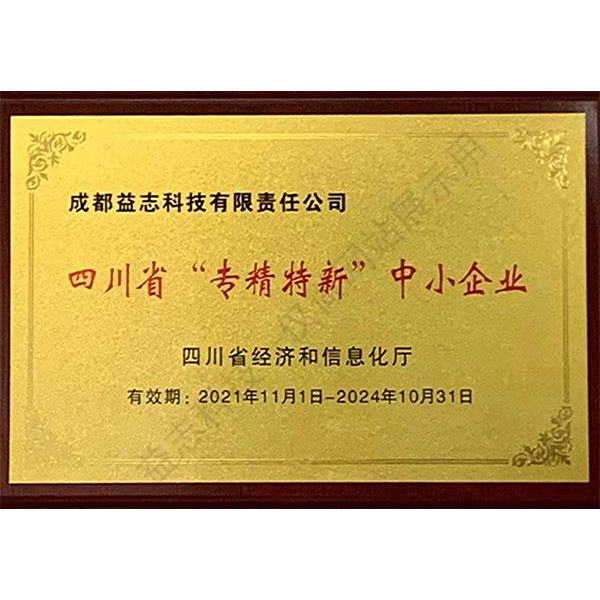
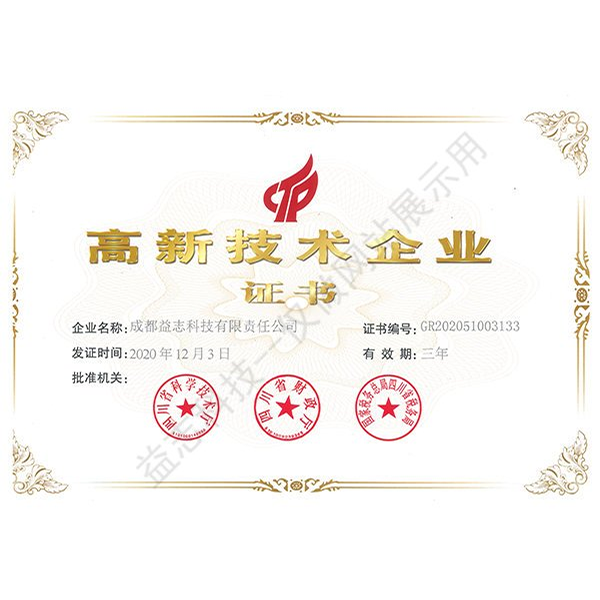
Let's take for exampleChengdu Yizhi Technology Co.(their website isyzkjhx.ru). This is not just a trading company. As stated in their profile, they are a design institute created by a chemical technology company. The registered capital of 120 million yuan indicates serious investment in R&D. For us in our work, this meant the following: when we were faced with an order to purify a gas stream containing hydrogen sulfide and volatile organic compounds at the same time, standard solutions were not suitable. Colleagues from Chengdu Yizhi did not offer a finished product from the catalog, but developed a layered adsorber loading: their specialists modeled a sequence of modified zeolite and specific activated carbon. This is already the level of technological partnership.
This approach changes the paradigm. The client does not buy tons of material, but a solution to his problem, taking into account capital and operating costs. And here it is ?cheap? transforms into “optimal in terms of total cost of ownership?”. It's hard to sell at list price, but that's how long-term contracts are built.
Innovation: where the market is really heading
Speaking ofinnovation in adsorption, everyone immediately thinks of nanomaterials or MOFs (metal-organic frameworks). These are nice for scientific papers, but in 95% of industrial applications they are not economically feasible. The real innovations we see in practice are much more down-to-earth.
The first is composite granules. Not just a mixture, but structured particles, where the core is responsible for mechanical strength, and the shell is responsible for selectivity. This allows you to extend the adsorption-desorption cycle and reduce dust formation. The second is innovation in packaging and form. For example, the supply of adsorbents in the form of cartridges or modular cassettes for quick replacement in continuous cycle industries. This reduces downtime and labor costs.
The third, and perhaps the most popular trend is hybrid solutions. Adsorption rarely works in a vacuum. It is often combined with membrane separation or plasma purification. A modern exporter-supplier must, if not develop, then at least understand the principles of operation of such hybrid systems in order to choose the right one? component. We ourselves once suffered losses by supplying an adsorbent with excellent characteristics for a system where a scrubber was used at the previous stage. They did not take into account the residual moisture - and the material lost half its capacity in a month. Innovation must be systematic.
Practical pitfalls and how to avoid them
Working with adsorbents is a constant struggle with the unexpected. It is possible to have a perfect certificate of analysis but run into a problem on site. One of the main pitfalls is incomplete data from the client. Everyone knows about the concentration of impurities, but they forget about the temperature of the flow, the presence of aerosols, and pressure fluctuations. Without this, any selection is a lottery.
We have developed a simple checklist-questionnaire for ourselves, which we send to the technologist on the customer’s side. Sometimes it's annoying (?just sell me what's in the spec already!?), but it saves you from warranty disputes. It contains simple points: is there dust, what is the dew point, the planned regeneration mode (heat, vacuum, blowing?). It's trivial, but it saves everyone nerves and money.
Another pitfall is logistics and storage.Cheap adsorbents, especially those based on activated carbon, are hygroscopic. Shipping by sea in a container without proper moisture control may result in the customer receiving material that is already reduced in potency. You have to either use special packaging with desiccant (which increases the cost), or clearly instruct the client on the conditions of unloading and storage. Is this the same “hidden” one? work of the exporter that is not visible on the invoice, but is critical to the success of the project.
The future: personalization and ecology
Where is everything going? I think that the mass market of standardadsorbents for airwill remain, but will shrink under the pressure of environmental regulations and recycling requirements. The future lies in solutions for a specific technological process, in closed cycles with effective regeneration.
Already, major players, such as the mentioned design instituteChengdu Yizhi Technology Co., are actively working on adsorbents that can be regenerated many times with minimal losses, and at the end of the life cycle - safely disposed of or even used as raw materials in other processes (for example, in building materials). This is a response to tightening standards in Europe and here.
For the exporter, this means a shift from trading goods to providing services. Perhaps an “adsorbent as a service” model? (Adsorption as a Service), when the client pays not for tons of loading, but for cubic meters of purified gas, and the supplier is responsible for the efficiency, replacement and disposal of the material. It's complex and requires deep integration into the client's process, but this is what a sustainable business in this area looks like. Cheapness in such a model will not be determined by the price per kilogram in a warehouse in Hamburg, but by overall efficiency and waste minimization throughout the entire life cycle. This is about real innovation and partnership between the developer,exporterand the end user is worth thinking about.