Cheap SCR/SNC denitrification exporters?
2026-03-19
I constantly see this request in tenders and from colleagues. Everyone is looking for ?cheap? suppliers of catalysts and denitrification technologies. I’ll say right away: cheap is almost always expensive to operate. I myself stepped on this rake when I tried to save money on a Chinese SCR reactor for one thermal power plant near Nizhny Novgorod.
What is hidden behind the “low price”?
Here we need to separate. There are simply inexpensive offers from new players who are trying to enter the market. And there are frankly dangerous options, where the low price is a consequence of a simplified design, weak materials or a complete lack of engineering. In the first case, you can find an adequate option, but the risks are high. In the second, there are guaranteed problems with efficiency and resources.
For example, they often save on an ammonia injection system. They install the simplest nozzles without precise adjustment and flow modeling. The result is uneven distribution of the reagent, local overheating, increased emission of ammonia (slip) and rapid poisoning of the catalyst. Savings of 15-20% at the procurement stage result in replacement of the catalyst layer 2-3 years ahead of schedule. They once calculated for one boiler house that the additional costs over 5 years exceeded the initial “savings”. almost tripled.
Another point is the catalytic units themselves. Cheap ones often have low mechanical strength and poor resistance to dust clogging. I saw samples that, after a year of working on low-purity coal, looked like a solid sintered mass. Aboutcheap exporters SCR/SNC denitrificationSoutheast Asia is legendary. Some send beautiful catalogs with inflated characteristics, but in fact the cell density does not match, the composition of the active mass is dark wood.
Chinese suppliers: experience and pitfalls
Many companies are now working with China. Not all of them are “handicraft”. There are serious institutes and manufacturers with their own R&D. The key point is not just to buy equipment, but to get a working technological scheme, adapted for a specific fuel and operating mode of the facility. There are many “cheap exporters” here. and drop out - they don’t have their own design department, they just sell hardware.
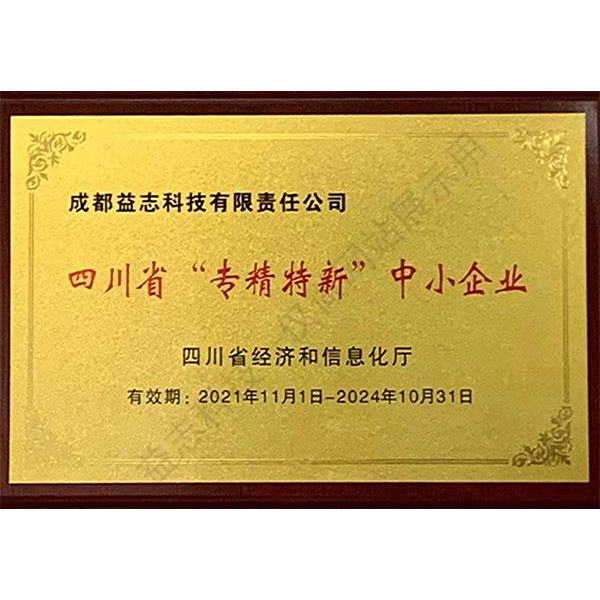
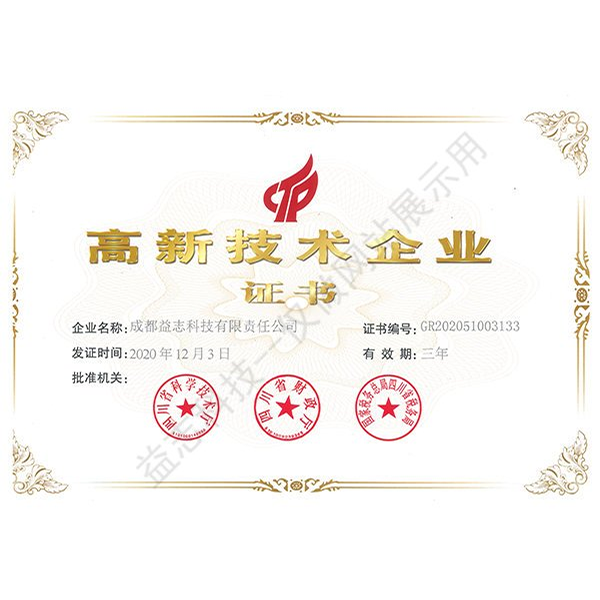
Among those who do complex work, we can recall Chengdu Yizhi Technology Co. (their website ishttps://www.yzkjhx.ru). This is a design institute created on the basis of a chemical technology company. They have a registered capital of 120 million yuan, which already indicates serious intentions. They don't just sell a catalyst, they offer engineering. In their case, “cheapness?” often relative - the price may be competitive due to the scale of production, but they are not the cheapest on the market. Worked with their technical specialists on the modernization of the installation at the enterprise in Kazan. It feels like people understand the process, not just sales managers.
But even with such suppliers you need to keep your eyes open. Their documentation sometimes requires very careful checking. Translations may not be accurate and there may be ambiguities in specifications. Somehow I almost got caught due to the difference in understanding of the “guaranteed degree of purification?” — for them, it is often tied to ideal conditions at the inlet, which are almost impossible to provide at a real facility. It took a long time to coordinate the terms of reference, specifying all the tolerances for dust, ash dispersion, and load range.
SNC technology: where you can save money and where you can’t
With non-catalytic selective denitrification (SNC), the story is a little different. There is no expensive catalyst, which immediately reduces capital costs. The main costs are for a precise system for the preparation and injection of the reagent (most often urea), for a high-quality burner or injector capable of providing the required temperature and residence time in the reaction zone.
Here are ?cheap? options often sin by simplifying these particular systems. They install one temperature sensor and one injector, hoping for a miracle. But if there is temperature unevenness in the flue gas flow (and there is always one), then the reaction will occur in some zones, but not in others. Efficiency decreases and ammonia emissions increase. You need to save not on the dosing system, but perhaps on the materials of the air ducts in the injection zone or on the degree of automation. You can make it semi-automatic, requiring more operator attention, but maintaining efficiency.
One of our unsuccessful experiences was associated with an attempt to implement a cheap SNC system from a little-known supplier at a small industrial boiler house. The reagent was supplied roughly, the mixing zone was poorly designed. As a result, the ammonia leak was such that it was necessary to urgently stop the system. The only thing that saved me was installing an additionalSCR catalystat the exit, which negated all savings. The result is a hybrid that was not originally planned.
Selection criteria: not price, but life cycle cost
Therefore, now, when evaluating proposals, I do not look at the price tag in the commercial proposal, but try to quickly estimate the LCC (Life Cycle Cost). This, of course, is not an exact calculation, but at least on key points: guaranteed catalyst life (or durability of nozzles for SNC), cost of replacement/regeneration, specific reagent consumption, energy consumption of auxiliary equipment, built-in performance margin.
Often from ?cheap exporters? these parameters are either not specified or are specified unrealistically. If the proposal says “catalyst life is 24,000 hours,” but does not indicate clear conditions for sulfur content in the fuel, humidity, temperature range, this is a flag. Most likely, this is a copy-paste from the catalog. A real technician will always clarify: “What kind of fuel do you have?” What is the ash content? Is it planned to operate in frequent start-stop mode??.
Another practical criterion is the presence of a reference list with objects in similar climatic conditions and using similar fuel. If a supplier brings a catalyst from humid southern China and has never supplied it, for example, to Siberia, where long downtime and sudden temperature changes are possible in winter, this is a risk. The media material may not hold up.
Final Thoughts: Markets and Common Sense
Equipment market fordenitrificationIt's very dynamic now. New players are emerging, including from China, who offer interesting solutions. It is unreasonable to completely refuse to consider offers with a good price/quality ratio. But the approach should be engineering, not procurement.
It is necessary to require detailed drawings of components, test reports for resistance to poisoning (especially to SO2 and alkali metals), and calculations of hydraulic resistance. It is better to spend money on sending your specialist to an existing facility with this equipment or hiring an independent engineer to audit the proposal. This cost rarely exceeds 1-2% of the project, but can save millions in the future.
And yes, sometimes a ?cheap exporter? may just be an efficient production company without the huge overhead costs of marketing and representation in Europe. Like the same Chengdu Yizhi Technology Co. Their strength lies in their own design and connection to chemical processes. Their weakness (for us) is often their remoteness and a different approach to project management. But if you find a common language at the technical level and clearly state all the conditions, cooperation can be successful and mutually beneficial, without unnecessary overpayment for the brand, but also without dangerous savings on quality. The main thing is not to be fooled by the lowest number in the “price” column. Experience shows that this number then necessarily grows in other columns of the estimate.