Cheap SCR/SNC products for denitrification?
2026-03-19
When you hear a request about cheap solutions for denitrification, you immediately want to clarify: what does this word mean? Because in our industry, cheapness at the stage of purchasing a catalyst or reagent often results in huge costs later - for repairs, downtime, unscheduled replacements. I have seen many times how enterprises, especially in the regions, try to save money by buying something incomprehensible at a low price, and after six months or a year the boiler or reactor is already working at half capacity, or even stops working. And the search for those to blame begins. So let’s be clear right away: we are not talking about the lowest price on the market, but about the optimal ratio of cost and resource, taking into account all operational risks.
Where to look for savings without loss of efficiency?
Experience suggests that the first and most important thing is accurate calculation and design. You can't just take a cheap SCR catalyst and shove it into an existing circuit. We had a project at one thermal power plant, where the customer initially demanded the most budget option. We carried out modeling, looked at the actual composition of the flue gases (and, in addition to NOx, there was high ash content and traces of alkali metals) and came to the conclusion that a standard cheap titanium-vanadium catalyst will quickly coke and become poisonous. Having saved 20% on purchases, they would have lost hundreds of thousands per month on a drop in efficiency and frequent regenerations. As a result, they offered a slightly more expensive but poison-resistant product with special promotion. It paid for itself in the first year of operation.
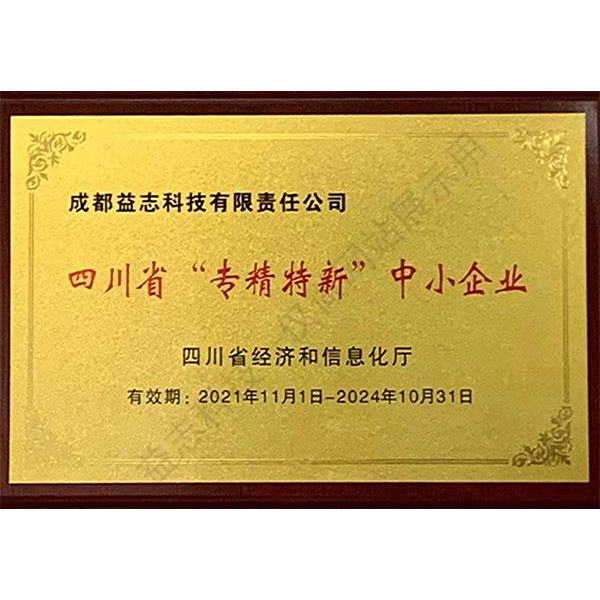
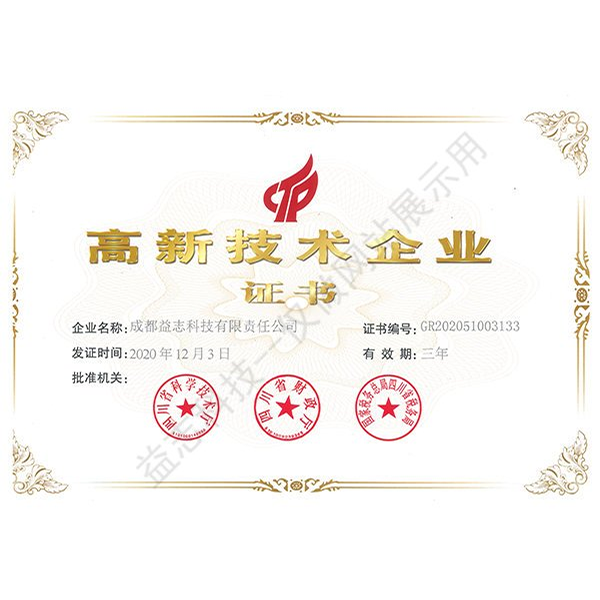
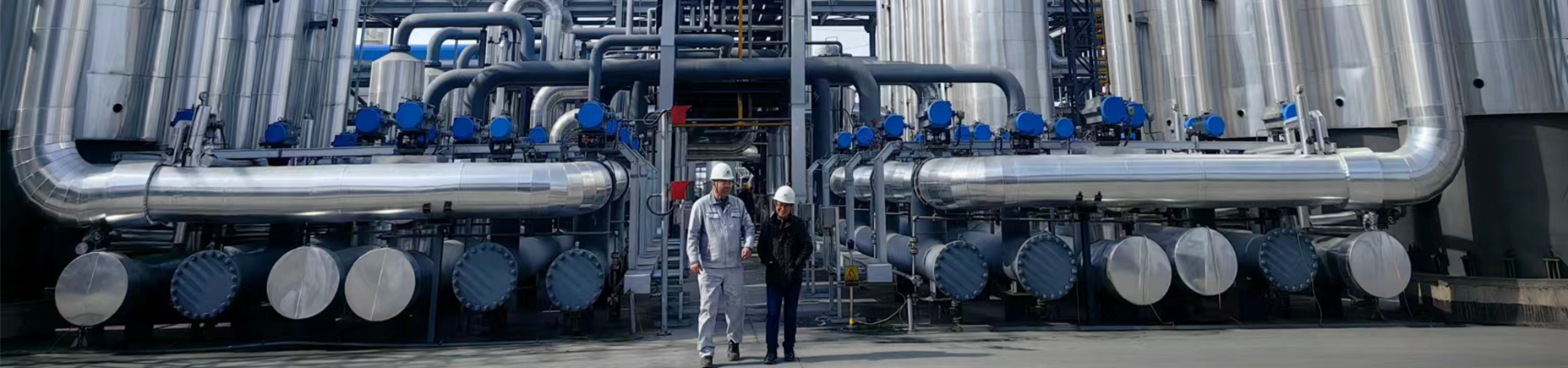
The second point is logistics and localization. Now manufacturers have appeared on the market who assemble or even produce catalytic elements in Russia or the EAEU countries, using imported carriers and active components. This can provide significant savings compared to the delivery of ready-made blocks from Europe or China. But here it is important not to run into handicrafts. Check real production capacity and the availability of a laboratory for quality control. One of our partners, for example,Chengdu Yizhi Technology Co.(their website ishttps://www.yzkjhx.ru), works on the model of a design institute: they don’t just sell boxes with a catalyst, but first do an in-depth audit of the customer’s technological process. This is their strong point. The company was established in 2013 as a subsidiary of Chengdu Huaxi Chemical Technology Co., Ltd., with a registered capital of 120 million yuan, which indicates serious investment in R&D. Their approach often optimizes not only the catalyst selection, but also the entire ammonia injection system, ultimately reducing overall operating costs.
The third source of reasonable savings is working with shape and design. Sometimes you can use not expensive ceramic honeycombs, but metal plate or even fiber catalysts, if conditions permit (temperature conditions, absence of abrasive dust). They are often cheaper to manufacture and install. But again, this is not a universal solution; you need to calculate the hydraulic resistance and ensure uniform gas flow.
SNC technologies: are they really cheaper to operate?
SNC (selective non-catalytic reduction) is often lured by its apparent simplicity and low capital costs. Like, I installed a nozzle for injecting urea or ammonia into the boiler - and that’s it. But this is a trap for the unprepared. The efficiency of SNC is tightly bound to a very narrow temperature window (typically 850-1050°C). If the temperature fluctuates, and it almost always fluctuates with variable boiler loads, then instead of denitrification you get the release of unreacted ammonia (NH3 slip) or, worse, the formation of ammonium salts, which are deposited on heating surfaces and in chimneys, causing corrosion.
At one of our waste incineration sites, we encountered a classic problem: the customer installed an SNC system based on a low starting price. After several months of operation, the line had to be urgently stopped due to intense corrosion of the air heater. The reason is constant temperature fluctuations in the injection zone, leading to condensation of ammonium salts. Repairs and upgrades were more expensive than the initial installation of a full-fledged mid-price SCR system. Conclusion: SNC is not a cheap technology, but a technology with other, often hidden, costs. It can be justified in facilities with stable and precisely controlled temperature conditions.
Another nuance is the consumption of the reagent. In SNC, a larger NH3/NOx molar ratio is required to achieve the same degree of purification as in SCR. That is, more urea or ammonia is lost. At large thermal power plants, this difference in annual consumption can eat up all the savings from simpler equipment. Therefore, when considering low-cost SNC products, always ask for specific reagent consumption data under real-world conditions, not under ideal laboratory conditions.
No-name catalyst market: be careful, fakes
This is a separate sore subject. In recent years, many offers have appeared on the market from unknown companies offering analogues of catalysts from BASF, Cormetech, Johnson Matthey at a price 2-3 times lower. Most often, this is either an outright defect, discontinued from production, or restored (regenerated) blocks passed off as new, or simply low-quality products with an untested composition. The problem is that they cannot be distinguished visually.
I had a sad experience of consulting at a cement plant. We bought a batch of cheap ceramic honeycombs supposedly from a Chinese manufacturer. After just three months, activity dropped by 40% and ammonia leakage began. Upon opening, it turned out that the thickness of the active layer was uneven, and the mass of the carrier contained impurities that themselves were catalytic poisons. The plant suffered losses not only from replacing the catalyst, but also from fines for exceeding emissions. Moral: always ask for a quality certificate with test results for a specific gas environment, check the reputation of the supplier. Sometimes it is more reliable to work with intermediary engineering companies that are responsible for the entire cycle, like the sameChengdu Yizhi Technology Co., which acts as a design institute and can provide a full package of documents and guarantees.
As for the recovery (regeneration) of spent SCR catalysts, this can be a real way to save money. But only if the regeneration is carried out by a specialized company with proven technology (for example, ultrasonic cleaning followed by re-application of active components). A cheap acid wash will only destroy the media and wash away the vanadium, after which the block can be thrown away.
The Hidden Costs Everyone Forgets About
When talking about the cost of denitrification products, few people consider the Total Cost of Ownership (TCO). It includes: 1) The cost of installation and commissioning. A cheap catalyst may require complex and expensive installation due to fragility or non-standard dimensions. 2) Energy consumption. The SCR system increases the hydraulic resistance of the gas path, which leads to increased energy consumption of smoke exhausters. A high-quality catalyst with optimal cell geometry can reduce this figure. 3) The cost of the reagent (ammonia, urea) and its storage. 4) Costs of control and analytics. A cheap system without normal automation and sensors will require constant manual monitoring, which increases the number of personnel.
In my opinion, TCO analysis is what distinguishes a professional from an amateur. It often turns out that a more expensive, but efficient and durable catalyst from a trusted manufacturer in conjunction with a competent design ends up being the cheapest option. Savings of 15-20% on purchases pale in comparison to the prospect of extending the inter-regeneration period by 2-3 years and avoiding unscheduled shutdowns.
By the way, about the project. This is the key. A good designer, be it an internal service or an external company like the mentioned design instituteChengdu Yizhi Technology Co., will be able to simulate the work and select a solution that minimizes TCO, and not the price in the catalog. Their experience, backed by a registered capital of 120 million yuan, allows such calculations to be made without relying on templates.
Bottom line: what does cheap mean in our business?
Let's go back to the beginning. CheapSCR/SNC products for denitrification- this is not a myth, but it is always a compromise and an accurate calculation of risks. This is not a blind search for the lowest price tag. This could be: a properly selected catalyst for specific conditions, which reduces the cost of future repairs; this is the use of localized production with good quality control; This is comprehensive engineering that optimizes the entire system, not just part of it.
The biggest mistake is skimping on knowledge. The money saved on specialist consultation or on design and survey work will definitely come out the other way. It is better to spend them on a thorough audit, selection and calculation, than to then urgently change a failed cheap system. The market now offers many options, including from players such as Chengdu Yizhi Technology, which rely on in-depth analysis rather than sales volume of catalyst boxes.
Ultimately, reliable and cost-effective denitrification is always a system, not just a product in a box. And the cost of this system is determined by its performance throughout its entire life cycle, and not by the figure on the purchase invoice. Keep this in mind when you're looking for your cheap fixes.