What products does China produce using nitrogen adsorption?
2026-02-26
Chinese adsorption nitrogen production plants: where is reality and where is marketing noise, and what specific products are they most often tailored to in production.
Not just nitrogen, but nitrogen of a certain purity
When talking about products made with nitrogen, a key point that is often missed is the purity required.Adsorption plant– is not a magic wand, it gives gas with parameters, and everything depends on these parameters. In the food industry, say, for packaging chips or nuts, 99.5% is often enough. This is the operating area for relatively simple and cheap adsorption generators, which China is now producing en masse and quite reliably. But as soon as you mention electronics or metallurgy, where 99.999% and higher are needed, a different conversation begins, a different price and other players.
In my own experience, I came across when at one of the LED production plants they tried to save money and install a standard Chinese adsorption unit for purging. Cleanliness was not enough, the defects went down the conveyor belt. We had to urgently purchase a fine cleaning system, which in the end turned out to be more expensive than immediately purchasing a specialized solution. It is a common mistake to think that nitrogen is also nitrogen in Africa.
Therefore, when asked about products, the first thing that comes to mind is not a list of names, but a mental map of industries with their requirements. The food industry, chemical synthesis, pharmaceuticals, fire extinguishing, metal processing - all have their own figures for dew point and oxygen content. And Chinese equipment manufacturers, to their credit, have long since grasped this and segmented their product lines.
Food front: from packaging to bottling
This is perhaps the most widespread and visible segment.Adsorption nitrogenin China, it is generated in huge volumes for modified atmosphere packaging (MAP). Products are almost everything that is on the shelves of supermarkets: chips, crackers, coffee, pasta, cold cuts, semi-finished products. The goal is to displace oxygen to slow down oxidation and growth of aerobic bacteria.
An interesting nuance that is often missed from textbooks: for different food groups, sometimes you need not a pure nitrogen atmosphere, but a mixture with CO2. And modern Chinese stations often come complete with a mixing system and precise control of gas composition - this has become almost a standard for large lines.
A separate story is the bottling of vegetable oils and wines. Here nitrogen is used for inerting to prevent the product from coming into contact with air between the barrel and the bottle. I saw lines at factories in Shandong where compact adsorption generators are built directly into the filling conveyor. They are noisy, of course, but they work stably for years.
Chemistry and petrochemistry: not only at large plants
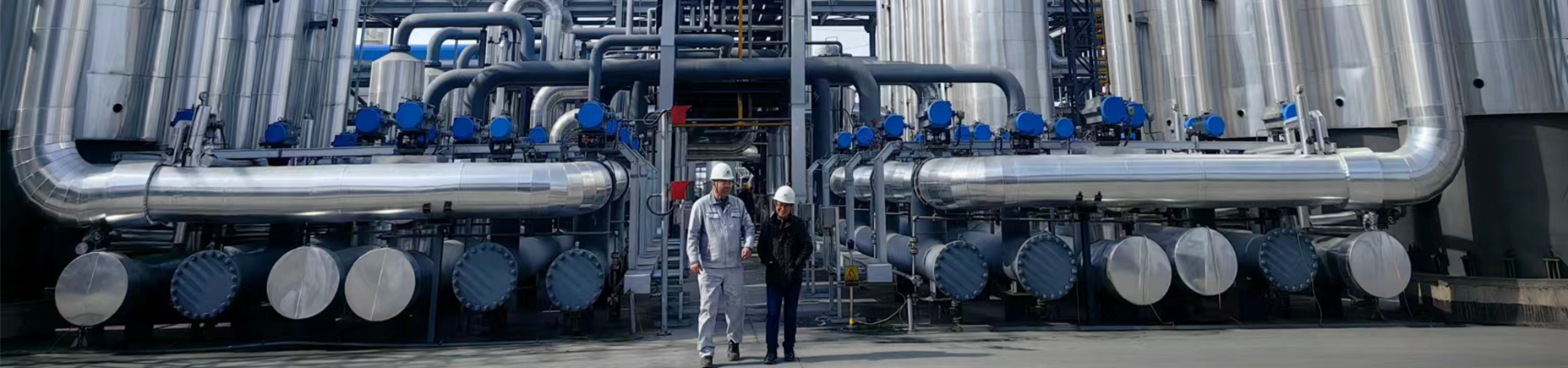
When you think about the chemical industry, your imagination pictures huge air separation plants. But in China, adsorption nitrogen is actively used for many medium and small processes, as well as for auxiliary operations at giant plants. For example, for purging reactors and pipelines before repairs, for transporting flammable liquids, for creating an inert curtain on tanks.
There was experience with the supply of equipment for one polymer plant in Zhejiang. They needed nitrogen fornitrogen purificationand drying of polypropylene granules. What was required was not ultra-high purity, but high volume and constant pressure. A Chinese-assembled modular adsorption station did the job. The key turned out to be the correct selection of zeolite adsorbents for the specific temperature and humidity of the incoming air - the initially proposed standard filler quickly lost effectiveness due to the local climate.
Here it is worth mentioning a product such as nitrogen for fire extinguishing. Systems based on high-pressure nitrogen generators (so-called IG-100) are becoming increasingly popular in China for protecting server rooms, archives, and museums. This is also a product of adsorption technology, simply configured to meet specific feed rate and volume requirements.
Metalworking: from soldering to hardening
In this area, the application is specific and very demanding in terms of parameter stability. Nitrogen is used in laser and plasma cutting to improve the quality of the cut, in soldering, especially lead-free, to prevent oxidation, and in heat treatment (nitriding, hardening in a protective atmosphere).
I worked with a workshop that produced radiators for electronics. There was a vacuum furnace for soldering, but the cooling cycle used nitrogen from the adsorption generator. The problem was micro-oscillations in pressure, which led to defects on particularly sensitive products. It turned out that the problem was not with the generator, but with the old pipe layout and insufficient volume of the receiver. After the modernization of the pipelines, everything fell into place. This relates to the fact that often the weak link is not the main equipment, but the harness.
Chinese manufacturers of laser cutting machines now often offer adsorption nitrogen generators as an option, assembled into a single housing with a compressor and dryer. This is convenient, but the maintainability of such monoblocks sometimes leaves much to be desired.
Case and evolution of the approach: from copying to engineering
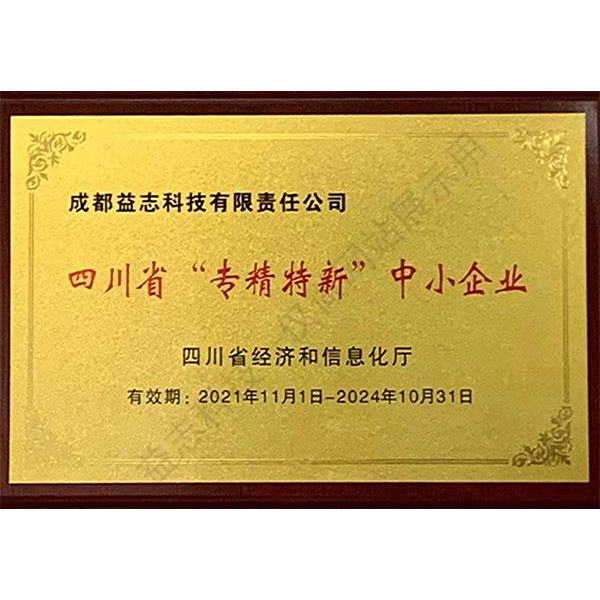
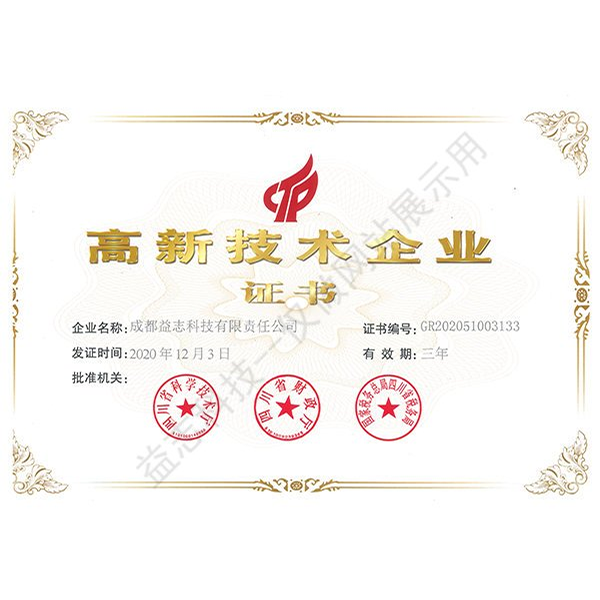
Previously, Chinese manufacturers often simply copied Western adsorption plant designs. Now the picture is changing. Let's take for exampleChengdu Yizhi Technology Co.(their website ishttps://www.yzkjhx.ru). This is not just a factory, but a design institute created by Huaxi Technology. Judging by their projects, they rely on the full cycle: from the development of technology and production of adsorbents to the design and turnkey construction of large installations, including for the production of nitrogen.
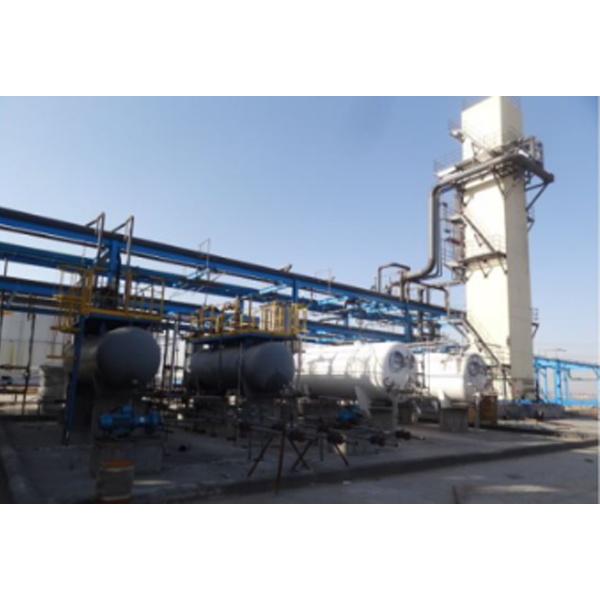
What's interesting about their approach is that they often offer hybrid solutions. Let’s say for a large chemical plant, where high-purity nitrogen is needed and in large volumes, they can design a system where the first, coarse stage is adsorption, and the second, fine stage is membrane or cryogenic. This is already a level of deep customization, and not just selling hardware out of the box.
The registered capital of 120 million yuan indicated in the description of Chengdu Yizhi Technology Co., Ltd. is also an indicator of serious intentions and the ability to take on capital-intensive projects. In the world of industrial gases and their separation plants, customer trust is often built precisely on such financial indicators and a portfolio of completed projects, and not just on technical catalogs.
What's in the bottom line? Practical view
So what products does China produce using adsorption nitrogen? In fact, the whole spectrum - from vacuum-packed food products to complex electronic components and processed metals. But the main product that China produces in this area is the nitrogen generation units themselves. They have become quite reliable, segmented by industry and, what is critically important, cost-effective for a huge number of medium-sized enterprises.
The trend in recent years has been a move away from selling just a generator to selling a technological solution. The client does not need nitrogen with parameters of 99.5% at 6 bar, but a guarantee of no oxidation on his fish packaging line. Or the stable quality of the cut on his machine. This changes the approach. Suppliers like the aforementioned Chengdu Yizhi Technology Co. work precisely in this paradigm.
Therefore, answering the initial question, it is worth looking more broadly. China uses adsorption nitrogen to produce not just a list of goods, but entire categories of industrial and consumer products, the competitiveness of which largely depends on the availability and adequacy of this technology. And this technology itself in China has gone from a cheap alternative to a completely mature engineering trend.