Chinese adsorbents: technologies and market?
2025-12-31
When people talk about Chinese adsorbents, many people immediately think about activated carbon and cheap molecular sieves. Well, or about gigantic volumes and low prices. This, of course, is part of the truth, but if you dig deeper, there is a whole world out there that has changed beyond recognition over the past ten years. And if earlier a Chinese product was often taken precisely because of the price, turning a blind eye to some “nuances”, now the situation is no longer the same. I went through this myself, purchasing materials for gas purification and separation projects. At first there was skepticism, then surprise, and now - cautious but confident interest. I’ll try to break down what it looks like from the inside, without the gloss.
From ?glands? to the “brains”: the evolution of the technological approach
Previously, about ten years ago, Chinese manufacturers mainly focused on hardware. Columns, reactors, containers - the iron was made of good quality, often according to drawings from European or Japanese licenses. But with ourselvesadsorbentsthere was trouble. There was often nothing to put into this equipment except the simplest products. The technology for producing sorbents lagged behind. I remember how in 2014 we considered one project for drying natural gas: the Chinese column looked great, but the proposed zeolite quickly lost capacity and became dusty. We had to look for a replacement from the Europeans, which killed the entire economy.
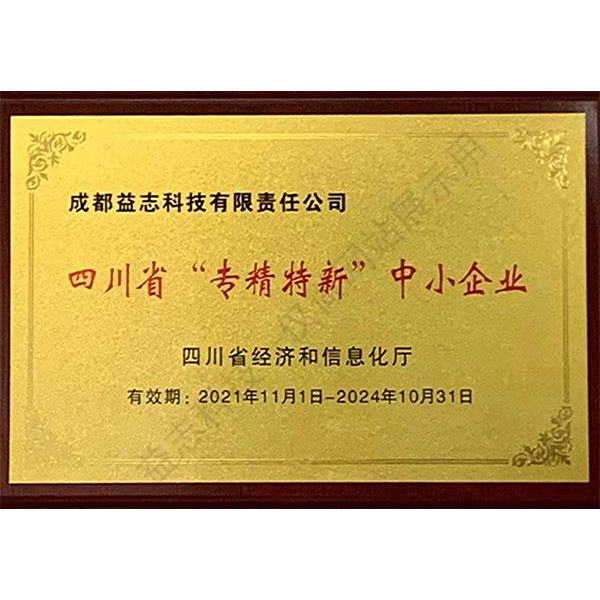
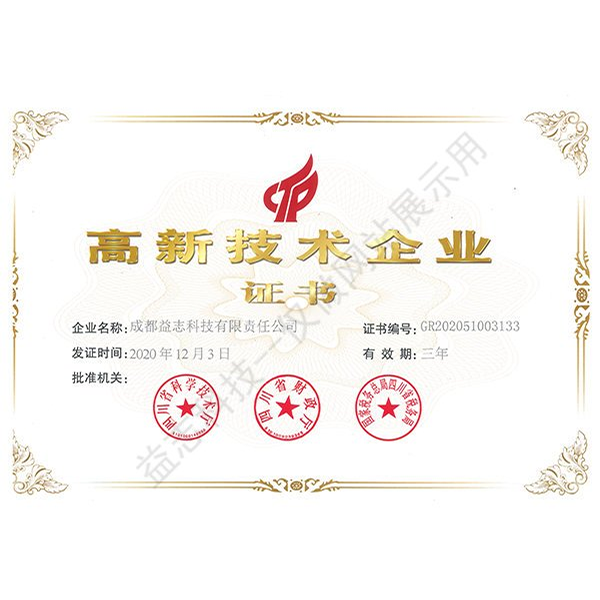
The turning point, in my opinion, began somewhere after 2015. Large players, especially those that worked in the domestic market with its strict environmental regulations, began to invest in R&D. This is not about copying, but about our own developments. Specialized institutes and engineering companies appeared, which became a link between fundamental science and the plant. Here, for example,Chengdu Yizhi Technology Co.is just such a design institute created by a chemical holding. Their websiteyzkjhx.ru- this is not just a business card, it shows a deep study of technological schemes specifically for specific sorbents. They don't just sell bags of powder, they design the process around it. This is a different level of thinking.
Now the Chinese have learned to make very worthy specific products. The same titanosilicates for selective removal of ammonia or mercaptans, modified aluminosilicates for fine purification of hydrocarbon streams. I won’t say that they are better or cheaper everywhere, but it has appearedcompetitive alternative. Their strength lies in their speed of adaptation. We saw a niche in the renewable energy market (hydrogen, biogas) - and within a year or two they were already offering a line of solutions. They may not always be perfect the first time, but they quickly iterate.
Market: between the internal giant and external expansion
The Chinese domestic market is a monster that eats everything itself. Purification of flue gases from thermal power plants, coke chemistry, oil refining, fertilizer production - the volumes of consumption of adsorbents are colossal. This moved the quality up: local requirements became stricter, and customers became more discerning. Therefore, a Chinese manufacturer that has survived and grown in the domestic market is already a serious fighter with streamlined logistics, quality control and, importantly, its own sources of raw materials (the same deposits of kaolinite for zeolites).
But with exports everything becomes more interesting. Previously, they followed the path of dumping, which spoiled their reputation. Now the strategy is smarter. They do not go “to all fields”, but through project engineering and partnerships. Like the sameChengdu Yizhi Technology(Chengdu Yizhi Technology). They position themselves not as a seller, but as a technology partner who can provide a full package: from laboratory testing and sorbent selection to plant design and commissioning. For the CIS, Middle East, and Southeast Asian markets, this approach is often preferable to simply purchasing “material?” from a famous Western brand, where you then need to look for engineering separately.
There are also pain points. The main thing is trust. Overcoming the stereotype of ?Chinese = short-lived? difficult. It works only through pilot projects and the provision of real data from industrial installations. The second is logistics and customs clearance of consignments. A bag with high-performance zeolite is an expensive product and difficult to transport. If you load it in bulk like crushed stone, you can get defective. They are also learning to work with this, offering special packaging and insuring deliveries.
Technological niches and failures
Where are Chinese sorbents really strong? The first is areas where large volumes and relatively standard but optimized solutions are required. Gas purification from SOx, NOx, drying of air and process gases, pre-treatment in the oil and gas industry. Here they have squeezed the price to a minimum with very decent quality. The second is niche products for new energy. For example, adsorbents for hydrogen storage systems or biomethane purification. Here they are trying to catch up and overtake, the investments are huge.
Where is it still weak? In ultra-high degrees of purification for microelectronics or pharmaceuticals. Japanese and American companies are still ruling the roost there. And in the production of some exotic, but critically important sorbents, such as the same metal-organic framework structures (MOFs) for particularly fine separation. Although laboratory samples already exist, stable industrial production is a long way off.
I had personal experience with failure. We ordered a batch of carbon molecular sieves for ethylene separation. According to the passport, everything is perfect, the laboratory tests from the supplier are excellent. They launched it - selectivity floats, and after three months the activity dropped by half. It turned out that the raw materials (coal base) differed in batches, and the activation technology did not provide the required uniformity of pores. The supplier, however, did not refuse; they sorted it out together, returned part of the funds, and sent an improved batch. But time and money to restart were lost. This is a typical “growing pain”: the race for volume at the expense of the stability of parameters from batch to batch.
What's inside the bag: about quality control and raw materials
This is perhaps the most important section for the practitioner. You can buy a sorbent at an attractive price, but if you don’t understand what’s inside, you can ruin the entire installation. Chinese manufacturers are now actively implementing control systems, but the approach is different. They often focus on final performance characteristics (static capacity, abrasion resistance), rather than on in-depth physical and chemical analysis of the structure. This is both good and bad. It’s good because they test in conditions close to real ones. It's bad because sometimes they can't explain why one batch is better than another.
Raw materials are a different story. Own deposits are a huge cost advantage. But the quality of the same kaolin or bauxite can vary greatly from region to region. Good manufacturers now have long-term contracts with specific quarries and conduct incoming control of raw materials. The bad ones take whatever is cheaper, hence the variation in the quality of the finished product.
Hence the advice, gained through practice: never buy “adsorbent at all?”. Clearly formulate the task: composition of the initial mixture, pressure, temperature, required purity, permissible pressure loss, regeneration mode. And ask for a trial batch to be tested under your conditions, on your pilot installation. Serious suppliers, such as design institutes, only welcome this. This is their chance to refine the product and gain a loyal customer.
Looking forward: not the price, but the cost of the cycle
Now the main trend in the market is not even a reduction in price per ton, but a reduction in the total cost of ownership. Chinese players have caught on to this. Increasingly, commercial offers do not include the price of a bag, but calculated indicators: sorbent service life, savings on energy costs during regeneration, reduction in operating costs. This shows maturity.
The future, I think, lies in hybrid solutions. Not just the supply of adsorbent, but the supply of a “process in a box?” — optimized sorbent + ready-made technological scheme + control algorithms. This is where the potential of integrators such asChengdu Yizhi Technology Co., Ltd.Their strength is that they are a design institute with a registered capital of 120 million yuan, established by a chemical company. They see the chain from the synthesis of the material to its operation in the column. This allows them to fine-tune the product.
So, answering the question from the title: yes, Chinese adsorbents have long been not only a market, but also a full-fledged, rapidly developing technology. With its leaders and outsiders, with breakthroughs and mistakes. You need to work with them with open eyes, with mandatory testing and strict technical specifications. But ignoring this segment means possibly missing out on interesting, cost-effective solutions for many standard and some complex problems. The main thing is to find not just a factory, but a technology partner who is interested in the result, and not in selling the next batch of “yellow powder”. As practice shows, there are already such partners in China.