Chinese butterfly valves: innovations and trends?
2026-01-23
When you hear “Chinese butterfly valves,” the first thought for many is still “cheap and cheerful,” but somehow they don’t think about innovation. But this has been an outdated view for five years now. Having worked with the supply and implementation of fittings for complex projects, I have seen how the approach has changed. Now the question is not whether they copied it or not, but how deeply they develop solutions for specific tasks, including ours. And this is where the fun begins.
From price to value: how the focus has shifted
Previously, the main argument was, of course, the price tag. You could take a standard cast iron valve with an epoxy coating, set it and forget it. Did it work? More often yes than no. But there were plenty of problems: either the seal would fail in cold water after a couple of seasons, or the shaft would begin to jam in a sticky environment. We then experimented a lot with different factories, looking for a balance.
Now the conversation begins with conditions. Not “how much does a 300 mm disk cost?”, but “what is the environment, temperature, cycling, requirements for tightness?” Chinese manufacturers, especially those exporting to serious markets, have learned to listen to this. I saw specifications where details were written down that would not have been mentioned ten years ago - for example, precise control of the surface roughness of the seat for working with abrasives or the material of the shaft seal for a specific chemical composition.
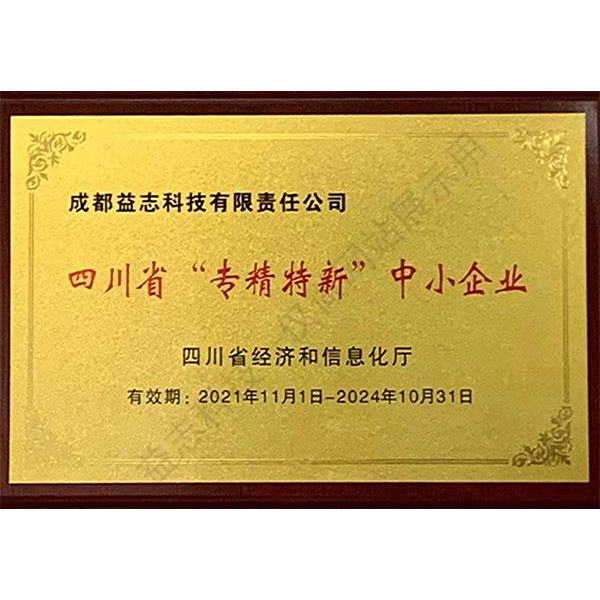
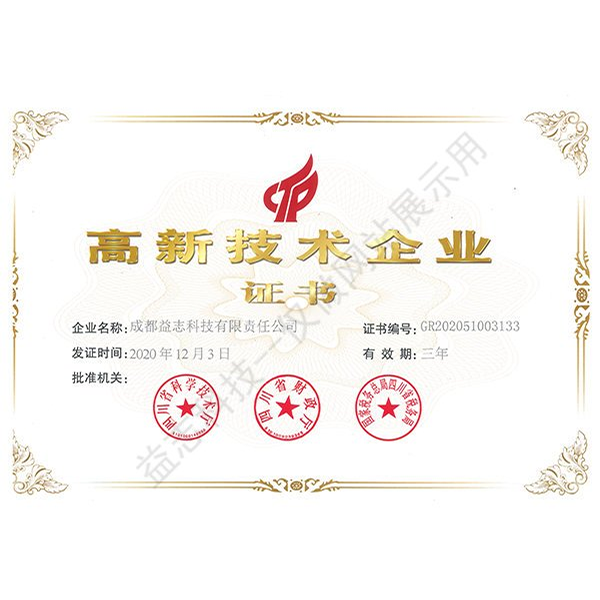
A striking example is the design instituteChengdu Yizhi Technology Co.(their website isyzkjhx.ru). They are initially designed for complex solutions. When they come to them with the task of not just buying valves, but optimizing the components in the system, they can offer customization of the drive, disk material (say, stainless steel with nickel plating), and type of seal. This is no longer hardware trading, but engineering. And their registered capital of 120 million yuan is not just a number, but an indicator of serious investment in development and testing.
Materials and “filling”: where is the real progress
When it comes to innovation, it is often hidden within. The most noticeable trend is the move away from mass-produced cast iron to specialized alloys and composites. For cases they are increasingly usingstainless steelgrade CF8M (analogue 316) or even duplex steels for aggressive environments. But the main thing is the seats and seals.
Previously the standard was EPDM or NBR. Now, especially for the petrochemical industry or heating networks, they offer PTFE (Teflon) with different fillers, metal seats with surfacing, or combined options - elastomer with a Teflon insert. This dramatically expands the temperature range and chemical resistance. I remember a project for a boiler room, where it was necessary to work with hot water with impurities. Standard EPDM rings degraded within six months. We decided to try valves with seats made of graphite-reinforced PTFE - the result was much better.
Another point is the shaft seal system. Double seals, stuffing box chambers for filling with grease - this is no longer exotic. I have seen models where the shaft in the contact area with the seal has a special chrome coating to reduce friction and wear. Trifle? No, this is exactly what determines the resource for 100,000 cycles versus 30,000.
Drives and control: silent integration into process control systems
The shutter itself is half the battle. His ?intelligence? and handling is where the main race is now. Previously, electric or pneumatic drives were often installed from third parties, European ones. Now Chinese manufacturers are developing their product lines, and they are becoming quite competitive.
The key trend is built-in diagnostic tools and compatibility with industrial networks (Profibus, Modbus). Not just “open-close”, but the ability to remotely read data about the position of the disk, the moment of operation, and the temperature of the drive. This is critical for predictive maintenance. At one of the alkali pumping facilities we just introduced such “smart” ones. valves with drives that could transmit a signal of increasing torque - the first sign of jamming or deposits on the disk.
But there are also pitfalls. Sometimes ?sophisticated? The drive turns out to be unnecessarily complex for simple tasks, and its on-site repairability is low. You have to weigh whether all these options are really needed for a valve on the bypass line, or whether a reliable gearbox with limit switches is enough. Experience shows that excessive versatility sometimes harms reliability.
Standards and control: trust is born in the details
A huge step forward is voluntary certification according to international standards. API 609, ISO 5211, EN 593 are now common practice for factories that want to work with Europe and the CIS. But it is important to look not at the piece of paper, but at how control is organized in production.
I had an illustrative case. We ordered a batch of valves for food production. Everything about the certificates was perfect. But during a random ultrasound check, micro-cavities were found in the casting of the body in the area where the seat was attached. Having found out, the plant did not argue, but carried out a 100% inspection of the entire batch and replaced all suspicious cases. This is the shift - responsibility for quality. Now many have their own laboratories for leak testing, service life tests, and metal analysis.
Institutes like the one mentionedChengdu YizhiHere they play the role of not just a seller, but a technical partner. They can provide a full package of documents, including factory test reports (FAT), and, importantly, adapt the product to the requirements of local regulations, for example, for seismic resistance or climatic performance.
What's the result? Trend for flexibility and dialogue
So where is everything going? The main trend is the rejection of the universal “turnkey” solution. in favor of a modular, flexible approach. The manufacturer is ready to assemble the valve like a designer: a body made of this material, a disk made of that material, a seat of the third type, a drive with specific options. This requires the customer and engineer to have a deep understanding of their processes, but the result is different.
The future, in my opinion, lies in further integration with monitoring systems and materials with shape memory or self-regenerating coatings (they are already working on this in laboratories). But the basis of everything is dialogue. When you can call a technologist at a plant in China and discuss the viscosity of the medium for which the seal is being selected, this is worth a lot.
Therefore, to the question “innovation and trends?” I answer: yes, they exist, and they are applied. This is not for show, but to solve real problems on pipelines. And Chinese manufacturers, who have gone through the school of fierce competition and working on mistakes, are now at a very interesting point, offering not just a product, but a technically sound solution. The main thing is to know who to talk to and what to talk about.