Chinese butterfly valves: innovation?
2026-01-27
When you hear “Chinese butterfly valves?”, the first thought for many is cheap and cheerful. But is this true now? It's time to figure out where this is a real technological leap, and where it's just marketing. I have been working with fittings for ten years, and during this time Chinese manufacturers have gone from copying to completely independent solutions. But the word ?innovation? This needs to be used with caution.
From copies to our own developments: evolution under pressure
Previously, about ten years ago, the situation was simple. Let's say, a model from a well-known European brand is taken, the dimensions are taken, and it is put into production using local materials. The result is predictable: problems with tightness, seal life, rod corrosion. This was especially truebutterfly valvesfor aggressive environments. I remember at one of the first deliveries for a supposed “chemical plant?” An accident almost happened near Minsk - the flange seals began to “sweat”. after a month of working on weak acids.
But it was precisely such failures that became the driver of change. Major players who wanted to enter the international market realized that without their own engineering solutions they would get nowhere. They began investing in test benches, inviting specialists, and working on metallurgy and composite materials. It is no longer uncommon to find a Chinese valve with a unique eccentricity design or a patented “elastic sleeve + PTFE” sealing system. This is no longer a copy, but an adaptation to specific, often more stringent, budgetary requirements.
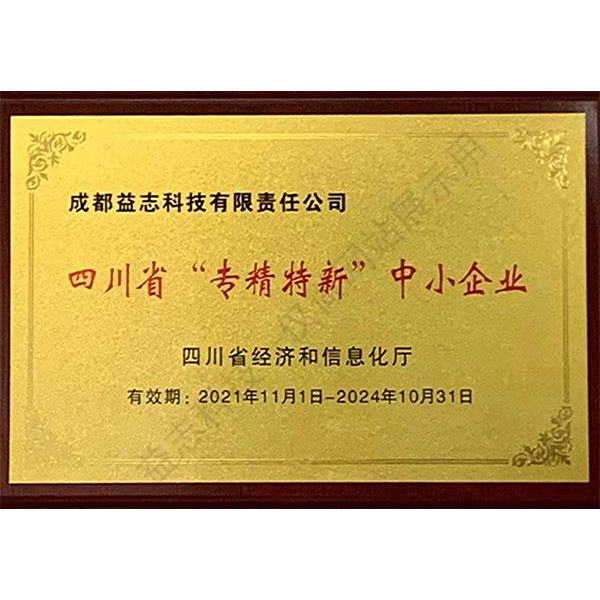
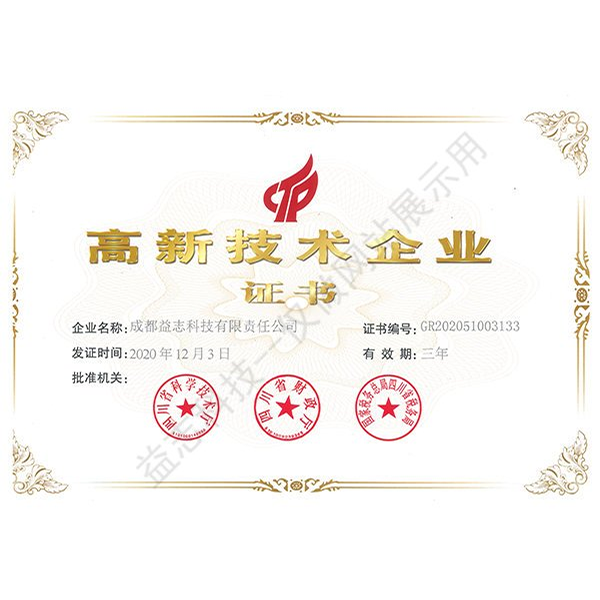
Take Chengdu Yizhi Technology Co. for example. - they can be found athttps://www.yzkjhx.ru. This is not just a plant, but a design institute created on the basis of a chemical technology company. This background is critically important. When did the valve manufacturer initially ?grow? from real chemical projects like Huaxi Technology, he has an understanding of processes in his DNA. He knows exactly what pressure surges occur in the reactor or what impurities in the environment “eat up”? standard seals. Therefore theybutterfly valvesoften have peculiarities in the selection of friction pairs “disc-seat?” specifically for specific chemicals. production This is that very practical innovation, born from experience, and not from a competitor’s catalog.
Materials and hardware: where is the real progress?
If we talk about real breakthroughs, they are in materials. Previously, the main problem was the quality of casting of bodies (hidden cavities, uneven structure) and the rolling of rods. Now many serious factories have switched to investment casting for critical series, which has sharply reduced defects. But the main thing is coatings and composites.
For example, spraying titanium nitride or chromium carbide onto a disc for working with abrasive suspensions. Yes, the technology is not new in the world, but Chinese manufacturers have learned to do it with acceptable quality and at a fraction of the cost. I have seen examples where the service life of a disk with such a coating in cement pulp increased by 3-4 times compared to conventional 304 stainless steel. This saves tons of money on downtime and repairs.
Another growth point is polymers. EPDM or Viton seat seals are standard. But now modified PTFE (for example, with carbon filling for better thermal conductivity and wear resistance) and PEEK for high temperature applications are being actively introduced. Key point: They don't just buy pellets from Chemours, they work on the formulations and injection molding technologies themselves. The same Chengdu Yizhi Technology Co., Ltd. The description shows that the registered capital of 120 million yuan allows us to have such research departments. This is not a guarantee of success, but a sign of serious intentions.
Electronics and "smart" features: justifiable complexity?
The trend of recent years is the installation of position sensors and IoT modules for remote monitoring. Looks innovative. But here, as a practitioner, I have many questions. Often it's just "screwed on" a third-party box that is poorly integrated with the mechanics of the shutter itself. The main problem is the reliability of these systems in conditions of vibration, high humidity or chemical vapors.
There was a case at a thermal power plant: they installed a batch of “smart” ones. valves with end-of-stroke sensors. After six months, half of the sensors failed due to condensation and temperature changes. The mechanics worked properly, but the control system was “blind”. It turns out that they paid more, but got a headache. Innovation? More like a marketing ploy.
The development of the “inner mind” seems to me much more valuable. - for example, improving the design for precise positioning of the disk or a fail-safe system (emergency closing/opening) with an independent energy accumulator. This is what Chinese engineers are really working on, because it directly affects the safety and price of the contract. They just shout about it less in advertising.
Fly in the ointment: problems of quality control and logistics
Despite all the successes, the main risk when working with Chinese suppliers remains the same - instability of quality from batch to batch. You can receive an excellent test batch made under the personal supervision of a project manager, but in a large series you may suddenly encounter valves with loose bolts on the drive platform or with questionable lubrication in the gearbox.
This is a matter of production discipline. Many factories have ISO certificates, but a culture of total control, like the Germans or Japanese, has not yet been formed. Therefore, selective incoming inspection at your site remains a prerequisite. You cannot blindly trust passports.
Another nuance is logistics and customs. Delivery times may fluctuate, and documentation (including materials) is sometimes not prepared as carefully as we would like. This creates risks for projects with tight schedules. Working, for example, through a representative office like yzkjhx.ru, you get at least one degree of control and support in Russian, which is important.
Results: is it innovation or not?
To sum it up, I’ll say this: talk about fundamental breakthroughs that change the paradigm in the segmentbutterfly valvesIt's too early from China. But talking about the rapid and pragmatic adaptation of global technologies, their reduction in cost and adaptation to specific, often more complex, conditions is already a reality.
Their strength lies in their flexibility and speed of response to market requests. Need a heated jacket seal for high viscosity oil? They will do it in three months, having carried out the necessary tests. Do you need a special lining coating? They will choose an option. This is innovation in the process, in the approach to solving the client’s problem, and not in creating something fundamentally new from scratch.
Therefore, when choosing Chinese fittings today, you need to ask the right questions. Not “is this innovative?”, but “what specific problems does this solve for my production line?”, “what is the service life of the friction unit in my environment?”, “how do you ensure quality stability?”. And then, with the right choice of a partner, such as design institutes-manufacturers, you can get an excellent price-functionality ratio. Without illusions, but also without prejudices.