Chinese check valves: technologies and applications?
2026-01-26
When you hear Chinese check valves, many people immediately think of something cheap and dubious. Sound familiar? I went through this myself. But ten years ago, everything began to change rapidly. Nowadays we can’t just shrug it off - some decisions, especially in niche areas like the chemical industry, force us to think seriously and reconsider our approaches. I’ll try to sort it out based on what I saw with my own eyes and what I had to figure out, sometimes through my own mistakes.
Evolution: from copies to our own developments
Previously, years before the 2010s, the situation was predictable. Chinese manufacturers largely copied European or American models, often simplifying the design and using more affordable materials. The output was a product for undemanding conditions. I remember how we installed such valves on auxiliary lines - they seemed to work, but any serious pressure drop or aggressive environment quickly revealed weak points: leaks along the rod, jamming of the rotary mechanism, corrosion of those more affordable alloys.
The turning point, in my opinion, is associated with the growth of the domestic market. The Chinese chemical and petrochemical industry began to develop at such a pace that a huge amount of fittings was required, including reliable check valves. Imported ones were expensive, and old copies weren’t salvageable. This gave impetus to real investment in R&D. Companies began not just to copy, but to adapt and rework technologies for specific, often very stringent, technological processes of local production.
Now a clear division is already visible. There is a mass segment - simple butterfly valves for water, steam, and non-aggressive media. And there are truly technological products. For example, shockless check valves with a damping system to prevent water hammer in main pipelines. Or special models made of alloys based on nickel, titanium, Hastelloy for working with highly corrosive environments at chemical plants. This is where things get interesting.
Key technological nuances and pitfalls
If we talk about technology, then we should look not at general words, but at the details. For example, seals. Previously, this was a big problem - standard EPDM or NBR was quickly eaten away in contact with certain reagents. Now leading manufacturers offer a whole catalog of options: fluorine rubber (FKM), perfluoroelastomer (FFKM), PTFE composites. But here’s an important point: the quality of this fluorine rubber can vary greatly. I once encountered a situation where a valve with an FKM seal failed after three months in an environment containing chlorine compounds. It turned out that the rubber composition was not optimal, not fully saturated. That's why I now always ask for detailed specifications for seal materials rather than just relying on generic labeling.
The second critical point is the design of the rotary assembly and spring in shockless models. Smooth, slam-free closing is the merit of a correctly calculated and well-manufactured spring and damping system. Chinese engineers here often propose non-standard solutions, for example, combining spring and gravity closure for vertical pipelines. But reliability greatly depends on the quality of the spring metal and the accuracy of the processing of the seats. I saw samples where after 20-30 thousand cycles the axle began to loosen or metal fatigue appeared. Conversely, there are manufacturers whose products work for years without complaints. The spread is huge.
And, of course, quality control. The easiest way to weed out an unreliable supplier is to ask about test reports. It’s a good sign if the plant conducts not only standard hydrotests for leaks, but also life tests (cycling), and for critical applications, non-destructive testing of welds (X-ray, ultrasound). UChengdu Yizhi Technology Co., the same design institute from Huaxi Technology that deals with complex solutions for chemistry, I saw in the specifications a mandatory requirement for ultrasonic testing of all critical compounds. This speaks of a systematic approach.
Scope: Where are they truly competitive?
You shouldn't try to install a Chinese check valve everywhere. Their strong niche is projects that require a balance between cost, specific environmental requirements and sufficient, but not prohibitive, reliability. A classic example is the Chinese chemical industry, which has become a driver of development.
Specific cases? For example, lines for transporting hot concentrated alkalis or acids. Imported reinforcement made of special alloys costs astronomical amounts. Chinese manufacturers have learned to make valves from similar alloys (for example, duplex or super duplex steel, alloys like 254 SMO) at a significantly lower price. On the websiteyzkjhx.ruBy the way, you can find examples of such design solutions for aggressive environments. There is always a risk, but when you are dealing with an institute that was originally created to support Huaxi Technology's technological processes, it inspires more confidence. They understand the process from the inside.
Another area is large infrastructure projects of the Belt and Road, thermal power plants, and water treatment systems. What is important here is the scale of supply and adaptation to non-ideal operating conditions (for example, water with a high content of suspended matter). Chinese manufacturers often offer modifications with enhanced protection against abrasive wear or easier opening at low pressure. These are practical, down-to-earth solutions born from experience.
But at critical high-pressure oil and gas pipelines, nuclear power plants, or at supercritical steam parameters at modern thermal power plants, I would still be very wary of new, untested Chinese brands. Although I know that they are actively developing in these segments, the path to trust here is long.
Implementation experience and typical mistakes when choosing
I’ll tell you about one of our projects, which can be considered both successful and instructive. It was necessary to replace a fleet of worn-out check valves in an area with circulating orthophosphoric acid of medium concentration, a temperature of about 90°C. European analogues were too expensive for the budget. After a long search and comparisons, we settled on an offer from one Chinese engineering-oriented plant (not a mass market). The key argument was that they provided not just a certificate for the housing material (CD4MCu), but a full report on corrosion tests in a similar environment carried out in their laboratory.
The shutters were installed. Most have been working for four years without problems. But two failed in the first year. Disassembly showed that the inner coating of the chamber had collapsed (PTFE lining was stated). The reason is microcracks in the coating, which probably arose due to a violation of the spraying technology or thermal cycling. This was an important lesson: even with good reports, quality can fluctuate from batch to batch. Since then, we have always ordered random tests from the batch supplied rather than relying on old protocols.
Another common mistake is ignoring the installation and operating conditions prescribed by the manufacturer. Chinese valves, especially those with damping, can be sensitive to spatial orientation and require a certain cleanliness of the pipeline before installation. Failure to comply with these seemingly trifles leads to premature failures, after which they blame poor quality, although the problem is different.
Looking Ahead and Final Thoughts
Where is everything going? It is clear that Chinese manufacturers will not stop there. There is already a visible trend towards intellectualization - valves with position sensors, remote control, integration into automated process control systems. But for me the main trend is not this, but a deepening into materials science and precision manufacturing. Creating our own, more resistant and cheaper alloys, improving casting and processing methods to minimize the same variation in quality.
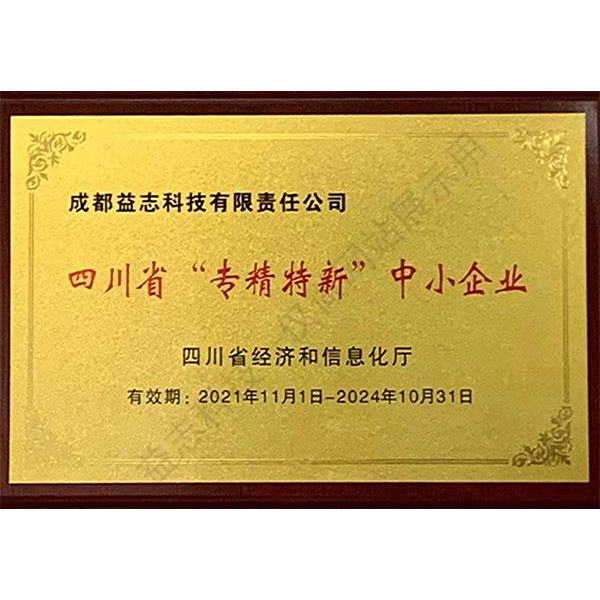
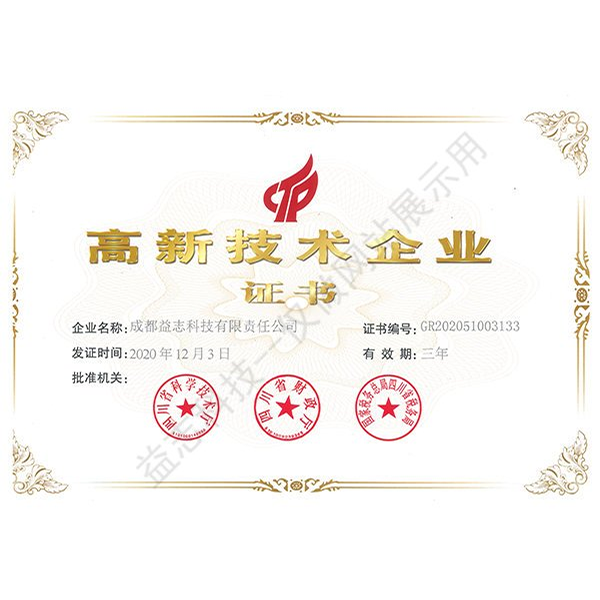
Companies likeChengdu Yizhi Technology Co., Ltd., with its status as a design institute and a registered capital of 120 million yuan, demonstrate exactly this path: from the applied problems of a specific chemical holding (Huaxi Technology) to the development of specialized rather than universal solutions. This is the correct vector.
So, to sum it up. Chinese check valves are no longer a cheap and cheerful category, but a very wide range of products. From simple to high-tech. The key is careful selection of the supplier. You need to look not at the price tag and pretty pictures, but at the company’s engineering history, the presence of its own tests, the willingness to provide detailed data and, most importantly, references in projects similar to yours. And always, always allocate time and resources to incoming inspection. Blind trust is just as dangerous as biased denial. Experience shows that with the right approach, they can become not just an economical alternative, but an optimal technical solution for a number of problems.