Chinese butterfly valve exporters: technology?
2026-01-28
When you hear Chinese butterfly valves, many people immediately think about the price. And about technology, they will grin. Sound familiar? I have been working with the supply of fittings for ten years, and this stereotype is our daily reality. But the reality is already different. The question is not whether there are technologies, but what exactly they are and where they are hidden behind the fact that they were made in China. This is not about space innovations, but about specific, sometimes non-obvious, engineering solutions that allow the same valve to work for ten years at a chemical plant, and not just comply with a paper certificate.
From drawing to packaging: where technology hides
Let's start with something simple - materials. Previously, the main battle was over the chemical composition of cast iron and stainless steel. Now this is the base. The story with coatings is much more interesting. Not just epoxy, but the exact layer thickness, application method, surface preparation. I saw samples where the inner coating peeled off like scales after the first hydrotest. Cause? Not the application technology, but the banal substandard preparation of the surface before painting. That's the whole technology for you - control of every stage, and not just the final product.
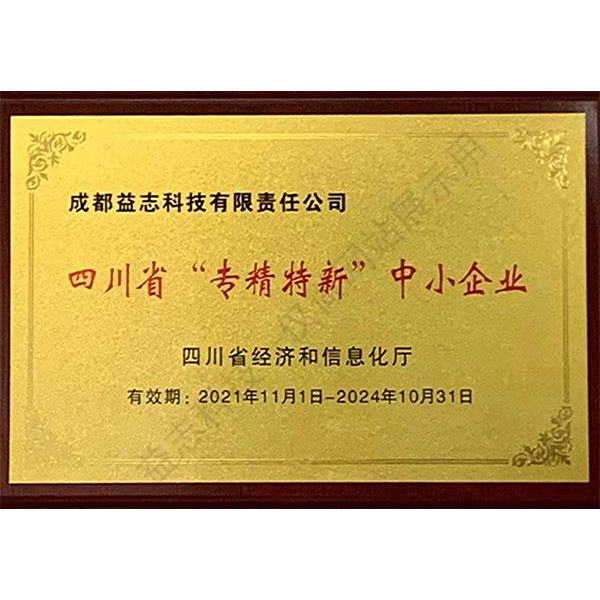
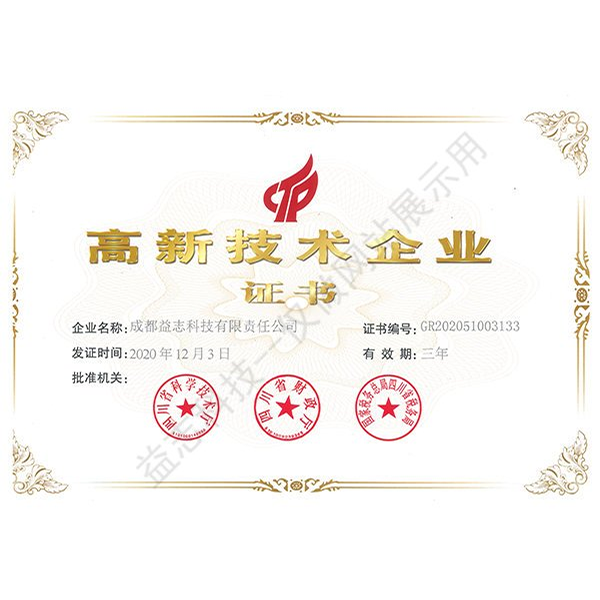
Here, by the way, it is often not giants who shoot out, but narrow design institutes or engineering companies that have grown out of real production. They think not in batches, but in projects. Take, for example,Chengdu Yizhi Technology Co.. This is not just a plant, it is a design institute created by the chemical company Huaxi Technology. Their websiteyzkjhx.ruis not a catalog, but rather a portfolio of solutions. When the registered capital is 120 million yuan and there is a parent company with deep knowledge of chemical processes behind it, the approach to the same butterfly valve changes. They can design it for a specific environment, taking into account not only pressure and temperature, but also dynamic loads, vibration, and cyclical operation.
Another point is assembly and testing. An automated line is great for stability. But technology is often in the details. How the drive is calibrated, how the seals are selected and lubricated, on what machine and at what feed the seat is processed. I remember a story with a batch of shutters for one object in Siberia. On paper, everything is perfect: leak tests, certificates. And on site at -45°C problems with compaction began. It turned out that the material of the cuff was generally correct (EPDM), but its hardness and elasticity were not adjusted to the extreme cold. A manufacturer who simply sells fittings will not take this into account. And the one who works likedesign institute, will put this into the specification at the discussion stage.
Drives and control: weak link or growth point?
Often the biggest gap, oddly enough, was in components, especially in drives. A Chinese shutter with an Italian or German drive was a classic of the genre ten years ago. Now the situation is changing, but not everywhere. A high-quality Chinese electric drive is no longer a rarity, but trust in it has been developing over the years. Pneumatics and hydraulics are more complicated.
Here again the approach is important. Large exporters who position themselves as technology companies often have their own drive test facilities rather than simply purchasing them from a sub-supplier. They test open-close cycles tens of thousands of times, operation in different climatic chambers. This is the very technology that is not visible in the product photo. When purchasing a valve from such a supplier, you are essentially buying a ready-made assembly - a valve with an already selected and tested assembled actuator. This reduces risks on site.
Nowadays, remote control and monitoring options are increasingly being requested. And here Chinese manufacturers are sometimes even ahead - they quickly integrate inexpensive but working IoT modules, position sensors, and telemetry systems. This is not always super reliable, but the demand for such smart solutions is growing, and they are actively filling this niche.
Failures that teach: the story of one tender
I’ll tell you about an incident that put a lot of things in place. We took part in a tender for the supply of a large batch of valves for water treatment to Europe. Our supplier (I won’t name him) was confident in himself - a modern plant, beautiful presentations. We focused on price and standard certificates. Lost. The competitor whose offer was 15% more expensive won.
Upon detailed analysis, it turned out that the key section of the technical proposal was where it was necessary to describe the quality control methodology at each stage, including statistics of defects by batch for the year, and provide a report on the wear resistance of the seat according to a specific method (not according to GOST, but according to their internal standard). We had common phrases. The winner has specific numbers, graphs, test reports from his own laboratory. Their website, by the way, was also not full of pictures, but contained a white paper on the materials. It wasChengdu Yizhi Technologyor someone similar is not the point. The point is that technology in modern export is not about the shutter device, it is the same everywhere. This is about the depth of documentation, about traceability, about the ability to answer a tricky engineering question, and not just send a commercial proposal.
After that, we started working with factories differently. Now the first question: Show me your abrasion test reports for suspended media. And from the answer a lot is immediately clear.
Logistics and post-sales: part of the technological chain
Technology is also about how the product reaches the customer. You can make the perfect valve, then load it into a container without proper fixation, and you'll end up with a bent stem when you receive it. It would seem like a small thing. But serious exporters are developing packaging standards for different types of transport and using 3D printing to produce individual fasteners for large fittings. This is also engineering work.
Even more important is post-sales support. The presence of not just a sales manager, but a technical specialist who speaks the same language as the customer’s engineers. Which can quickly sort out the complaint not based on the principle of “you installed it incorrectly”, but by finding the root of the problem in the production batch or giving recommendations for installation. Websiteyzkjhx.ruthe same Yizhi Technology is a good example: the structure suggests that they are ready to conduct a dialogue on projects, and not just on the catalogue.
The supply of spare parts is a different story. The ability to quickly manufacture and ship not a standard set of seals, but, say, a specific seat made of a special alloy for a specific size is aerobatics. This means that a digital model and technological map for each shipped product are saved in production. This is true technology.
So what's the bottom line?
So do Chinese butterfly valve exporters have the technology? Answer: yes, but they are not concentrated where they are looked for in the first place. These are not necessarily breakthrough patents. More often it is a technology of stable, traceable, reproducible quality. This is a technology of a design approach, when not only the size, but also materials, coatings, and type of control are adapted to the customer’s task.
This is a technology for documenting and proving its characteristics. And finally, it is the technology of building processes - from design and procurement of raw materials to packaging and technical support. Companies likeChengdu Yizhi Technology Co., which grew out of deep industry specifics (in their case, chemical technology), demonstrate precisely this path.
So now, when choosing a supplier, I look less at shiny catalogs and more at the depth of engineering. I ask uncomfortable questions about tests, about control in operations, about real cases in similar environments. And I see how someone begins to feverishly leaf through the catalog, and someone opens a folder with test reports. It is between these two reactions that the whole difference lies.