Chinese adsorbent: technology and market?
2026-01-03
When they talk about Chinese adsorbents, many people immediately have a picture in their head: huge factories, conveyors, tons of a homogeneous product at a minimal price. And there is some truth in this, but only some. Much more interesting is what is hidden behind this stamp - a real technological race, attempts to catch up and overtake, and a lot of nuances that are not written about in glossy brochures. I would even say that the market is now at a stage where cheapness is no longer the only trump card, and this changes everything.
From ?made in China? to “designed in China”: an evolution of the approach
Previously, about ten years ago, everything was quite straightforward. The request from the client sounded something like this: “need silica gel or zeolite, similar to such and such, but cheaper?” And Chinese manufacturers, especially large chemical holdings, coped with this task very well. The focus was on scale and reproducing proven formulas. The quality could fluctuate from batch to batch, but the price suited everyone.
Now the requests have become more complicated. Requirements have emerged for specific selectivity, for the shape of granules (spherical supports for catalysts are a separate big topic), and for resistance to abrasion in certain cyclic processes. And this is where the interesting divide began. Large plants designed for tonnage are often cumbersome for such customized tasks. Niche players, on the contrary, began to grow like mushrooms.
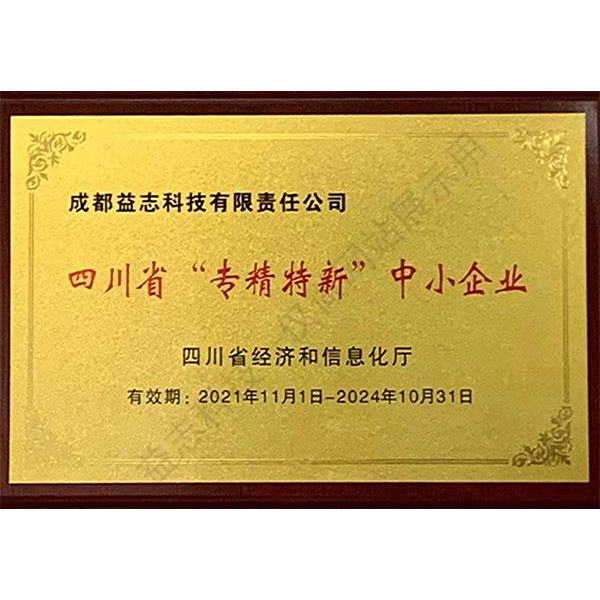
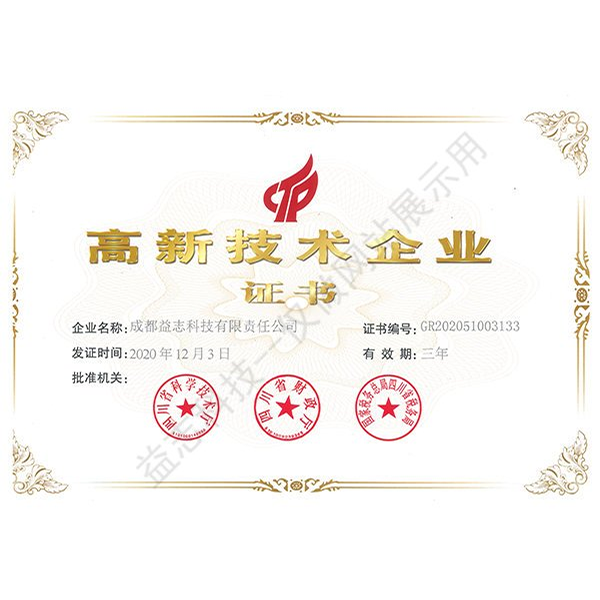
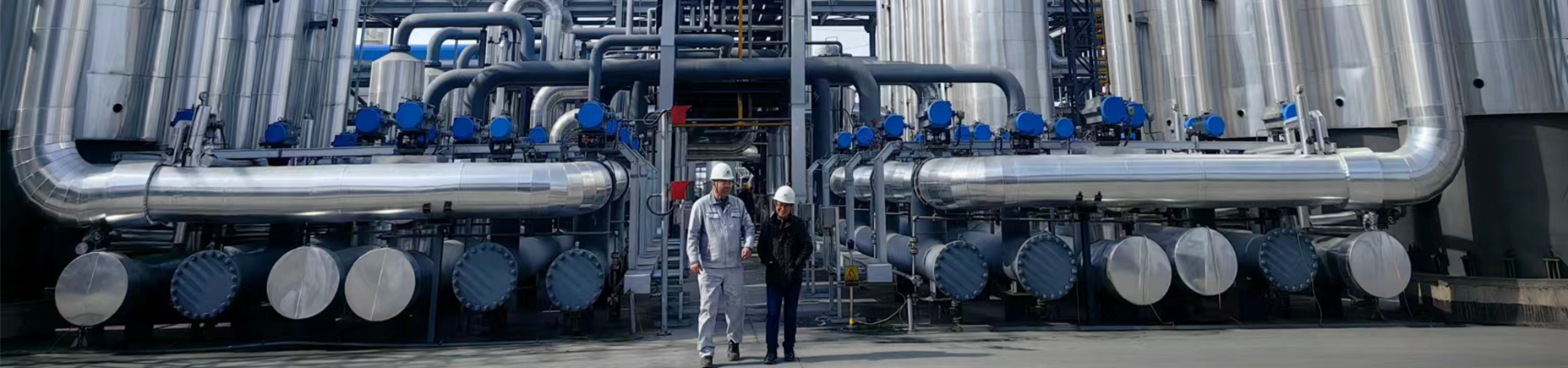
A striking example is design institutes that are spun off from large chemical giants. They operate as agile labs. Take, for example,Chengdu Yizhi Technology Co.is essentially an engineering division created by Huaxi Technology. By the way, they have a websitehttps://www.yzkjhx.ru, aimed at the Russian-speaking market, which already says a lot. They don't just sell bags of powder. They can lead a project from laboratory tests to pilot plants. This is the shift: selling not a product, but a technological solution for a specific client task. The registered capital of 120 million yuan is not about gigantic capacities, but about a serious research and design base.
Technologies: where is the real breakthrough, and where is the marketing?
Looking at the patents and publications, it seems that China is ahead of the rest in modified zeolites and MOFs (metal organic frameworks). The reality, as always, is somewhere in the middle. In the laboratories, yes, colossal work is being done. But the commercialization of MOF is still a fairy tale for most industries. Too expensive.
Where I see real practical progress is in the areamodified activated carbonsandzeolites. Not in creating fundamentally new structures, but in fine, predictable tuning of existing ones. For example, impregnating coal with specific salts to selectively capture hydrogen sulfide in the presence of CO2 - Chinese suppliers have learned to do this very reliably. Or the production of zeolites with precisely defined pore sizes for the separation of xylene isomers. This is no longer just copying, but a deep understanding of the process.
But there are also pitfalls. They often send samples of “innovative adsorbent”, which show miracles in laboratory conditions. And when you put it into a real installation, with changes in temperature, pressure, humidity, the adsorption capacity drops significantly. Once we spent six months on such tests with one “breakthrough” one. material for gas drying. As a result, we returned to a proven, albeit more expensive, product from a European manufacturer. An expensive lesson: with Chinese new products, you need to conduct not standard tests, but tests that are as close as possible to the real conditions of the customer.
CIS market: why have the Chinese become so active?
The answer lies on the surface: sanctions and logistics. Traditional suppliers of adsorbents for the oil, gas and chemical industries of Russia and Belarus are Europe and, to some extent, India. Now the channels have become more complicated. China, with its developed logistics through land and sea routes, found itself in an advantageous position.
But it is important to understand that Chinese companies did not just occupy a vacant niche. They are actively investing in it. Opening Russian-language websites like Yizhi Technology, participating in specialized exhibitions in Moscow and Kazan, and being ready to send engineers for audits is systematic work. They study GOSTs, technical specifications, and try to adapt their products to local standards. This didn't happen before. Previously, there was an impersonal export department that sent a commercial offer by email and that’s it.
Another point is payment flexibility. They are often ready to work under a deferred scheme or through ruble equivalents, which is critically important for many enterprises in the current conditions. This is not a technological advantage, but a purely market advantage, but it works and opens doors.
Practical advice on choosing and working with a supplier
Based on bitter and sweet experience, I will formulate several non-obvious rules.
First, always request not only a certificate of quality (COA), but also test reports using methods that are as close as possible to your processes. If you need air dehumidification at -40°C, let them test under such conditions, and not at +20. A good supplier, such as a design institute, will do this and may even carry out such tests in-house.
Secondly, look not at a giant plant, but at a company that takes on engineering responsibility. Questions like: “What should be the layer height in our device?”, “How often will regeneration be needed given our parameters?”, “Do you offer installation supervision and commissioning?” - an excellent filter. If the answer is silence or a reference to standard tables, this is not your partner.
Thirdly, be sure to request a reference list for your region (CIS). And contact these customers yourself. One call to a colleague at another plant can save millions. Find out not only about the quality of the product, but also how the supplier responded to complaints, how logistics were organized, and whether there was technical support.
And lastly: don’t go after absolute cheapness. The 10-15% price difference is often offset by higher adsorption capacity or durability. A cheap adsorbent may require more frequent replacement, which leads to equipment downtime and ultimately higher costs. Consider the total cost of ownership, not the cost per ton.
Looking to the future: what's next?
I think consolidation and specialization. Small handicraft industries that make adsorbents using artisanal methods will be forced out. Their product cannot stand any competition in terms of stability. There will remain either large integrated factories that will put pressure on standard items in volume and price, or technology companies such asChengdu Yizhi Technology Co., who will survive due to deep expertise, R&D and the ability to solve non-standard problems.
Another trend is ecology. The demand for adsorbents for capturing CO2, for treating wastewater from specific organic pollutants, and for recycling waste will only grow. And here Chinese players are very active, because the Chinese domestic market itself makes enormous environmental demands; this is their training ground.
So, answering the question from the title: yes, Chinese adsorbent is no longer synonymous with “cheap and cheerful”. This is a complex, multi-layered market with players of different levels. Technologies are catching up, and in some ways they are already ahead, especially in applied and engineering solutions. The main thing is to be able to navigate this market and choose not just a seller, but a partner who understands the essence of your problem. And, fortunately, there are more and more of them.