Chinese adsorbent coal: technology and application?
2026-01-04
When you hear Chinese adsorbent carbon, many people immediately think of cheap filter media or, at best, activated carbon for water purification. This is perhaps the most common and completely incorrect stereotype. In fact, over the past ten to fifteen years there has been a quiet revolution there, and now it is a matter of targeted design of sorption materials for specific, sometimes very complex, technological tasks. Not just coal, but an engineering product. I went through this myself when, about seven years ago, I was looking for a solution for capturing organic vapors with a high boiling point at one of our production facilities - standard offers from the West were not suitable either in price or in terms of the required regeneration characteristics. I had to dig deeper, and my gaze involuntarily went to the East.
From black powder to specific porosity
Previously, the main parameter was the specific surface area, and that was all. Now Chinese manufacturers, especially those working in conjunction with serious research institutes, are actively playing on pore distribution. This is no longer just a barrel of coal, but a material where the ratio of micropores, mesopores and macropores is pre-designed. For the capture of volatile organic compounds (VOCs), for example, it is the developed system of mesopores that is critical - they provide both high dynamic capacity and relatively easy desorption. I remember how we tested one of the first batches of such engineered coal fromChinese supplier— the difference in saturation speed compared to the old sample was striking.
But they also work with micropores. For fine purification of gases, say, from traces of hydrogen sulfide or mercaptans, you need coal with a predominance of micropores and specific impregnation. There is often a catch here: the impregnation may be uneven, or the carrier itself (that very coal) is unstable in terms of mechanical strength. In one of the projects, they encountered the fact that after several regeneration cycles, the impregnated adsorbent carbon began to generate a lot of dust, clogging the heat exchanger tubes. It turned out that the problem was in the raw materials for the coal itself and in the activation mode. Chinese colleagues then promptly changed the type of base coal to a stronger one, while adjusting the impregnation - the problem went away.
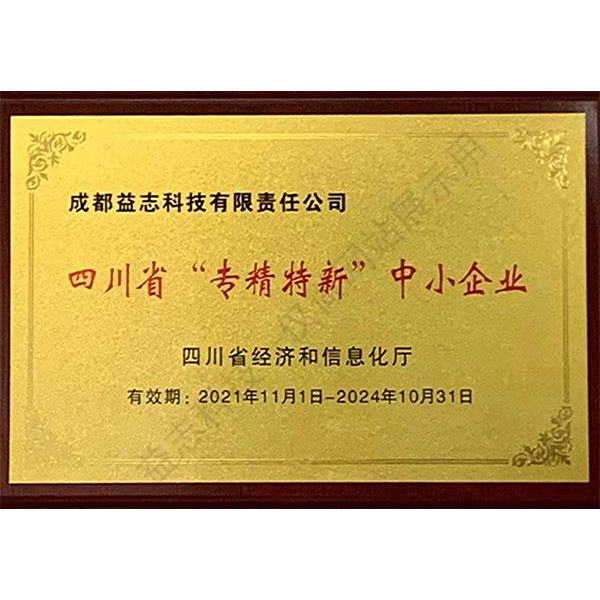
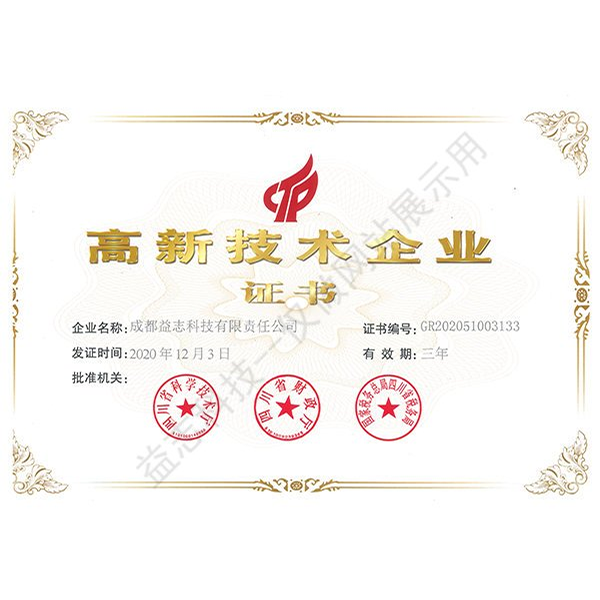
Activation technology is a whole different story. Steam-gas activation, chemical (usually with phosphates or zinc chloride), and now increasingly combined methods. The goal is not just to burn off the excess to get pores, but to create their desired structure in a controlled manner. OnYizhi Technology website (https://www.yzkjhx.ru), by the way, this is clearly visible - they position themselves not just as a seller, but as a design and technology institute, which is logical, given their connection with Huaxi Technology. For complex problems, this approach is a necessity. You can't just buy a bag of coal from a dealer and expect a miracle.
Scope of application: goes far beyond water filters
So where does all this work? The first thing that comes to mind is industrial ecology. Emission treatment, solvent capture and recovery. Here, Chinese materials have long occupied their niche, often offering the best price-function ratio. But there are also more interesting directions.
For example, catalytic support. Adsorbent carbon as a carrier for catalysts in various syntheses. It is important that it is not just an inert brick, but has a certain surface chemistry. Some Chinese manufacturers have learned to modify the surface of carbon by creating active sites on it or improving the adhesion of the catalytic layer. In one of the joint projects on the synthesis of esters, just such a modified carrier was used; it was possible to increase the selectivity of the reaction for the target product by 15% compared to the standard imported analogue.
Another field is the food and pharmaceutical industry, but here the requirements for cleanliness and documentation are sky-high. Not every factory in China can provide full traceability of raw materials and validation of the washing/drying process. Those who can immediately stand out. Their products are used to decolorize solutions and remove impurities at intermediate stages of synthesis. I worked with one such manufacturer - their test protocols for residual solvents and solid waste (heavy metals) were more detailed than those of many European colleagues.
Special applications are worth mentioning: gas masks, life support systems, gas purification in electronics. The requirements for the strength of granules, sorption kinetics and, most importantly, the absence of dust or impurity emissions from the coal itself are prohibitive. China is not yet a world leader here, but progress is noticeable. I saw samples of impregnated carbons for protection against ammonia and methylamines - in terms of dynamic activity they were not inferior to proven brands, although there were still questions regarding durability in cyclic mode.
Practical difficulties and pitfalls
There is no ideal material. What problems do you encounter when working with Chinese coal adsorbents? The first is, no matter how trite, the stability of the parties. One game was excellent, the other - the parameters went wrong. This is especially true for unimpregnated coals made from coconut shells or coal. Large, systemic players likeChengdu Yizhi Technology Co.This problem was overcome a long time ago, their quality control is at a high level. But there are many small suppliers on the market, where every time there is a lottery.
The second is technical support. This is critical. You can send coal that is perfect according to the passport, but if it is incorrectly loaded into the adsorber, or the cycle time or regeneration temperature is incorrectly calculated, the result will be disastrous. Hot steam desorption can be fatal for some types of impregnated coals. A good supplier will not just sell, but will help with process engineering. From my experience, design institutes such as Yizhi, created on the basis of Huaxi Technology with a registered capital of 120 million yuan, focus on this - they do not sell a product, but a technological solution, which is much more valuable.
Third - logistics and packaging. Coal is a hygroscopic material. If it is transported in a container without proper moisture protection, you can get a lump, which then has to be crushed, losing the strength of the granules. High-quality suppliers pack in multi-layer bags with a polyethylene liner and always with a moisture indicator. Trifle? In practice, it is critically important.
Comparison and selection: what to look at besides the price per ton?
Price is, of course, an important factor. But counting only this is the path to big losses. What should be in the material passport, besides the specific surface area? Particle size distribution (fine fraction and content), bulk density, mechanical strength (often indicated as abrasion strength or loss during attrition test), ash content, moisture content. For impregnated coals - the type and concentration of impregnation, its stability when heated.
Be sure to request data on dynamic activity on target components. Not static capacity, but dynamic capacity - how long is it before breakthrough at a given concentration and flow rate. This is a key parameter for adsorber design. The best manufacturers provide such curves and sometimes can even simulate the process.
And of course, reputation. Reviews from other industrial enterprises, period of operation on the market, availability of its own laboratory and pilot industrial base. The fact thatChengdu Yizhi Technologyis a design and technological institute, and not a trading office, says a lot. Such companies are usually ready for deep technical discussions, can modify the product to suit the task and are responsible for the result. This is a different level of trust.
A look into the future: trends and prospects
Where is the industry heading? The first is further specialization. Custom-made adsorbent carbon for a specific molecule or group of molecules. Something like molecularly imprinted polymers, but carbon-based. Work in this direction is underway, and Chinese researchers are very active here.
The second is hybrid materials. Compositions of coal with zeolites, with oxide sorbents, with metal-organic frameworks (MOF). The goal is to combine the advantages of different types of sorbents. For example, the high capacity of coal for organics and the selectivity of zeolite for polar molecules. So far these are more laboratory developments, but commercialization is not far off.
And third, the most practical - smart regeneration. We are talking about systems that, in real time, based on indirect parameters (temperature front, pressure change), determine the degree of saturation of the adsorbent and optimize the desorption cycle, saving energy and extending the life of coal. Chinese adsorber manufacturers are already in full swing implementing such systems, and the demand for coal that can consistently withstand precise rather than rough regeneration cycles will only grow.
So, going back to the beginning,Chinese carbon adsorbent- this is no longer a commodity product. This is a complex, technologically advanced product, the selection and work with which requires an understanding of surface chemistry, the basics of the adsorption process and a clear technical specification. And if you approach the matter without old stereotypes, you can find solutions that will not just save your budget, but will open up new technological opportunities. Tested in practice.