China: ammonia desulfurization - is it effective?
2026-02-07
When you hear about ammonia desulfurization in China, the first thought is how much ammonia is needed, and where should the ammonium sulfate go next? Many, especially those who are just starting to look in this direction, think that this is just a replacement for the lime method. But in practice, everything depends not on the chemistry of the process, but on logistics, the by-product market and, most importantly, on the designer’s ability to take into account thousands of little details that are not written in textbooks. Efficiency - yes, but not always and not everywhere. Let's talk about this, without gloss.
From theory to concrete: where the catch lies
In theory, everything is fine: ammonia binds SO2, ammonium sulfate is obtained, which can be sold as fertilizer. The cleaning efficiency is stated to be 99%. But when you start delving into projects, you realize that the key parameter is not maximum efficiency, but stability of operation when the load and composition of the flue gases changes. At one thermal power plant near Chengdu I saw an installation that showed excellent numbers in passport modes. But as soon as the boiler load began to be changed frequently (and this is real life, not a laboratory), problems began with crystallization in the apparatus and uneven distribution of the aerosol.
And this is where the difference between simple technology and competent design manifests itself. Many local design institutes take standard solutions without adapting them to a specific firebox or specific ash. I remember that at one of the coke production plants they tried to apply a standard scheme from industrial and thermal power engineers - the result was disastrous. The nozzles became clogged, and the gas composition turned out to contain a large amount of resins and phenols, which no one took into account. We had to redo the ammonia preparation system on the fly.
Therefore, when talking about effectiveness, we must immediately ask: effectiveness under what conditions? Under constant load on coal of stable quality? Or in conditions when the boiler is operating in unloading mode, and the coal today is from one mine, tomorrow from another? These are two big differences. In my opinion, the true effectiveness of ammonia desulfurization is manifested where there is the possibility of deep integration into the technological cycle of the enterprise, where heat from reactions can be used, where sales of (NH4)2SO4 are established. Without this, it becomes an expensive headache.
Ammonium sulfate market: fertilizer or waste?
This is perhaps the most painful question. When designing an installation, everyone draws beautiful payback graphs from fertilizer sales. But the reality is that the ammonium sulfate market in China is very capricious and local. If the enterprise is located in the outback, transportation costs can eat up all the profits. The quality of the product is a different story. To obtain commercial granular ammonium sulfate, a complex and energy-intensive stage of crystallization, drying, and granulation is needed. Often desulphurization plants supply it simply in the form of a pulp or wet crystal, which is then difficult to dispose of.
There was experience at one power plant in Sichuan province. They built a state-of-the-art facility, but didn't think through the logistics. As a result, the warehouse was filled with bags of product that could not be removed. We had to stop the process and switch to a waste-generating mode, which, naturally, killed the economics of the project. On the other hand, there are positive examples when an enterprise, for example a chemical plant, uses ammonium sulfate in its next technological process. Then the efficiency of the system as a whole increases sharply.
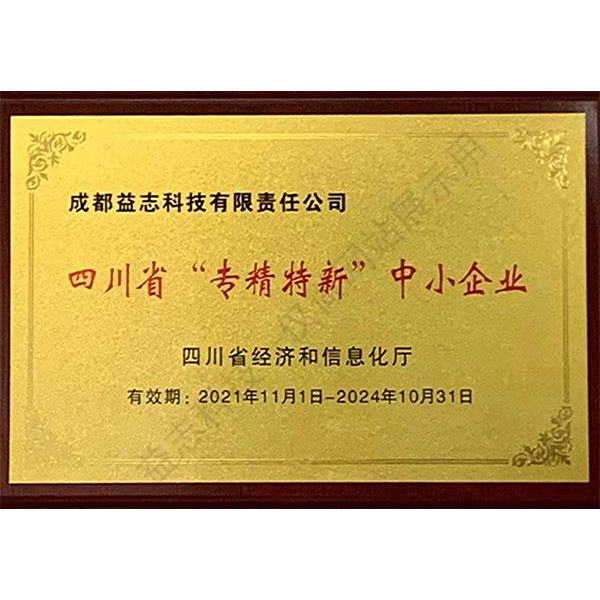
It is worth mentioning hereChengdu Yizhi Technology Co.(their website ishttps://www.yzkjhx.ru). This is not just an equipment seller, but a design institute created on the basis of Huaxi Technology. In their approach, I noticed an emphasis on a systemic solution. They don’t just install a scrubber, but look at the entire chain: from ammonia supply to packaging and logistics of the final product. Their projects, which I have seen in the metallurgical sector, often include modules for processing ammonium sulfate to a marketable state, which immediately removes many problems.Chengdu Yizhi Technology Co., Ltd., as an institute with a registered capital of 120 million yuan, clearly focuses on comprehensive engineering solutions rather than selling hardware. This is an important difference.
Ammonia: safety and logistics issues
Working with ammonia always involves increased safety requirements. And this is not only refrigerated or pressurized storage. These include daily procedures, personnel training, and emergency release systems. On one of the early projects I was on, the engineers saved money on the gas control system in the ammonia pump. As a result, a small leak in the flange connection went undetected for a long time until complaints from staff began. It’s good that there were no consequences, but a residue remained.
Logistics are the second nightmare. If it is not possible to receive ammonia through a pipeline from a neighboring plant, you have to import it by road or rail. These are additional risks, costs and dependence on suppliers. In winter, in the northern regions there may be difficulties with unloading. Therefore, the effectiveness of the entire ammonia desulphurization system may be questioned if this issue is not resolved at the design concept level. Sometimes it turns out to be cheaper and more reliable to build a site for the production of ammonia from urea directly on the site, although this complicates the technological map.
Another nuance is the purity of the ammonia. Technical ammonia may contain impurities (oils, for example), which then poison the catalytic processes or simply clog the injectors. We have to install additional cleaning. This is a detail that is often missed in preliminary calculations, and then it results in simple and unscheduled repairs.
Practical experience: when everything went wrong
I would like to share one case that clarifies a lot. I won’t name the plant, but it was a large non-ferrous metallurgy enterprise. We decided to introduce ammonia desulfurization at the roasting area. The gases were complex, with high and variable SO2 content, plus dust. The project was carried out by a company that was reputable on paper. Installed and launched. The first weeks are all good. Then it started: fluctuations in pH in the absorber, unstable crystallization, constant clogging of the gas distribution grid.
It turned out that the designers did not take into account the cyclical operation of the kilns. Peak SO2 emissions at the time of charge loading significantly exceeded the calculated ones, and the system did not have time to process them. Ammonia was supplied with a delay. It was necessary to completely redo the automatic control system, introducing cascade control for several parameters, and not just for pH at the outlet. This increased costs, but saved the project. Moral: Technology is sensitive to process dynamics. It cannot simply be bolted onto existing production without an in-depth analysis of the technological regulations.
In the same project there was a problem with the material of the devices. To save money, we used ordinary stainless steel in some components. And the gases, as it turned out, contained hydrofluoric acid vapors (due to impurities in the raw materials). Six months later, pitting corrosion began. The lesson was learned at great cost - a complete replacement of the absorber. Now I always require the full chemical composition of the gas, including possible hotels, and insist on the use of more resistant alloys or linings at key points.
Still, is it effective?
Returning to the main question. Yes, ammonia desulfurization is effective. But with a huge number of reservations. This is not a one-size-fits-all solution. Its effectiveness is a product of competent design, understanding of the entire context of the enterprise (from raw materials to sales markets) and the availability of qualified personnel for operation. It breaks records for the degree of purification when operating in normal mode on the design gas. It can be economically justified if the by-product is not ballast, but a commodity.
In China, it is often chosen not because it is the best in a vacuum, but because it fits better with the specific environmental and economic policies of the region. Somewhere gypsum dumps from the lime method are prohibited - and ammonia becomes the solution. Somewhere there is an excess of ammonia from a neighboring production - and this solves the logistics issue.
So, my conclusion is this: the technology is working and powerful. But its implementation is always high-risk engineering, and not the purchase of a boxed solution. It is necessary to consider not only CAPEX and OPEX, but also the risks of supply disruptions, fluctuations in the fertilizer market, and, of course, the cost of possible local improvements. If all these links are assembled into a chain, then the result will be. If not, you can end up with a very expensive and capricious object that only creates the appearance of environmental friendliness. The choice is up to the engineer, who must see beyond the absorption reactor.