China: argon purifiers - new technologies?
2026-03-17
Here is a question that periodically comes up in conversations with colleagues in the workshop: are Chinese argon purification units really something fundamentally new, or are we dealing with a well-forgotten old one, but in a new package? Often for ?new technologies? what is hidden is clever engineering and adaptation, not discovery. I’ll try to sort it out based on what I saw myself.
Argon: a banality that is always complex
It would seem, what could be simpler? Inert gas, high purity required for welding, metallurgy, electronics. But here’s the catch: achieving and, more importantly, consistently maintaining this purity (say, those same 99.999% and above) is always a story about the balance between technology and economics. Many people, especially those who are just getting into the subject, think that the main thing is to buy the “most sophisticated” one. cleaner But in fact, the key is to understand what exactly you are purifying from and under what conditions you will do it.
Chinese manufacturers have taken an interesting path here. They do not so much invent new physical and chemical principles (this is rare), but rather actively work on the design of adsorbers, algorithms for controlling regeneration cycles, and materials. Emphasis on the efficiency of the process, rather than on the loud name of the technology. Often the basis is the same pressure swing adsorption (PSA) or low-temperature cleaning, but the “filling” is? and control have become different.
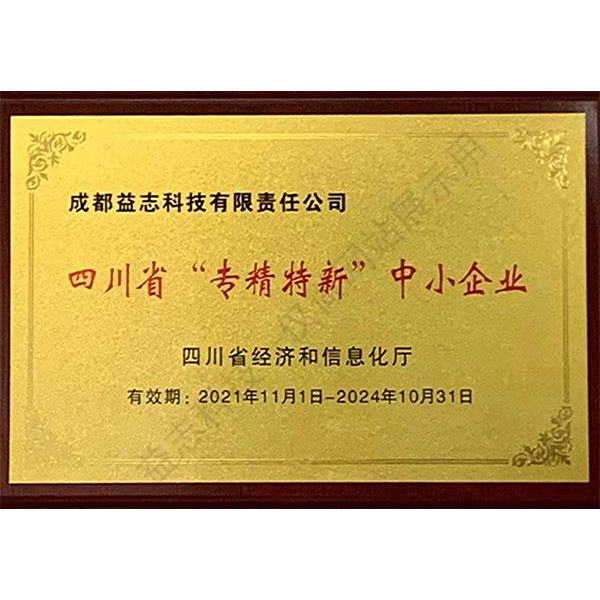
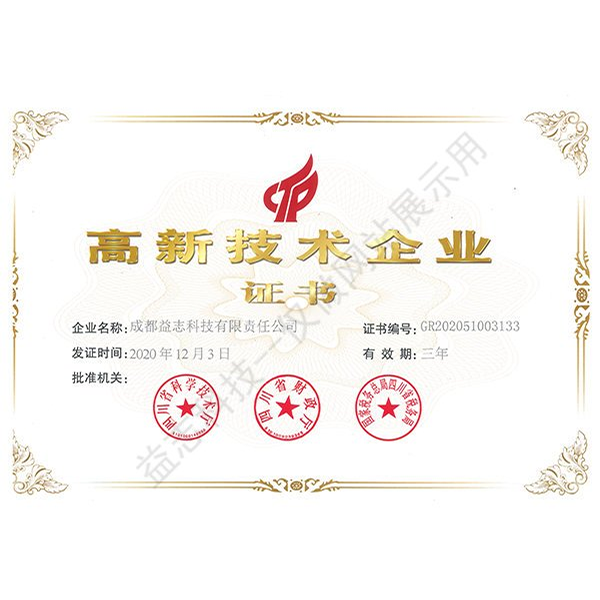
I remember one project about three years ago. The customer needed argon for the production of semiconductor components. It was necessary to cut off not only O2 and N2, but also microimpurities of hydrogen and hydrocarbons. Standard market offers did not cover the residual H2 content. Then they paid attention to the developments of the instituteChengdu Yizhi Technology Co.— their approach to a multilayer adsorbent backfill and a cascade cleaning scheme seemed more thoughtful. The solution turned out to be not “magical”. material, but in the precise calculation of the sequence of its layers and temperature conditions of regeneration. This is a typical example: novelty is in systems engineering.
Where is the “new technology” hidden: details versus slogans
If you dig deeper, the main improvements are visible in three planes. The first is the adsorbents themselves. Not so much new formulas, but combinations and specific activation for argon purification tasks. Chinese suppliers have learned to adapt zeolites and carbon molecular sieves well to the specific composition of the source gas, which gives greater service life and stability at the output.
The second is management. Digitalization, but without fanaticism. We are not talking about a color touch screen, but about accurate pressure, temperature sensors and, critically, real-time residual oxygen and moisture analyzers. Controller logic, which not only runs a hard timer, but adjusts regeneration cycles to the actual load and condition of the adsorbent. This saves energy and resource of the installation. On the websiteyzkjhx.ruThe same Izhi Technology shows a shift in emphasis in the descriptions to “intelligent process control?” and “guaranteed purity of the output”. These are not empty words if the correct algorithms are behind them.
Third is an integrated approach to the system. The purifier is no longer treated as a separate box. It is increasingly being designed in conjunction with gas compression, storage and distribution systems, taking into account points of possible contamination. This is the very project culture that theChengdu Yizhi Technology Co., Ltd., established as a design institute under Huaxi Technology. Their strength, in my opinion, lies in the ability to calculate the entire chain - from raw materials to the final consumer.
Field testing: where theory meets reality
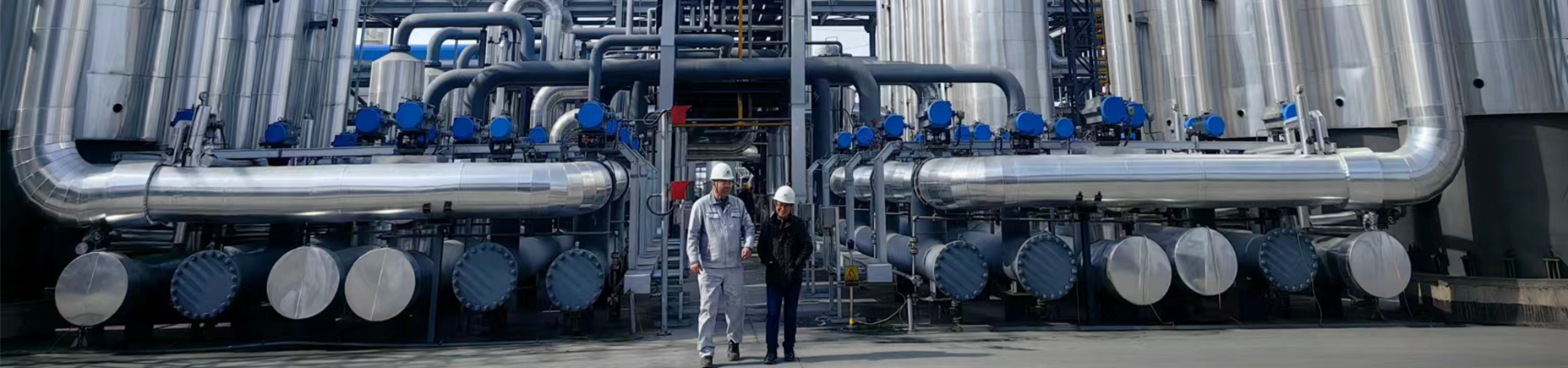
Any technology is tested not in a laboratory, but on site. I had the experience of launching one of these modern Chinese installations at a metallurgical plant. The initial argon was from a cylinder station, the quality was “floating”. The main task is to consistently maintain cleanliness for responsible automatic welding.
The first weeks everything worked perfectly. Then minor failures began—pressure surges, and once an emergency release was triggered. The reason turned out to be trivial: they did not take into account the sufficient buffer capacity of the gas before installation and fluctuations in its supply. The purifier was good, but its algorithms were designed for more stable input conditions. I had to modify the harness. Conclusion: even the most advanced ?new technology? useless without proper integration into the existing technological process. Manufacturers, including Yizhi, now understand this and are increasingly offering not just equipment, but audit and design of the entire unit.
Another point is service. The declared service life of adsorbents (often 5-7 years) is achievable only under ideal conditions. In reality, if oil or aggressive moisture gets into the inlet, the material can fail within a year. Therefore, the trend now is not just selling the installation, but long-term contracts for monitoring and service. This is an indicator of technology maturity when the manufacturer is ready to share risks with the client.
Failures that teach
There were also failed cases that are not written about in brochures. One in particular stood out to me. We decided to save money and supplied a compact argon purifier for a small laboratory producing optical fibers. The installation was “smart”, but... too compact. The physical size of the adsorbers did not allow for a sufficient performance reserve for peak loads. As a result, with the simultaneous operation of several cleaning lines, there was not enough cleaning, cleanliness dropped, and defects in the products began immediately. We had to urgently change to a unit with greater throughput.
This case is a classic mistake: the pursuit of “novelty”. and compactness to the detriment of basic engineering principles. Argon purification technology, even the most advanced, is subject to the laws of physics and chemistry. It is impossible to endlessly reduce the size of the adsorber without losing efficiency or resource. Now, looking at the proposals, I see that serious players, including the mentioned design institute, are focusing on modularity: you can increase power by adding standard blocks. This is a more honest and practical approach.
Another lesson concerns analysis. We saved money on a good online moisture analyzer and installed a cheap sensor. He began to “lie”, showing good numbers, while the real output humidity was already growing. The result is damage to a batch of expensive metal. After that, I firmly understood: in high-purity purification systems, saving on quality control is the most false economy. Now this is a mandatory item in the technical specifications.
So are they new or not? A look from inside the workshop
To sum it up, let me return to the initial question. Are modern Chineseargon purifiersnew technologies? Yes, if by novelty we mean not a revolutionary breakthrough, but a significant evolution. An evolution in materials, in control precision, in system design and in the service model.
They have ceased to be just "pieces of iron" to remove oxygen. These are technological modules built into the logic of the entire production. Their ?intelligence? - not for show, but to actually save resources and guarantee results. The key word here is “predictability”. Predictable cleanliness, predictable service life, predictable maintenance costs.
Therefore, when you see a site likeyzkjhx.ruand read about the design capacityChengdu Yizhi Technologywith a registered capital of 120 million yuan, it is clear that we are not talking about a handicraft manufacturer. This is an institute that does not sell a box of tubes, but a finished technological process. And this, perhaps, is the main “new technology”? — transition from the sale of equipment to the sale of a guaranteed parameter (pure argon) throughout the entire life cycle of the system. For a production engineer, this is the most important criterion.