China: argon purification - new technologies?
2026-03-22
When you hear “new argon purification technologies in China?”, you immediately imagine laboratories with brilliant equipment. But the reality is often simpler and dirtier. Many still believe that the main problem is simply achieving high purity, say 99.999%. However, in reality, especially in metallurgy or in the production of semiconductors, the stability of this purity and the control of specific impurities such as moisture or oxygen are much more important, and not just the beautiful number “five nines”. This is where I’ll probably start.
Where is the catch with “purity”?
When working with cleaning systems, you constantly come across the same story. The customer demands a purity of 99.9995%, the equipment produces it on test samples, but in a real continuous process in the finished argon they suddenly “pop up”? problems with welding or crystals. Everyone starts looking for the culprit - the attitude. And the reason is often in the point of sampling, in the material of the pipelines after the cleaning unit, or in the fact that the analysis was carried out on ideally dry gas, and air is sucked into the line somewhere. The novelty of technology is often not about “cleaning even more”, but about making the process resistant to such “trifles”.
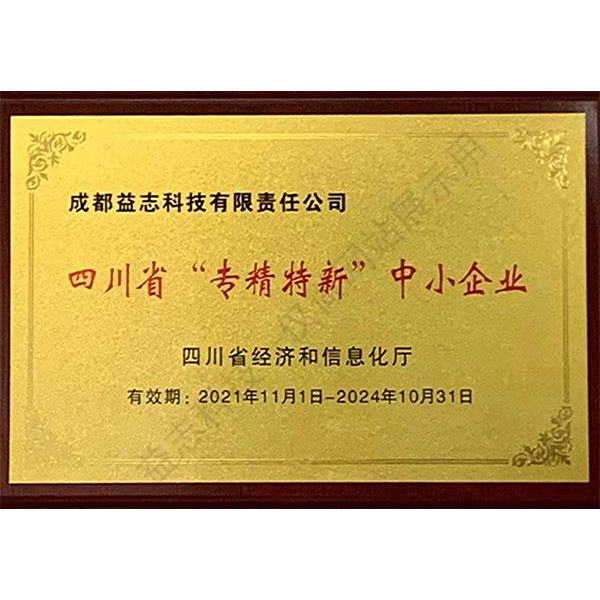
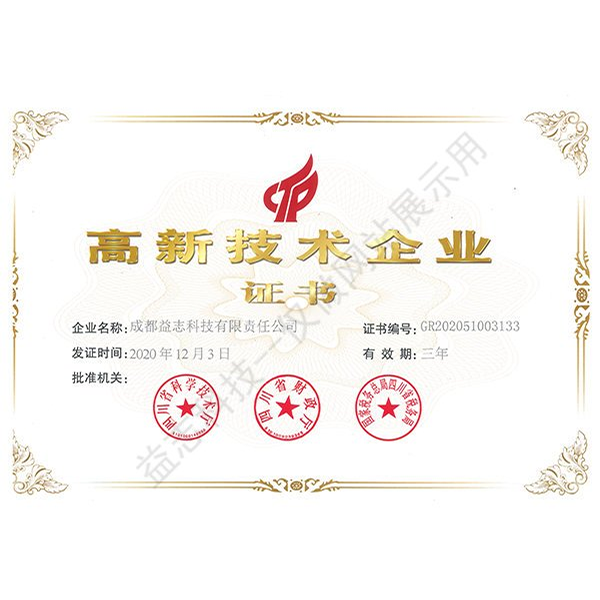
Take, for example, adsorption purification at low temperatures. The technology is not new, but Chinese manufacturers have done a lot of work in recent years on the design of adsorbers and algorithms for controlling the regeneration cycle. Previously, a common problem was incomplete heating of zeolite layers, which is why the moisture capacity dropped after just a couple of weeks. Now many are like the sameChengdu Yizhi Technology Co.(their website ishttps://www.yzkjhx.ru), introducing multi-point temperature control over the entire height of the column and cascade purging with regeneration gas. This is not a breakthrough in science, but rather a refinement “to the point”, the result of many practical tests on site.
I had experience at one pipe-rolling plant. There was an old installation, the argon seemed to be clean, but when welding stainless steel, the seam sometimes turned out to be porous. They began to figure it out. It turned out that pressure fluctuations in the raw argon network caused a short-term breakthrough of nitrogen into the clean gas line. The cleaning system had nothing to do with it - it coped with what came into it. The problem was solved not by replacing it with “new technology,” but by installing a simple buffer receiver and a more precise control valve at the inlet. Sometimes ?new? is simply more thoughtful engineering of the entire system, not just its heart.
About catalytic methods and ?Chinese? approach
If we talk about truly new directions, then it’s worth taking a closer look at combined schemes. For example, preliminary catalytic removal of oxygen and hydrogen followed by adsorption drying and fine purification. In Russia and Europe, they often go through deep cryogenic distillation, which gives fantastic purity, but also requires huge capital and energy costs. Chinese engineers, especially in design institutes likeChengdu Yizhi Technology Co., Ltd.(this, by the way, is an institute created on the basis of Huaxi Technology with a solid authorized capital), often offer more flexible and modular solutions. Their goal is not an absolute record, but an optimal ratio of “purity/cost/reliability?” for a specific customer task.
I saw their projects for polysilicon production plants. The requirements for argon there are strict, but the volumes are also huge. They used a cascade of cheap metal getter cartridges for rough purification from active gases, and then highly efficient zeolite traps with the latest generation of adsorbents. Savings at the first stage made it possible not to overload and increase the service life of expensive thin filters. It's a practical, down-to-earth approach. They do not shout about “revolution”, but simply show calculations on TCO (total cost of ownership), which are more convincing than any advertising slogans.
But failures also happen. I remember that at one facility they tried to introduce membrane separation for the preliminary enrichment of argon from exhaust gases. The technology is fashionable, they write in articles. On paper, the savings should have been 15-20%. In practice, the stability of the flow and its composition fluctuated so much that the subsequent treatment stage could not cope, and the alarm constantly went off. I had to return to the proven scheme with short-cycle heat-free adsorption (SCA). Conclusion: not every ?new? The technology is ready for the harsh conditions of a real workshop 24/7. Chinese colleagues understand this and often offer on-site pilot testing before full-scale implementation.
Equipment and hardware: what has really changed
If you look away from the processes and look at the hardware, the progress is noticeable. We are not talking about fundamentally new devices, but about quality of execution and control. Just ten years ago, Chinese valves for process gases could be a source of constant problems - leaks, sticking. Now many manufacturers, especially large ones, like Huaxi Technology, behind which there isChengdu Yizhi Technology Co., use valves from well-known international brands or their own production, but under licenses and on the same machine park. There is still a difference in price with European analogues, but the gap in reliability is no longer so dramatic.
Monitoring and control systems have made great strides forward. Almost all new units come with built-in residual oxygen and moisture analyzers, the data from which is integrated in real time into the process control system. This is not just a “trick”, it is a necessity. Because, going back to the beginning, stability is important. The operator sees not just that the installation is working, but sees a trend. If the moisture content at the outlet begins to creep up from 0.1 ppm to 0.3 ppm in a week, this is a signal to check the regeneration cycle or to replace the adsorbent. Previously, this was known after the fact, due to defects in products.
A separate topic is materials. Increasingly, electropolished 316L stainless steel pipes with argon brazing are used for contact with high-purity argon after cleaning, rather than just welds. This has become almost the standard for new projects. Chinese manufacturers now easily provide such pipelines, and they make them on site, for a specific layout. This reduces the risk of contamination during installation. Trifle? No, this is exactly the detail that distinguishes a high-quality project from a mediocre one.
Practical case: unobvious savings
I would like to give an example that shows thinking well. There was a modernization project at a glass factory. Argon was used to provide a protective atmosphere in furnaces. There was cleaning, but it was old and “gluttonous?” in terms of energy for regeneration. Two options were considered: a new adsorption unit and a membrane-cryogenic hybrid system (new and advertised).
Specialists from the design instituteChengdu Yizhi Technology Co.conducted a detailed audit. It turned out that up to 30% of raw argon (with low purity) was simply vented into the atmosphere at one stage because its pressure was slightly higher than required, and the old system could not utilize it. They suggested, first, installing a compressor to recirculate this waste gas back to the treatment inlet. And secondly, install a new adsorption unit with an improved heat exchanger that utilizes heat from regeneration to heat process water.
The introduction of a ?supernova? membrane technology in this case would give an increase in purity that was simply not needed for the process. And their solution saved gas and reduced energy consumption by 40% compared to the old system. The key was not choosing the most advanced technology in the world, but analyzing the whole picture in production. The economic effect turned out to be many times higher.
So new technologies or not?
To sum up some informal results, I will say this. If we expect some fantastic breakthrough from China in the physics of gas purification, then perhaps it is too early. But if we talk about new technologies in the sense of new, more rational, streamlined and cost-effective engineering solutions, about new approaches to the design and integration of systems - then yes, this is happening very actively.
Strength of local players such asChengdu Yizhi Technology Co., in their close connection with real industry. They see problems from the inside, they have the ability to quickly test prototypes on their own or partner sites. Their ?novelty? - this is often a technological puzzle made of proven components, perfectly tailored to the task, assembled taking into account thousands of small nuances that are not written about in textbooks.
Therefore, to the question ?? I would answer: yes, but with clarification. These are new technologies for bringing a reliable industrial process to a state of economic and operational optimality. These are technologies not so much of discovery as of perfection. And this, perhaps, is their main value for the market today. Everything else is marketing and beautiful numbers in brochures, which are quickly forgotten at the first acquaintance with real production.