Is China the leading exporter of argon purification units?
2026-03-17
This is a question that often comes up in industry conversations, and the answer is not as clear-cut as it seems at first glance. Many people immediately imagine giant factories and tons of equipment sent abroad. But the reality in the gas separation and purification sector, especially with argon, is much more nuanced. Yes, China is a huge player in the market, but the ?leading exporter?? This requires analysis of not only volumes, but also technological depth, adaptation to projects and, critically, real implementation experience outside the country. It's worth digging deeper than customs statistics.
What's behind the big numbers?
When people talk about export, they often mean ready-made installations. But there is a nuance here. China actually produces and supplies a huge amount of equipment for air separation (ASU) and gas purification in general. However, if we take highly specialized, highly effectiveargon purification units- those that bring raw argon from 95% to 99.999% and above - the picture becomes more colorful. The market is segmented. There is a segment of standard, one might say, “catalogue” ones. solutions where Chinese manufacturers are very strong in price and production speed. And there is a segment of turnkey projects. for metallurgy, semiconductors, solar energy, where the requirements for cleanliness, automation and integration into the existing process are off the charts.
This premium segment has historically been dominated by European and American engineering companies. Their strength comes from decades of accumulated process know-how, such as fine-tuning catalytic reactions for oxygen and hydrogen removal or deep drying. Chinese players here have long been more of hardware contractors. But this is changing quickly. Changes do not come through loud statements, but through specific, often complex projects, where local engineers learn from their own mistakes. I remember how about seven years ago one large project in the CIS for the supplyargon cleaningto modernize the steel mill almost failed due to underestimating the material requirements to operate at extremely low dew points. The equipment was installed, but commissioning took months. It was a painful but invaluable lesson.
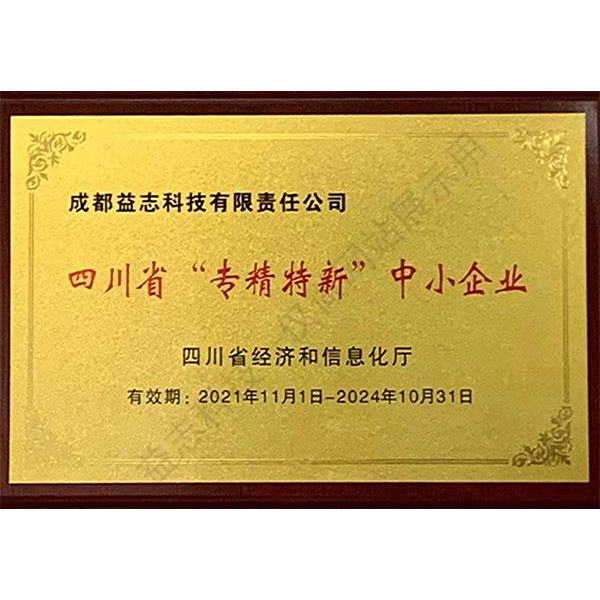
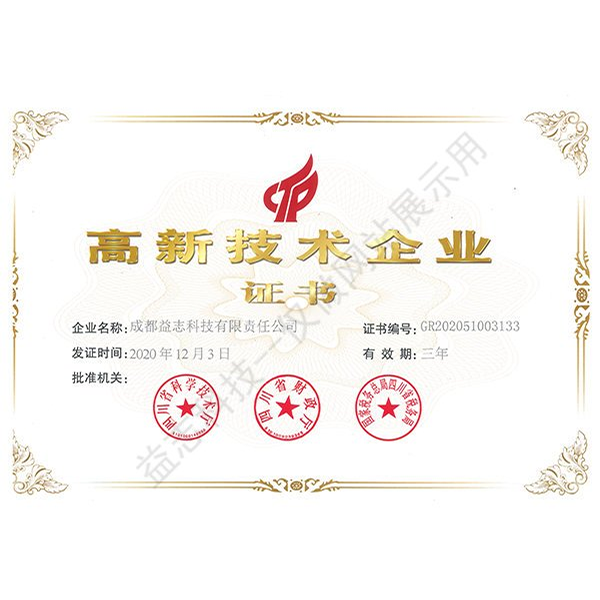
Now the approach is different. Leading Chinese design institutes and companies that are serious about exporting do not just sell iron. They sell a technological scheme based on real calculations and, importantly, operating experience at home. China itself is a huge testing ground for such technologies. For example, the same Chengdu Yizhi Technology Co. (a subsidiary of Chengdu Huaxi Chemical Technology Co.) is not just a plant, it is a design institute with a registered capital of 120 million yuan. Their websiteyzkjhx.rufocused on the Russian-speaking market, which already speaks about the strategy. They grew out of internal projects in the chemical and metallurgical industries of China, and now they are trying to broadcast this experience externally. Their trump card is not an abstract “advanced technology”, but specific solutions, for example, for the utilization of waste gases or the integration of an argon purification unit into the circuit of a large ASU while minimizing energy costs.
Key Difference: Project Approach vs. Product Approach
This is where the answer to the question of leadership lies. A leader in export is one whose solutions work in the customer’s environment, and not just on a test bench in the workshop. Europeans are strong in their “clean slate” design. Chinese companies are now actively increasing their competencies in this area, but their traditional path is to optimize and standardize successful solutions. This provides an advantage in cost and timing for typical tasks. For example, to obtain argon with a purity of 99.999% for welding work or filling double-glazed windows, a Chinese installation will most likely be the best choice.
But when it comes to ultra-pure argon for growing silicon crystals or for processes in pharmaceuticals, where not only purity is required, but also absolute stability of parameters, customers still look to proven Western suppliers. Although the gap is rapidly closing. I have seen proposals from Chinese institutes that already include systems for online monitoring of impurities at the ppb level and automatic switching of adsorbers with a guarantee of uninterrupted operation. Five years ago this was rare.
The problem often comes down to trust and service. Installing the installation is half the battle. Ensuring its launch, training personnel, guaranteeing the supply of spare parts and reagents (the same catalysts or molecular sieves) - this is what makes an exporter truly leading. Chinese companies understand this and are actively developing networks of service partners in importing countries. This is no longer just remote support via Skype.
The role of the specifics of the CIS market
For Russia, Kazakhstan, Ukraine (before well-known events), Chinese suppliers became especially active. Why? Because there is a huge fleet of outdated Soviet equipment that requires modernization. European solutions are often too expensive and "packed" for such tasks. The Chinese offer more flexible schemes: you can upgrade only the cleaning unit, leaving the old compressors and tanks; You can focus on energy efficiency, which is critical when tariffs are rising.
When working with such projects, you come across a lot of nuances. For example, the quality of raw argon from old Soviet ASUs can “float”. according to the composition of impurities. A ready-made standard installation, designed for average parameters, may not meet the passport data. Therefore, now competent suppliers, like the aforementioned Chengdu Yizhi Technology, always request advanced analysis of raw materials and site conditions. This is a sign of maturity. Previously, they often sold “as in the catalogue?”, and then it turned out on the spot that an additional stage of purification from nitrous oxide was needed, which was not initially taken into account.
Another point is the climate control. Equipment that works great in Sichuan may require modifications for the Siberian winter. Insulation of piping, heating of sampling lines, frost-resistant grades of steel for external components - all this is now prescribed in the specifications. These are the very “little things” that distinguish a real export project from a simple container shipment.
Technological trends and where China is at the forefront
If we talk about purely technological innovations, the picture here is interesting. In the field of adsorption technologies (PSA, TSA) for argon pre-purification, Chinese manufacturers are perhaps even ahead of the rest in terms of price/performance ratio. Their columns, valves, control systems are very competitive. In some places they even set the trend for miniaturization and modularization of installations.
However, in the field of catalytic purification (removal of O2, H2) and deep drying to dew points of -110°C and below, there is still a certain lag in the stability and durability of catalyst compositions and adsorbents. But they do not buy these technologies, but are actively developing their own. Investments in R&D in this area are huge. Saw their pilot plants using hybrid processes combining membrane separation and swing adsorption. For certain niche applications this could be a breakthrough.
Practical conclusion: when you are now considering an offer forargon purification unitfrom China, you cannot evaluate it according to a ten-year-old template. You need to look deeper: who exactly is designing (a design institute or an assembly shop), what references are there specifically for your task (not just “100 units delivered?”, but “5 units delivered for purifying argon from nitrogen in the exhaust gases of polysilicon production?”), and how the support is organized. Websiteyzkjhx.ruis a good example when a company does not hide its affiliation with a chemical technology holding (Huaxi Technology), which indicates a deep understanding of processes, and not just mechanics.
So, is it a leading exporter?
Returning to the title question. Based on the number of equipment units shipped, it is quite possible that yes. In terms of the total value of exports, it’s probably already yes or very close to it. But according to the perception of the most demanding, “premium” segment of the global market - not yet. There is a position of a very strong, aggressive and fast-learning number two player, who has already become the number one player in some niches.
Their strength lies in their flexibility, responsiveness and unparalleled reliance on their huge domestic market as a test base. The weakness they overcome is a historical mistrust of the depth of their technological engineering for non-routine tasks. For them, every successful complex project abroad is a building block for their reputation.
So if you need a reliable, cost-effective unit for standard argon purification tasks, a Chinese supplier is one of the best, if not the best choice today. If your process is extremely sensitive to purity and requires completely unique solutions, it may be worth looking at others for now. But tomorrow this situation may change. They learn not from textbooks, but from real objects. And this is the fastest way. So the question in the title will soon, I think, lose its question mark. It will become a statement.