?China: innovations in PSA technology for the environment??
2026-01-29
China: innovations in PSA technology for the environment
When they talk aboutPSA technologyin China, many immediately imagine giant petrochemical installations. But the real innovation now lies in its adaptation for environmental problems, and there are a lot of nuances here that are not written down in reports.
From classical sorption to an environmental tool
ClassicP.S.A.(pressure swing adsorption) has been used for decades to produce pure hydrogen or oxygen. The essence is the cyclic process of adsorption and desorption on zeolites or carbon molecular sieves. But about 10 years ago, a strong trend towards greening industry began in China. And then it turned out that the same technology, but with a different approach to the design of adsorbers and the selection of adsorbents, can solve completely different problems.
For example, capture and recovery of volatile organic compounds (VOCs) from production facilities. Don't just burn it, but return it to the process. Or cleaning biogas from CO2 to produce marketable methane. This required a revision of many canonical parameters. Cycle speed, pressure drop, even the shape of the valves - everything had to be recalculated for dirty and wet flows, and not for purified natural gas.
The first benzene vapor recovery project I encountered from a plant almost failed due to condensation. Classic zeolite clogged within a week. The solution was found in a combined layer of adsorbent: first, a more hydrophobic material takes away moisture, then a specialized sorbent works on the target components. But this increased capital costs, and the customer was initially shocked. It took a long time to calculate the payback due to the return of the product.
Key challenges: not theory, but field conditions
The main problem in environmentalP.S.A.— instability of the input flow. At the same solvent recovery plant, the concentration can jump significantly depending on the mode of the main line. And the automation, configured for a stable flow, begins to fail. Frequent switching of valves leads to their wear. At one of the factories in Jiangsu province, we installed a system with a backup adsorption line and more flexible control logic that analyzes the trend rather than the instantaneous value. But this is, of course, more expensive.
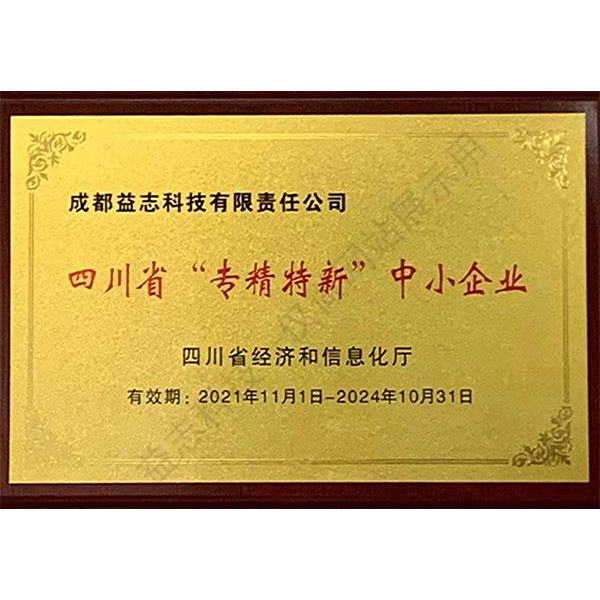
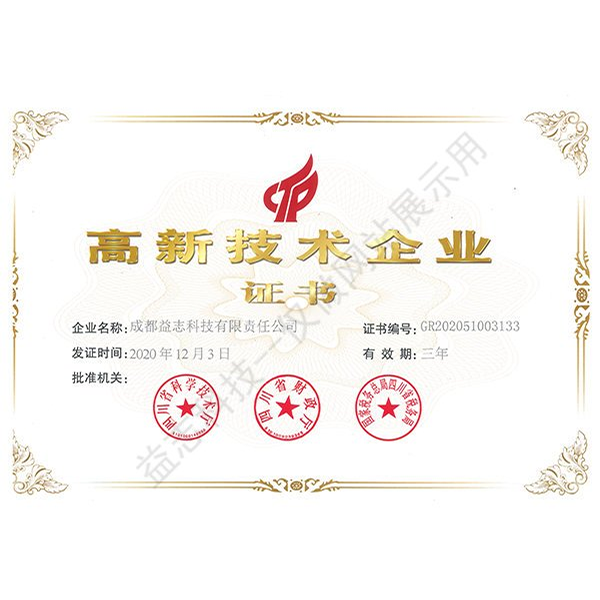
Another point is energy consumption. Classic PSA for air is energy intensive due to compression. In environmental applications, low-pressure fans can often be used if the hydraulics are properly designed. But here an accurate calculation is needed, otherwise adsorption will be ineffective. One of our partnersChengdu Yizhi Technology Co.(their website ishttps://www.yzkjhx.ru), specializes in such engineering solutions. They don’t just sell installations, but conduct the full cycle from audit to commissioning. This is important because without a deep analysis of the source data, the project is doomed.
By the way, aboutChengdu Yizhi Technology Co.. It is a design institute established by Chengdu Huaxi Chemical Technology Co., Ltd. back in 2013. With a registered capital of 120 million yuan, they can afford serious R&D. I saw their pilot plant for purifying coke oven gas at a steel mill. There was an interesting scheme with pre-cooling and drying, which significantly extended the life of the main adsorbent. But they also recognized that the selection of an adsorption pair for such aggressive environments is always a compromise between capacity and durability.
Case: biogas and the intricacies of economics
A very indicative direction is the modernization of biogas stations. The standard scheme is combustion in a cogeneration plant. But if you clean biogas from 40% CO2 and sulfur compounds, you get biomethane, which can be pumped into the network or used as motor fuel. The economy is changing dramatically.
We worked on a project in Shandong. The goal is to increase the calorific value of the gas. UsedPSA technologybased on modified carbon molecular sieves. The main difficulty was not even in the technology, but in the raw materials: the composition of the manure changed seasonally, which affected the concentration of hydrogen sulfide. It was necessary to integrate an additional purification stage based on chemisorption before PSA. This added operating costs but protected the expensive adsorbent.
The most interesting thing began at the start-up stage. Oxygen sensors showed phantom peaks, the system crashed. It turned out that the problem was in the micropores of the new adsorbent, which captured some air during regeneration. We decided to change the purge procedure. You can’t write such little things in the installation passport; they are learned only in work.
Materials matter: not just zeolites
Publications often focus on zeolites. But in real environmental projects, hybrid adsorbents and metal-organic frame structures (MOFs) are increasingly being used. Their capacity for some specific pollutants, such as mercaptans, is many times higher.
But there is a nuance - cost and stability. MOFs may be sensitive to the presence of water vapor. At one of the seminars, a representative of an academic institute spoke about a new composite material based on a graphene matrix. It sounded impressive, but when we asked for samples to test in real conditions (with dust and aerosols), it turned out that its life under cyclic loading had not yet been studied. Innovation in the laboratory and on the shop floor are two very different things.
Therefore, many engineering companies, including the mentioned Yizhi Technology, are going by creating their own patented adsorbent compositions. They are not always revolutionary, but they are tested for long-term stability. Their website, by the way, is a good source for understanding current trends in applications.P.S.A.in Asia.
Looking to the future: integration and digital
The next step I see is the integration of PSA installations into the overall digital contour of the enterprise. Not just an autonomous unit, but a system that receives data on planned shutdowns of the main production, forecast the composition of raw materials and optimizes its cycle in advance.
For example, if it is known that tomorrow a raw material with a different impurity content will be supplied to the line, the installation can adjust the adsorption cycle time in advance. This increases both the efficiency and the service life of the adsorbent. There are already pilot projects of this kind, but mass implementation is hampered by the unpreparedness of the infrastructure at many old factories.
Another promising direction is miniaturization for distributed sources of pollution. Not a huge factory, but many small workshops. Here we need compact, almost modular PSA solutions. Work is underway on this, but the key barrier is the cost of manufacturing small-scale high-precision equipment, such as a valve block.
Overall, innovation inPSA technologiesfor ecology in China, this is not about breakthrough discoveries, but about painstaking adaptation, engineering ingenuity and the willingness to look for non-standard solutions for each specific, often imperfect flow. And it is in this mundane work that the real effect on the environment is born.