Is China the leader in the export of adsorbents?
2025-12-31
When you hear this question, the first thought is yes, of course, the statistics speak for themselves. But this simplicity hides a lot of nuances that are rarely written about in reviews. Many people imagine just a giant factory churning out tons of silica gel or activated carbon. In fact, leadership is not only about volume, but also about how the very structure of this export is changing and what pitfalls are encountered along the way for those who, like us, are trying to figure it out in practice.
From raw materials to systems: the evolution of Chinese supply
It used to be pretty straightforward. The key argument was price. We purchased large quantities of basic adsorbents - aluminum oxide, zeolites, simple molecular sieves - for oil and gas or chemical cleaning. Competition was mainly based on price per ton. Now the situation is different. Yes, the mass segment has not gone away, but more and more requests are coming for specific products. For example, titanosilicate molecular sieves for fine separation or highly porous carbon adsorbents for capturing volatile organic compounds (VOCs).
This is no longer just selling material, but selling a solution. The client comes with a task: We have such and such a flow, such and such a temperature, we need to reduce the concentration of this component from X to Y. And then the work begins. It is necessary to select not just an adsorbent, but perhaps a whole combination, calculate the contact time, and propose a regeneration scheme. Chinese manufacturers, especially engineering companies, are increasingly entering this segment. They no longer wait for people to buy bags of powder from them, but offer technological schemes themselves.
A striking example is working withzeolitesfor drying natural gas. Previously, they simply supplied calibrated balls. Now the kit may include a detailed test report on a specific gas mixture of the customer, recommendations on the regeneration temperature, and even warnings about possible poisonous impurities for the adsorbent. This is another level. This is no longer an export of raw materials, but an export of technological knowledge, albeit packaged with material.
Field testing: where theory meets reality
Everything looks perfect in the laboratory. The adsorption capacity is high, the kinetics are fast. But the real test begins on site. One of the most painful lessons is the importance of mechanical strength. We had experience with the supply of ground activated carbon for the purification of liquid media. According to laboratory data, everything is fine. On the customer’s existing installation, after a month of operation, there is a sharp increase in hydraulic resistance, dust formation, and loss of material. It turned out that our raw materials, although active, had low abrasive resistance and were worn out in a turbulent flow. I had to urgently look for another supplier who focuses not only on porosity, but also on binders for granules.
Another common surprise is the heterogeneity of the batch. For example, you buyaluminum oxidefor drying. The first three containers work fine. And from the fourth - a drop in dynamic capacity by 15-20%. During the investigation, it turns out that the raw materials for production were taken from another deposit, or the calcination temperature at the plant was slightly changed. For the manufacturer, this is a trifle, within the limits of the specifications. For the technological process at the end there are serious fluctuations and downtime. Now we always include in contracts not only standard specifications, but also requirements for the stability of key parameters from batch to batch, and we make sure to carry out acceptance tests of each major delivery.
And of course, logistics. It would seem that what is so difficult here? But adsorbents are often hygroscopic. They shipped excellent silica gel with a residual moisture content of 2%, and it traveled in a container through the tropics, condensation, and temperature changes. Arrived with 8% humidity and partially lost activity. Now packaging is a separate item of requirements: multi-layer waterproof bags, humidity indicators, desiccants. These are the very little things that distinguish a supplier who simply sells from one who understands the process from plant to customer reactor.
The role of engineering: why just buying material is not enough
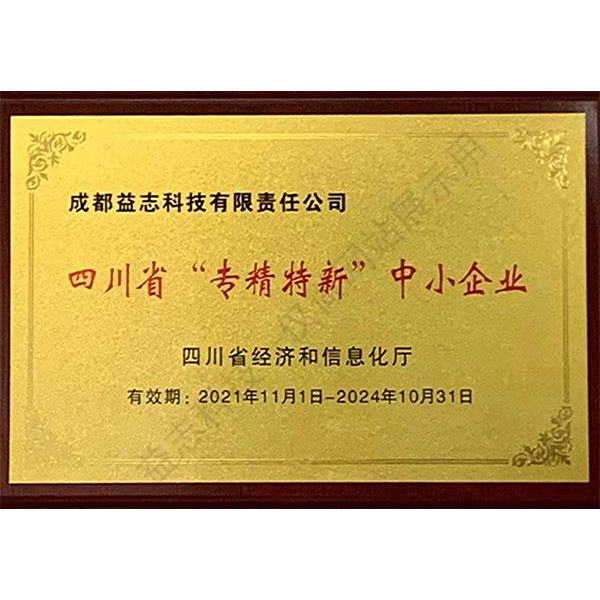
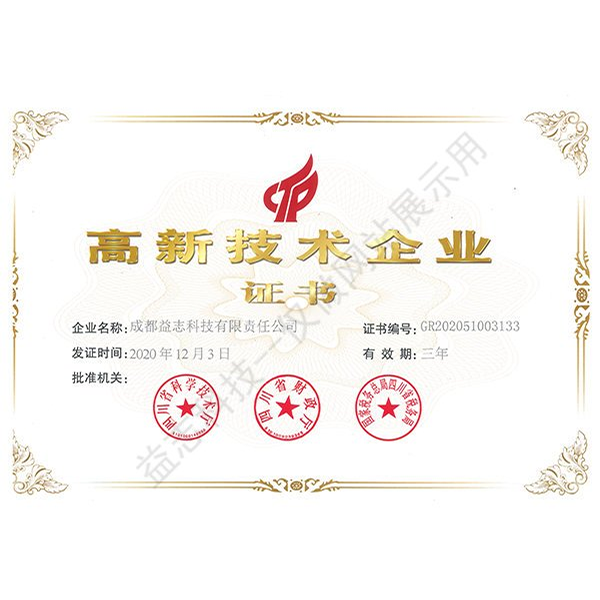
This is where companies like Chengdu Yizhi Technology Co. come into the picture. Their website (yzkjhx.ru) is a good example of a modern approach. This is not just a product catalog. It can be seen that this is a design institute created on the basis of a chemical technology company. This is important. When you have not only sales behind you, but also actual design of installations, your view of the adsorbent changes.
You begin to think not in terms of tons per month, but in terms of adsorption-desorption cycles, pressure losses, and energy costs for regeneration. For example, they may suggest not just a zeolite for separating xylenes, but also perform process simulations to optimize adsorber size and column switching design. This is the next level. The client pays for the economic effect, and not for the weight of the material.
It is these companies that are moving China from the status of a global factory of cheap adsorbents to the status of a supplier of complex adsorption technologies. They often act as a link between large research centers (of which there are now many in China) and the market. They quickly introduce new developments in the form of pilot installations, test them, and then scale them up. Their capital of 120 million yuan is not just a number, it is an opportunity to invest in pilot projects and test beds that are not available to many pure trading firms.
Competition and niches: not only volume, but also specialization
Yes, in terms of total volumes, China probably has no equal. But if you dig deeper, there is still intense competition in certain high-tech niches. For example, in the field of highly selective adsorbents for pharmaceuticals or fine separation of isomers, Japanese and German manufacturers are traditionally strong. Their materials may cost many times more, but their stability and purity are still unrivaled for critical applications.
Where China is aggressively advancing is in environmental applications.Adsorbentsfor cleaning flue gases from SOx/NOx, for capturing CO2, for treating wastewater from heavy metals or organics. Here, the combination of acceptable quality, aggressive pricing and a willingness to do large volumes works perfectly. Many European companies now purchase basic carbon or zeolite adsorbents for their systems from China, carrying out only the final activation or modification at home.
Another interesting area is spent adsorbents. It used to be a headache - disposal. Now some Chinese companies offer regeneration services, for example, saturated activated carbon or zeolites. This is not always effective, but the trend towards a cyclical economy itself pushes for the development of such services. This is no longer a linear economy of produce, sell, throw away, but an attempt to close the cycle, which adds new arguments to the competitive struggle.
A look into the future: what will move the market next
I think the main driver is the tightening of environmental regulations around the world. Requirements for emissions, for the quality of wastewater, for the content of impurities in products - all this directly increases the demand for adsorption technologies. And China has a dual role here: as the largest producer of materials for these purposes and as a country with its own huge domestic environmental problems that stimulate domestic development and create practical experience.
The second trend is digitalization and smart materials. We are talking about adsorbents with specified properties obtained through precise synthesis, or about systems where sensors monitor the degree of saturation of the adsorbent in real time. For now, these are mostly laboratory studies, but Chinese research groups are publishing a huge number of articles on these topics. The question is who will bring this to the industrial level faster and cheaper.
So, back to the title question. Yes, China is the undisputed leader in the export of adsorbents, if we count in tons and dollars. But its current and future leadership will be determined by how successfully it can transform itself from a supplier of standard materials to a provider of proven, reliable and cost-effective turnkey technology solutions. And judging by the emergence and growth of companies that combine a scientific base, design engineering and production capacity, this path is already being actively followed. Of course, there have been and will be mistakes and failures - without them there is no real experience. But it is precisely this practical experience, full of cones on real objects, that makes today’s Chinese offer on the adsorbent market so significant and interesting for the whole world.