China: argon purification exporters?
2026-03-16
This is a question that often comes up in conversations at exhibitions or in correspondence with new clients from the CIS. Many people immediately imagine huge air separation plants and think that China is only about mass production. But in a nicheargon purification, especially for specific applications, the picture is much more interesting and not so clear-cut. A common mistake is to simply look for a “supplier” without delving into what is behind the word “purification”: to what purity, from what impurities, for what process. I came across this more than once when we received requests with the wording “we need an argon purification installation?”, and in the process it turned out that the client, say, needs 99.9999%, not 99.99%, to grow crystals, and his main problem is not nitrogen, but microimpurities of hydrocarbons. This is where I’ll probably start.
Not “production”, but “finishing”: what are the specifics of Chinese solutions
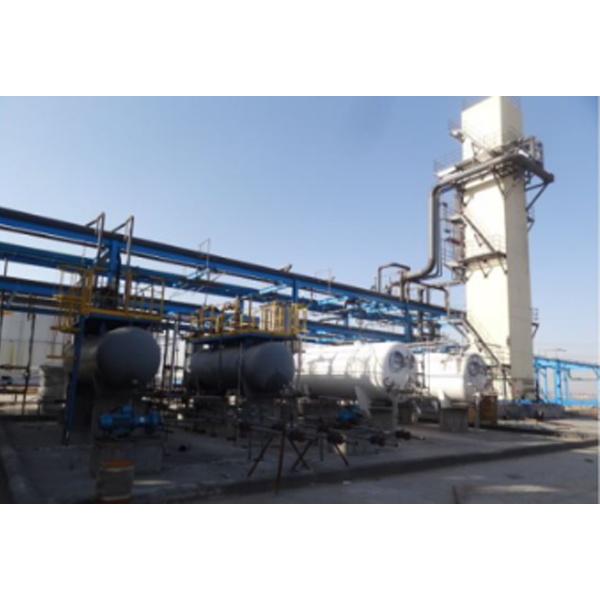
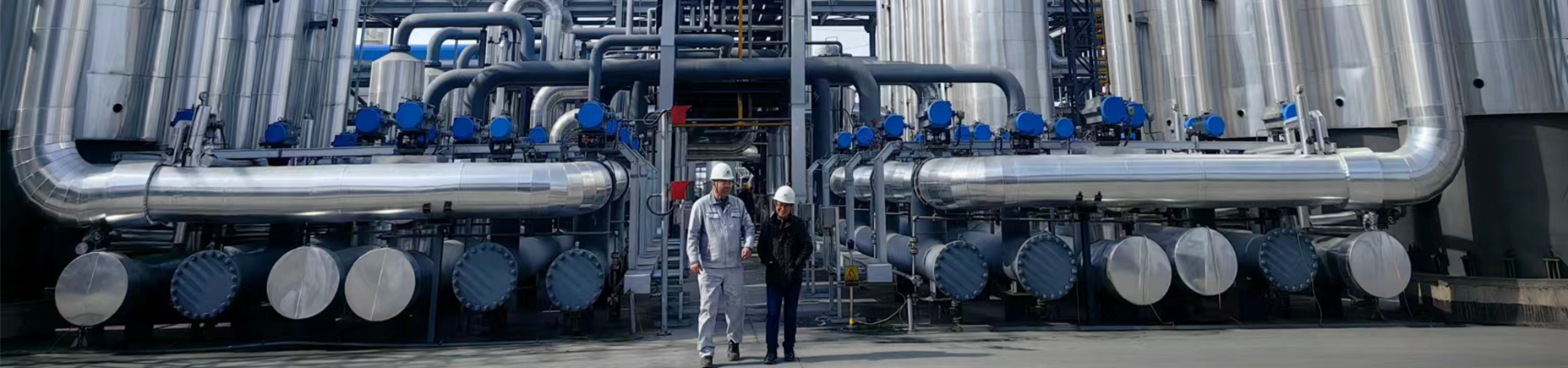
Large Chinese Air Separation Units (ASU), of course, pour argon like a river. But this commercial argon, roughly speaking, 99.99%, is a raw material for further work. The core competence of many Chinese engineering companies lies precisely in the areadeep cleaning technologies- the same ones that transform this commercial product into high-purity technical or even electronic gas. We are talking about systems with palladium catalysts for oxygen removal, adsorption units with molecular sieves and special adsorbents for removing moisture, nitrogen, and hydrocarbons. We are not so much “exporters of argon” as exporters of technologies and installations that bring this argon to condition at the customer’s site.
For example, a classic scheme that we have implemented more than once for metallurgical plants in Kazakhstan: a flow is taken from the customer’s air separation unit, say, with a purity of 99.5% Ar. Next comes our pre-treatment unit (moisture and CO2 adsorption), then a catalytic deoxidizer and final adsorption. The output is stable 99.9995% for use as a protective medium. The key here is adaptation to the specific composition of the source gas, which can “float” strongly. Once they almost failed the project when they did not take into account the increased hydrogen content in the raw material from the old blast furnace - they had to modify the catalytic stage on the fly.
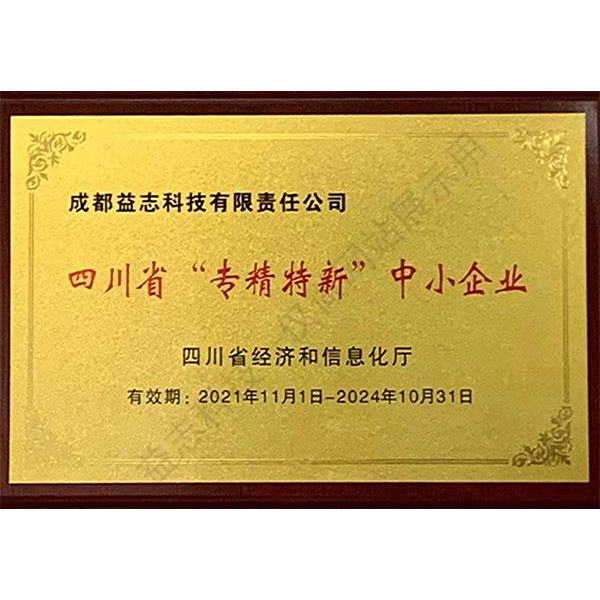
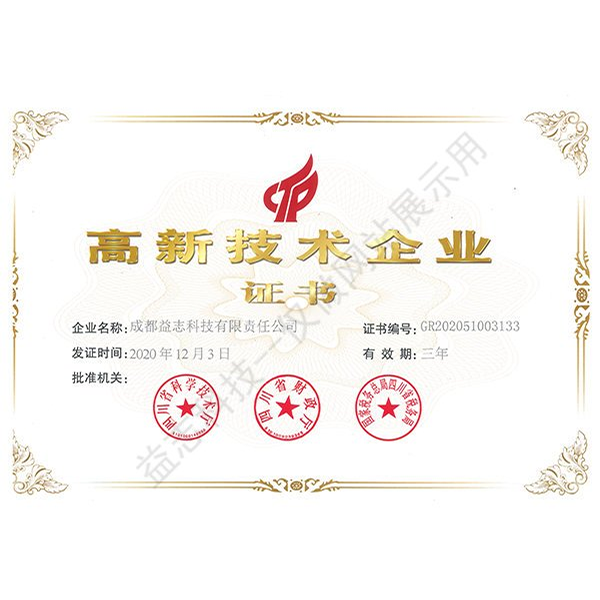
It is in this “fine-tuning” and therein lies the difference. Many European suppliers offer beautiful standard boxes. Chinese engineering firms, especially those like our instituteChengdu Yizhi Technology Co.(subsidiary structureHuaxi Technology), often work on the principle of “design for the task?”. This can be a compact module for a laboratory, or an entire station for a factory. Information about our approaches can be found athttps://www.yzkjhx.ru— there, among other things, it describes cases of gas cleaning.
Equipment vs. ?hardware + know-how?
When people talk about exporting, they often mean simply selling equipment. In our case, the second part is critically important - technological regulations, commissioning, training. A cleaning installation is not like a refrigerator that is turned on and running. This is a living system, sensitive to pressure, temperature, and the sequence of adsorber switching. You can install the best valves and vessels, but if you incorrectly calculate the adsorption cycle or do not configure the controller program, the output will be defective.
I remember a project for a plant for the production of solar panels in Russia. The client bought a “budget” somewhere. Chinese installation, but without full technical support. It worked unstably and the cleanliness fluctuated. When we were called in for an audit, it turned out that local technicians, trying to save money, replaced the original adsorbent with a cheaper analogue with different characteristics, and all the cycles went wrong. It was necessary not only to change the backfill, but also to completely reconfigure the control logic. After this, we always insist on a comprehensive contract, including installation supervision and long-term support.
This, by the way, is a common feature of many serious players from China in this area. We don't just sellargon purification unit, and a guaranteed output result - a certain purity and consumption. And in this package, know-how often costs more than metal structures.
The price trap: why cheap can be expensive
The market is tempting. Inquiry ?Chinese manufacturer of argon purification units? lists dozens of companies with attractive prices. And here is the main trap. The difference in cost can be fivefold. Why? It's all about the "stuffing". You can assemble an installation using valves and devices made in China in the mid-price segment - and it will work. Or you can use key components from Burkert, Siemens, Emerson. The difference is in reliability, service life and, most importantly, in the stability of cleaning parameters.
We had a sad experience at the very beginning, about ten years ago, when we decided to make a “budget” one. line for competition. We saved on air dryers for the pneumatic automation system. As a result, in the winter at one of the facilities in Siberia, the condensate in the pipes froze, the valves became stuck, and the process stopped. The client's losses due to downtime outweighed the savings many times over. Since then, we have fundamentally not skimped on the compressed air preparation system and controllers - this is the brain and nervous system of the installation.
Therefore, when evaluating proposals from China, you need to look not at the big picture, but at the specification, brands of key components and, most importantly, at the reference list in a similar climate and for a similar technology. OurYizhi Design Institute, with a registered capital of 120 million yuan, can afford to invest in long-term testing and selection of optimal partners for components, which is not always available to small assembly firms.
Niche applications: where Chinese technologies turned out to be unexpectedly strong
Beyond standard metallurgy and welding, it is interesting to see an increase in requests for argon purification for high-tech sectors. For example, for the production of optical fiber or for MOCVD epitaxy when growing LEDs. What is needed here is purity at the ppb (parts per billion) level for impurities such as moisture, oxygen, and hydrocarbons. This is already the major league.
About five years ago we got involved in such a project with one research and production center in Belarus. The goal was to achieve a purity of H2O and O2 of less than 1 ppb. Standard circuits did not produce results - they interfered with “memory?” highways and background leaks. We had to develop a hybrid scheme: catalytic removal of oxygen followed by adsorption on specially activated zeolites, plus the entire piping was made of electropolished stainless steel with soldering in an argon environment. We struggled for a long time with selecting the adsorbent regeneration mode. As a result, we reached a stable 0.5 ppb, but this project was more about R&D than commerce. However, the experience gained later formed the basis of several successful commercial solutions for microelectronics.
Such cases show that Chinese engineering companies are already capable of not only copying, but also carrying out complex technological developments for specific, even very narrow, gas purification tasks. It's not easy anymoreexport of equipment, and the export of complex solutions.
What's the result? An inside look at the prospects
So is China a major exporter in the argon purification industry? If we talk about the physical volumes of pure argon, of course, yes, but this is a different business. If we talk about technologies and installations for its purification, then the answer is yes, but with important reservations. China exports mainly not standard goods, but engineering competencies, the ability to quickly customize a solution and, yes, a competitive price while maintaining quality.
The main challenge, in my opinion, is not technical, but reputational. There are many low-quality offers on the market that spoil the overall impression. Therefore, the key for a serious player is to build trust through completed projects, through technology transparency and long-term support. As we try to do, working throughChengdu Yizhi Technology Co., Ltd., where behind each project there is not just a sale, but a full cycle from design to commissioning.
The future, I think, belongs to hybrid models: the key components are global brands, assembly and adaptation are local Chinese forces, and design and know-how are the joint work of engineers from China and the customer country. This allows you to control quality and optimize costs. And in this model, China has already firmly occupied its niche as a reliable and technologically savvy partner, and not just a cheap assembler. So to the question in the title I would answer: “Yes, but look not at the name of the country, but at the specific company, its experience and what it offers in the package?”. Everything else is details that have to be dealt with during the process, over a cup of strong tea during commissioning somewhere near Yekaterinburg.