Is China an exporter of technology for extracting methane from coal?
2026-03-06
A question that at first glance seems simple, but in fact comes down to subtleties known only to those who actually worked on wells in Shanxi or in laboratories in Chengdu. Many people immediately imagine ready-made installations sent abroad, but the reality is most often exporttechnology packageand, what is critically important,adaptive engineering. The biggest myth is that China has one “magic” one. technology suitable for everyone. This is wrong.
From laboratory to reservoir: where the real export potential lies
If we talk about exports, then we need to separate the “iron”. and ?knowledge?. Hydraulic fracturing or separation equipment is a commodity and is supplied by many. But a comprehensive solution for a specific deposit with its geomechanical stresses, coal composition and hydrogeology is already a technology. It is here that Chinese institutes and companies that have made their mark in complex fields like the Jinzhong Basin have accumulated unique experience. They learned not just to produce, but to predict and manage production in conditions that textbooks call “unfavorable”.
For example, a standard problem when entering new fields abroad is the calibration of production forecasting models. Our Chinese models, "trained" in highly gas-bearing but low-permeability formations often fail in seemingly simpler fields in another country. You have to adjust the parameters on the spot, in the field, sometimes by trial and error. This is the same “exported” one. competence is not a model, but the ability to adapt it.
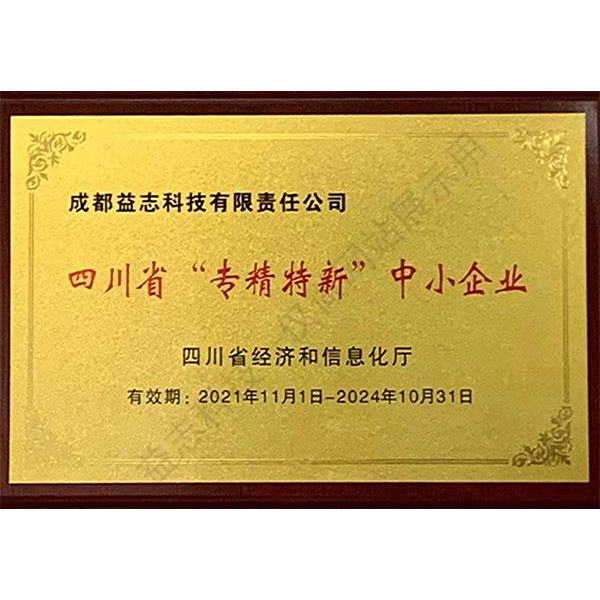
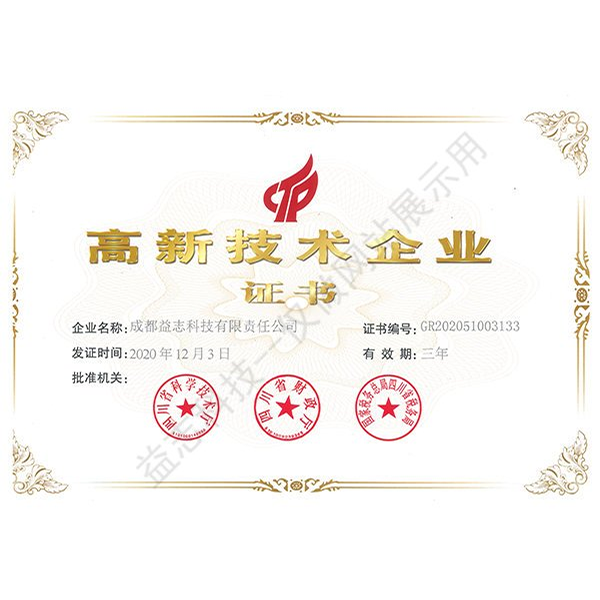
Here it is worth mentioning such players asChengdu Yizhi Technology Co. (https://www.yzkjhx.ru). This is not just a hardware supplier. This is a design institute that grew out of a chemical technology company, which immediately speaks of its strength in the field of gas purification and use technologies. Their approach is deep involvement in the project from the logging stage to methane utilization, which is exactly what constitutes a comprehensive technological package.
Case study: why turnkey? often turns out to be a half-finished product
We had experience in one of the CIS countries. They brought a proven scheme for injecting water with proppant. The wells were drilled, the equipment was installed - everything was according to the standard. And the result is 30% of the expected. They began to figure it out. It turned out that the key factor was the mineralization of formation waters, which in China at similar depths was one thing, but there it was completely different. This led to unplanned chemical reactions in the formation and rapid clogging of pores.
We had to urgently develop a new composition of hydraulic fracturing fluid on site. This was not a theoretical task, but pure practice, requiring a mobile laboratory and quick solutions. As a result, the project became profitable, but with a delay of almost six months. This failure, and then success, is the best illustration of technology export. We did not export the circuit, but the ability to revive this circuit in an emergency situation.
It is such cases that build a reputation. Companies like the aforementioned Chengdu Yizhi Technology Co., Ltd., with its registered capital of 120 million yuan and the status of a design institute created by Huaxi Technology, are interesting to customers precisely because behind them is not just a catalog, but a portfolio of solved (and not solved the first time) problems. This is capital that you cannot buy just like that.
Equipment vs. Know-how: what they actually buy
The market is now saturated with good equipment. High-pressure pumping units, microseismic monitoring systems, pipelines - all this can be purchased from different suppliers. Therefore, when a foreign company turns to China, this is often not what they are looking for. She is looking for a combination: “equipment + algorithm for its operation for our coal?”.
For example, the cycle control system “drainage-depression” for wells. Standard valves and sensors can be supplied. Or you can install the same valves, but with proprietary software, which, based on data on the pressure drop and gas composition, determines the optimal moment to start pumping out water. This software is ?trained? on thousands of Chinese wells. This software, this logical link, is the core of the exported technology.
It is design institutes, and not trading houses, that are the bearers of such know-how. Their website (yzkjhx.ru) may look modest, but their technical proposals will detail how they will adjust the coefficients in the gas filtration equations in a fractured environment specifically for your field. It's the level of detail that differentiates a technology partner from a vendor.
The future: exporting standards and environmental solutions
Now the trend is shifting. The demand is not just for production, but for production with a minimum environmental footprint and maximum use of gas. Here, China has also accumulated significant experience, especially in the field of utilization of low concentration coal mine methane. Technologies for enriching it or using it to generate energy on site are the next frontier for export.
We see growing interest not in individual installations, but in creating entiretechnological cycles?extraction-refining-generation?. This requires even deeper integration of engineering, chemical technology and energy. This is where companies with a background like Huaxi Technology, where deep knowledge in chemical processing is embedded in their DNA, are strong.
Export in the future will be less and less about “drilling rigs from China?” and more and more about the “Chinese standard for integrated development of coalbed methane”, which includes protocols for assessment, modeling, production and environmental monitoring. This is a shift from selling tools to selling proven workflows.
Final thoughts: is it an exporter or not?
Definitely yes. But not in the primitive sense as it is often understood. China exports not so much hardware as coalbed methane software. Exports the competence to work with complex geological conditions, exports the practical experience of thousands of wells, exports the ability to create economically viable projects where others see only risks.
These exports are often invisible. It lies in the files with logging data, in the software settings for separators, in the methodology for interpreting flow rate data. It comes to the country not in a bright container, but in the head of a visiting engineer, who, looking at the graph, says: “We had something similar in Shanxi, let’s try to change not the pressure, but the time interval between cycles?”
Therefore, when looking at the websites of design institutes or reading their cases, you need to see behind this not advertising, but traces of real work. Experience that is sold is always experience that was previously purchased at the cost of trial and error. And in this, China, as an exporter of technology for extracting methane from coal, is more than wealthy today. The only question is whether the receiving party is ready to buy not just a machine, but an entire cultural code of approach to subsoil use.