China: argon purification epishur - innovation?
2026-03-20
When they talk about Chinese technologies in the field of gas purification, especially argon, you often hear two extreme opinions: either they are cheap copies, or suddenly breakthrough innovations. In reality, as usual, everything is more complicated. I’ve been watching this segment for ten years, and the main thing that catches my eye is not so much loud statements as concrete work on bottlenecks. For example, this is the same oneargon purification episur. Many people think that it is simply a matter of a more efficient sorbent or membrane. But in practice, the key often becomes not the material itself, but how you integrate it into the system, taking into account fluctuations in inlet pressure, impurities in the feed gas, which are specific to each production. In China, this is actively done not only by academic institutions, but also by design companies that have grown out of the real industrial sector.
From laboratory to workshop: where the gap lies
I remember about seven years ago we tested a new Chinese installation for deep purification of argon. The numbers in the passport were brilliant, especially for the residual oxygen and moisture content. They brought her to the site - and she was capricious. It turned out that laboratory tests were carried out on an ideally stable flow, but in reality the compressor produced pulsations that disrupted the adsorber regeneration cycle. The manufacturer then spent a long time figuring it out, eventually finalizing the valve system and control algorithm. This was a good lesson: innovation is not only a new composition of zeolite, but also the ability to make the technology survivable in non-ideal conditions.
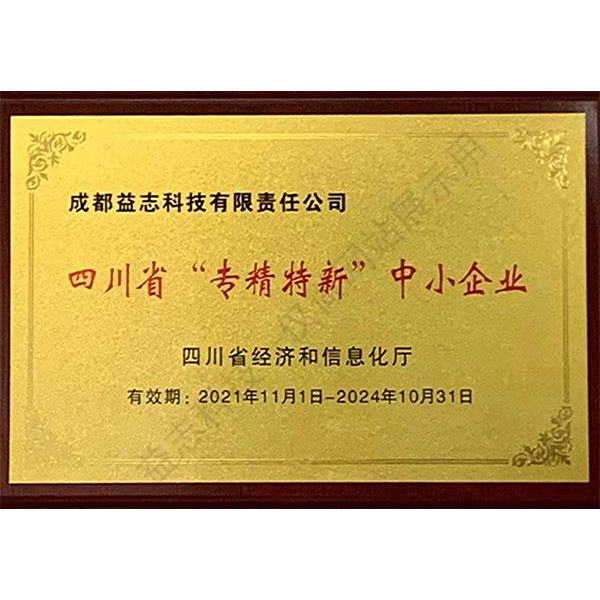
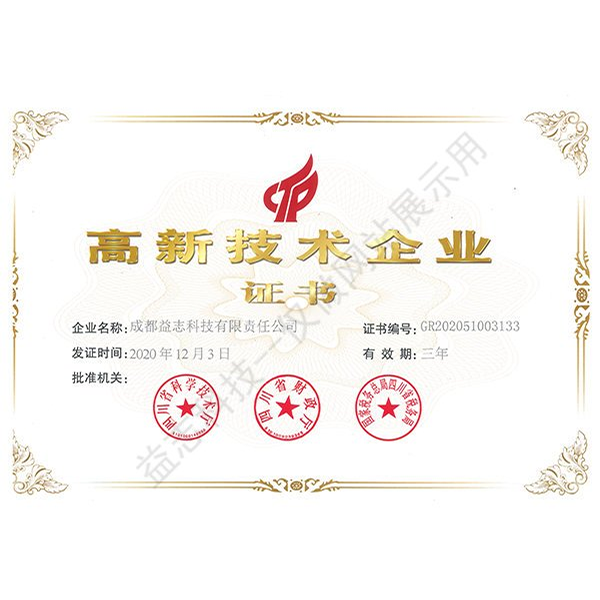
Now this gap between theory and practice is closing. Companies have appeared that were initially focused on engineering and implementation. For example, Chengdu Yizhi Technology Co. — their websiteyzkjhx.rureflects the approach well. These are not just equipment sellers, but a design institute that grew out of the chemical technology company Huaxi. When the authorized capital is 120 million yuan, this allows you not only to assemble installations from purchased components, but to conduct your own developments and build pilot stands. In their case, innovation inepishure argon purificationare often born from requests from specific clients - say, from producers of polysilicon or special steels, where the requirements for gas purity are prohibitive.
What’s also important is that they don’t hesitate to combine methods. You can often see hybrid schemes: catalytic oxygen removal + adsorption drying + final purification with metal getters. This is not for the sake of complexity, but to save resources. For example, preliminary catalytic removal of O2 greatly reduces the load on expensive zeolites in deep purification adsorbers, extending their life. Such decisions only come with experience from many projects.
The devil is in the details: examples and problems
Let's take a specific unit - an adsorber. It would seem that everything is simple: tower, backfill, valves. But how to ensure uniform flow distribution so that there is no channeling? Chinese engineers are now actively experimenting with the design of distribution grids and the shape of the sorbent layer. I saw one installation where for particularly fine cleaning they used not just one thick soda, but several successive layers with different granulometry. Efficiency has increased, but so has flow resistance. I had to recalculate the entire compressor part.
Another sore subject is analysis. How will you know what's yours?epishur cleaningdoes it really produce argon 6.0 and not 5.8? Calibrating online analyzers, especially for trace amounts of moisture (down to -80°C dew point and below), is a different story. Many failures at the start of projects were due precisely to the fact that control was carried out using outdated or incorrectly calibrated instruments. Nowadays, serious players, including the aforementioned Yizhi Technology, often include in their supply not just equipment, but a control methodology and even a service for periodic verification of analyzers. This adds trust.
There was also a curious incident at one of the metallurgical plants. After launching the new argon purification system, the quality was excellent, but a strange peak in nitrogen content appeared every two weeks. They spent a long time looking for the cause - it turned out that in the neighboring workshop they were carrying out a scheduled purge of the nitrogen line, and micro-diffusion was occurring through the common overpass. The innovation here was not the equipment, but the revision of the plant-wide scheme for purging and insulating pipelines. You can't simulate such things in a laboratory.
Market and drivers: why China?
Why is this segment actively developing in China? There are several drivers. The first is the internal giant market of electronics, photovoltaics and metallurgy. These industries are the main consumers of pure argon. The second is the import substitution policy. Previously, key high-precision systems were purchased in Europe or Japan, now there is a clear course towards localization. This gave designers and technology companies the opportunity to try, fail and iterate with guaranteed demand.
The third driver is access to production capacity. Developing a new sorbent is half the battle. It is necessary to establish its stable industrial production. In China this is easier due to the developed chemical industry. Chengdu Yizhi Technology Co., Ltd., being part of the Huaxi Technology structure, has direct access to production sites, which allows for faster scaling of laboratory developments.
But there is also a downside. Due to rapid growth, many small players have emerged who are chasing price, skimping on materials (for example, the quality of stainless steel for contact with high-purity environments) or on the control system. This creates some noise in the market and undermines the reputation of the segment as a whole. Therefore, now the trend is towards consolidation and the emergence of proven brands, like Yizhi Technology, that are responsible for the entire life cycle of the installation.
Looking to the Future: Where Technology is Heading
If we talk about trends, there is a clear shift towards energy efficiency and “green” ones. decisions. Previously, the main thing was the purity of the output. Now the question of how much energy is spent to produce each cubic meter of high-purity argon becomes no less important. Therefore, innovations are moving towards the recovery of regeneration heat, the use of more efficient algorithms for controlling the PSA (short cycle adsorption) cycle.
Another direction is miniaturization and modularity. Increasingly, what is needed is not giant stations, but compact, almost container-based solutions that can be quickly deployed in new production. This changes the approach to design. The modular principle, where the cleaning unit, drying unit and finishing polishing unit are separate but easily joined units, is becoming popular. On their websiteyzkjhx.ruyou can see that they are also moving in this direction.
Finally, digitalization. This is not about the buzzword “Industry 4.0?”, but about practical things: remote monitoring of parameters, predictive analytics for planning the replacement of sorbents, digital twins for optimizing operating modes for a specific batch of raw materials. This is the next logical step, which turns the treatment unit from a set of pieces of hardware into an intelligent technological unit. In China they are betting big on this, and pilot projects are already working.
Personal summary: is it innovation?
So, is this innovation? If by innovation we mean something completely new, discovering unknown physical principles, then perhaps not. The basic methods (adsorption, catalysis, gettering) have been known for decades. But if you look from the angle of integrated engineering, adaptation to stringent requirements and cost-optimization, then the answer is yes, of course.
Chinese approach toargon purification epishuratoday it is often a second-order innovation. They take technologies known to the world and bring them to life in terms of reliability, integration and ultimate cost of ownership. This is less noticeable from the outside, but no less valuable to the end user. The success of companies like Chengdu Yizhi Technology Co. is built on exactly this: a deep understanding of chemical processes, coupled with engineering experience and proximity to real production.
So, the next time you hear about a Chinese gas purification plant, don’t be so quick to label it. It’s better to look at the details: how the regeneration problem is solved, what kind of analyzers are at the output, what kind of steel the heat exchanger is made of. It is in these details that the very practical, down-to-earth innovation that moves the industry forward lives. And from what I see, China has created a very suitable ecosystem for this kind of work.