Best Chinese adsorbent exporters?
2026-01-03
A question that many people ask, but often look for in the wrong place. Everyone wants to find the best, but they forget that the best is a situational concept. Over the years of working with supplies to the CIS and Eastern Europe, I realized: the key is not in the great name of the plant, but in who stands between you and the plant. And this is where the fun begins, and often the most problematic.
What is really behind the exporter?
I used to think that the main thing was to find a large plant with a direct export department. I was wrong. Many giants, especially state-owned ones, work through intermediaries for small and medium-sized parties. And those who proudly call themselves exporters often turn out to be just a trading company in Shanghai or Guangzhou with a beautiful website. Their knowledge of chemistry is at the level of a safety data sheet, which they have difficulty translating.
I tried to work with these. Order for zeolite for gas drying. The certificate of analysis arrived, everything is normal. But in fact, the moisture capacity is 15% lower than stated. It turned out that the batch was mixed, from different lines. The trading company is not even aware that the plant may have such a practice. Lost time, money and, more importantly, the client's trust.
Therefore, my first filter now is the technical expertise of the supplier. Can their engineer discuss adsorption kinetics or the effect of pore size on selectivity? Or does the whole conversation come down to price per ton and Incoterms? This immediately puts everything in its place.
Critical details that are overlooked
Everyone is chasing activated carbon or molecular sieves. But the real challenges (and opportunities) lie in the specifics. Let's take for examplesilica gel. Silica gel for transformers is important for Russia. The requirements for residual moisture are nowhere more stringent. Many Chinese manufacturers make an excellent product, but their standard packaging is 25 kg bags with a polyethylene liner. When transporting by sea in a container, especially in winter, condensation is a killer. The liner breaks, the adsorbent becomes damp even before customs.
I had to bear it on my own hump. Now for such projects we work only with those who agree to vacuum packaging in foil bags. Yes, more expensive. But cheaper than compensating for damage caused by moisture in transformer oil. And there are dozens of such nuances: from the strength of granules during transportation to compatibility with specific technological environments at the customer’s plant.
Another point is regeneration. Adsorbents are often purchased without specifying the regeneration parameters for the client’s existing installation. Chinese zeolite may require temperatures 30-50°C higher than equipment is used to. The result is under-dried gas and more complaints. You need to not just sell, but integrate the product into the chain.
Case study: when a design institute wins over a trader
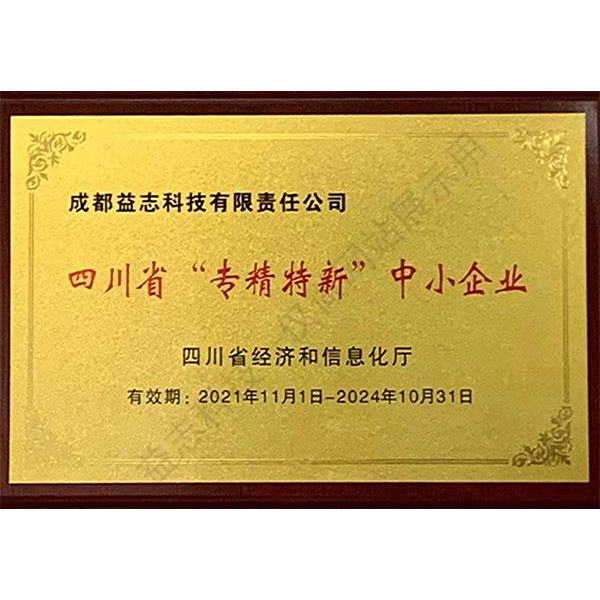
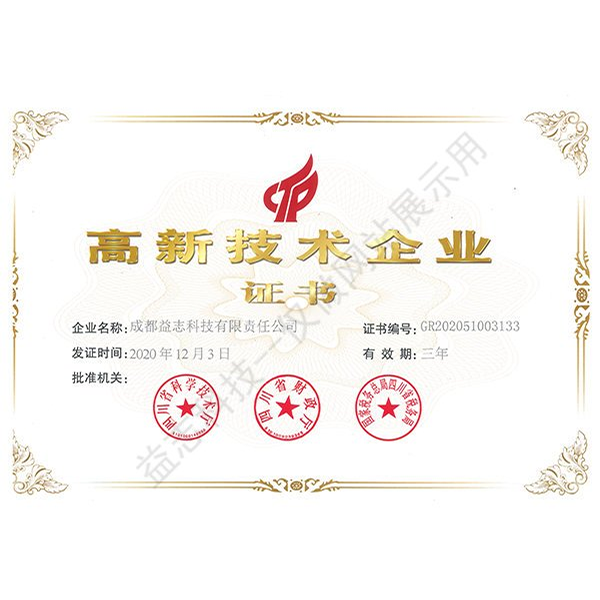
One non-standard example is worth mentioning here -Chengdu Yizhi Technology Co.. I came across them when I was looking for a solution to the complex problem of purifying pyrolysis gas. This is not just a salesman. It is a design institute established by Huaxi Chemical Company. Their websiteyzkjhx.ruis aimed at the Russian-speaking segment, which already hints at the seriousness of its intentions.
What's important? They don't start the conversation with a price list. Their technical specialists first request process parameters: gas composition, pressure, temperature, desired degree of purification. Then they can offer several options based on differentadsorbents: ours or partners. They have their own research base. For my case, they simulated the process and offered a custom mixture of zeolites, rather than a standard product from a catalog.
Of course, this is not a panacea and is suitable for fairly complex, non-trivial tasks where the cost of an error is high. For simple supplies of aluminum oxide for air drying, their services may be redundant. But the very fact of the presence of such players in the market changes the rules. They show that export is not only the shipment of containers, but also the export of engineering competencies. The registered capital of 120 million yuan is also not just a number, it is a signal of serious investments in R&D.
Regional factories versus coastal giants
Many people automatically look towards Jiangsu, Shandong or Shanghai. Logical: ports, logistics. But some of the best specialized manufacturers are located inland, in Sichuan, Shaanxi, Liaoning. Old, Soviet in spirit, research institutes and associated production facilities are often located there. Their technology may be unique, inherited from an era of close cooperation.
Working with them is a separate quest. Zero English. Documents are only in Chinese. But if you find a competent local agent (not from a trading company, but a technical translator with a chemical background), you can find a product with exceptional characteristics. For example, one such plant in Henan province produces aluminum gel for chromatography, which is not inferior in purity to German ones, but costs several times less. But to get it, you need to go through seven rounds of bureaucracy and pay at least 20 tons.
Logistics, of course, kills some of the savings. Delivery to the port of Tianjin or Qingdao from inland regions involves additional costs and risks. But for premium or niche products, the game is worth the candle.
Price, quality and gray analytics
Golden rule: if the price is significantly lower than the market average, it means they are saving on something that they won’t tell you about. Most often - on raw materials or quality control. Activated carbon from coconut shells and from coal are two big differences in mechanical strength and pore structure. But the certificate may simply say activated carbon.
I developed the habit of demanding not a standard certificate, but an analysis of a specific batch. And, if possible, random testing by an independent laboratory in the destination country. The first couple of times this ate up the entire margin, but then a white list of verified factories appeared that you can work with without such a total check.
Another life hack is to look at packaging and palletizing. If the factory is in chaos, the boxes are torn, the pallets are crooked - run. Quality control in such production is most likely just as careful. An adsorbent is not a bag of sand; it requires cleanliness and order at all stages.
So, who are they - the best?
There is no clear answer. For large-scale, standard tasks, the best may be a proven large plant with streamlined logistics and stable quality. For complex, customized solutions - rather, engineering companies or design institutes like the one mentionedChengdu Yizhi Technologywho act as intellectual intermediaries.
The main conclusion over the years: the best exporter is not the one with the lowest price. This is the one whose technologist understands your task, whose logistician foresees problems with condensation in the container, and whose manager honestly says: Our product is not ideal for this application, let's look at an alternative. There are few of these, they are worth their weight in gold, and they do not work with 100% advance payment against a copy of BL. They build relationships with them. And it is they who, in the long term, turn out to be the most reliable and, paradoxically, profitable partners. Everything else is a lottery, where the stakes are your deadlines, nerves and reputation.