Where are cheap mycotoxin adsorbent exporters?
2026-03-28
When you look for cheap exporters of mycotoxin adsorbents, you immediately come across a sea of offers from China. But ?cheap? - the concept is deceptive. Many, especially those who are just starting to purchase, chase a low price per ton, and then end up with problems with efficiency, documentation or logistics. I went through this myself. It seems like this is a lucrative contract, but in the end the adsorbent does not hold aflatoxin B1 as stated, or the shipment is delayed at the port due to incomplete certificates. Therefore, “where is it cheap?” - this is not the first question. The first question: “Where is it reliable and with a clear price-quality ratio?” And this is where the real search begins.
China as the main source: pros and pitfalls
Yes, the main exporters are China. The production volumes are huge, the technologies are mature, the competition is high, which theoretically should reduce the price. But the market is very heterogeneous. There are large factories with their own R&D, and there are hundreds of small manufacturers who simply package standard compounds based on bentonite or hydrosilicates. Their price may be attractive, but the quality varies from batch to batch. I remember in 2019 we worked with one such supplier from Shandong province. The price was 15% below the market. The first three batches were more or less successful, but in the fourth the humidity suddenly increased, and the adsorbent began to cake in the silos of a client in the Rostov region. I had to figure it out, wasting time and money.
What is important to understand about Chinese exporters? Many of them are not manufacturers, but trading companies. They buy from factories, add their margin and sell further. This adds another link in the chain and, sometimes, confusion in the specification. Directly going to the plant is more difficult, but often more profitable and safer. You need either personal contacts or work through proven design institutes that are directly related to production.
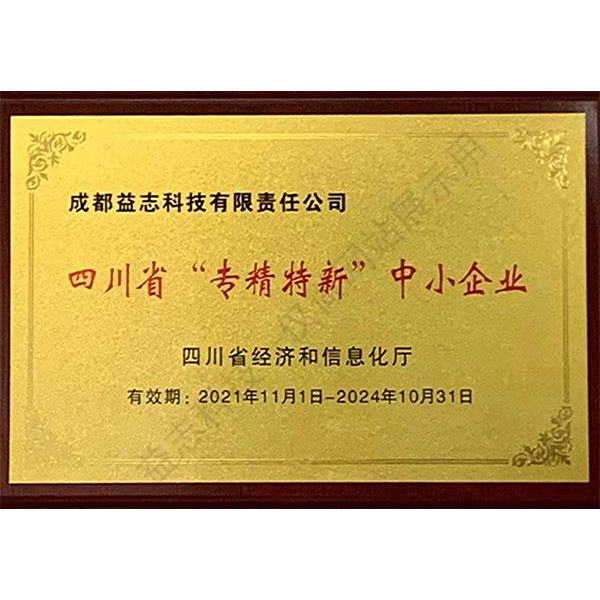
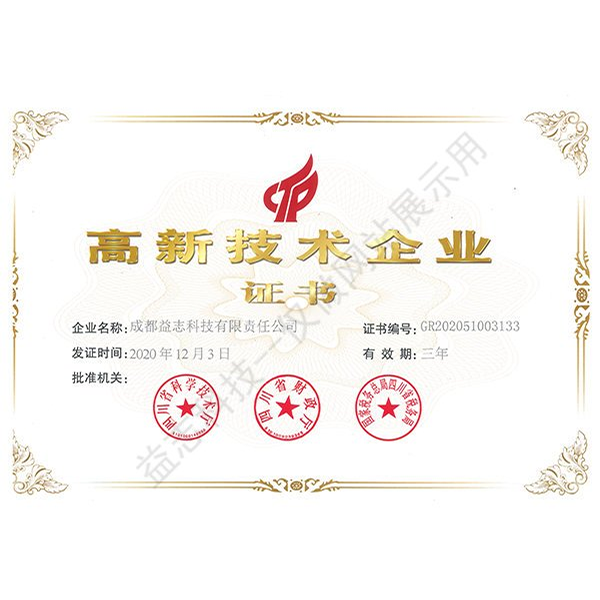
Here, by the way, you can mention an exampleChengdu Yizhi Technology Co.. This is not just a trading company. It is a design institute established by the chemical company Huaxi Technology. They have a registered capital of 120 million yuan, which indicates serious investments. They do not just resell mycotoxin adsorbent, but, apparently, are engaged in the development and design of formulations for specific tasks. Such structures can often offer a more technologically advanced solution, rather than simply the cheapest product. Their website -yzkjhx.ru— focused on the Russian-speaking market, which already facilitates communication.
What to look for besides price? Criteria for real “cheapness”
So, the price per kg or per ton is just the tip of the iceberg. The real cost comes from efficiency. A cheap adsorbent may have a low binding capacity. If it needs to be added to the feed at 2 kg per tonne instead of 0.5 kg of a more effective but expensive analogue, then all the savings on the price per kg disappear. Always consider the final cost of processing a ton of feed.
The second point is security and analytics. A good exporter provides not only a certificate of quality (CoA), but also detailed test reports in vitro and, preferably, in vivo. It is better if the tests were carried out in independent laboratories recognized in your country. Cheap suppliers often have problems with this: certificates are templates, data can be “borrowed”. I almost got caught once: they sent CoA with ideal figures for aflatoxin adsorption, but when tested in our laboratory, the result was 30% lower. It turned out that they tested in ideal laboratory conditions, and not in a model environment that simulates the gastrointestinal tract of an animal.
The third point is logistics and document flow. Is shipping to port (FOB) or to your warehouse (CIF) included? How quickly are export documents prepared? There have been cases when, due to a delay in obtaining a phytosanitary certificate, a container stood idle for a week at the port of departure. These costs also eat up the “cheapness”.
Search experience: from Alibaba to specialized exhibitions
I started, like many others, with Alibaba. There really are thousands of offers. Filters by minimum order, price, rating. But ratings on Alibaba are unreliable. Lots of bad reviews. Found several suppliers with “gold status” and great reviews. Requested samples. Half sent samples that did not match the characteristics of what was stated on the product page. A standard trick: they display a product with high performance, but in fact send you something simpler, hoping that you won’t check or will already be involved in negotiations.
Searching through industry exhibitions, such as VIV or EuroTier, turned out to be more productive. Serious players are represented there. You can chat in person, ask tricky technical questions, and see documentation. It was at one of these exhibitions that I drew attention to companies that position themselves not as sellers, but as technology partners. They asked about the types of feed that we use, about the prevailing mycotoxins in our region (for example, in the Southern Federal District, fusarium toxins are often found - DON, zearalenone). This is another level of dialogue.
After the exhibitions, I began to purposefully search online for design or research institutes at chemical plants. This led me, among other things, to information aboutChengdu Yizhi Technology Co.. Their approach, judging by the description, is precisely from this category - not just to sell, but to design a solution. For constant supplies to large livestock complexes, this option may be both more profitable and more reliable in the long term.
Packaging, storage and other “little things” that affect the price
It would seem like a small thing - packaging. But it greatly affects the final cost. 25 kg bags are standard. But what kind of bags? Simple polypropylene without a tray? Or with an insert? When transported by sea in a container without humidity control, the bags may become damp and the product may clump. There were complaints from the client. Now we always specify the type of packaging and the availability of pallets. Of course, bags with a 5-layer barrier layer and on pallets are more expensive. But they preserve the product. And this is also part of the “cheapness” — less losses during transportation.
Storage in your warehouse. Cheap adsorbents based on natural materials can be hygroscopic. If the warehouse is not heated and ventilated, you can get a large percentage of defects. Higher quality products often have better anti-caking properties. This is rarely written about in specifications, but it is important to ask the exporter.
And one more nuance - the possibility of delivering a trial batch. A real exporter, confident in his product, is almost always ready to send a small trial batch (1-2 bags) for real testing in your production. If the supplier is stubborn and talks only about container deliveries with prepayment, this is a red flag. Even if the price is very tempting.
Final thoughts: so where to look for cheap exporters?
Let's return to the original question. Cheap in the sense of “low price per unit of weight?” there are many exporters. They are easy to find on B2B sites. But such cheapness is a lottery with high risks. Real ?cheapness? - this is the optimal ratio of price, efficiency and reliability of supply.
In my experience, the balance is most often found with exporters who are part of a production holding or, as in the case ofChengdu Yizhi Technology, design institute. They have control over the technology, they can be flexible in their composition, and they usually have good export logistics. Their price may not be the lowest on the market, but it is stable and the product is predictable. Websites of companies such asyzkjhx.ru, contain more technical information, rather than just a product catalog.
Therefore, my advice: do not chase the lowest number in the price list. Collect samples from 3-5 potential suppliers of different sizes - from a large plant to a specialized institute. Test them in your own conditions on your own feed. Consider the total cost of ownership, taking into account dosage, logistics and risks. And then you will find your “cheap” one. an exporter who will actually turn out to be the most economical and responsible partner. Search is a process, not a one-time deal.