Cheap mycotoxin adsorbent: innovation or trend?
2026-03-28
Everyone is talking about cheap adsorbents. But when you see the price tag, you immediately want to ask: what’s inside? And most importantly, what will be in the feed and in the animal tomorrow?
Which way the wind blows: market pressure and the search for solutions
The situation on the market is familiar: production costs are rising, purchase prices are not keeping up, and it is logical that attention falls on one of the cost items - premixes, and in them - expensive adsorbents. A request for a “budget alternative” appears. This is neither good nor bad, it is a fact. But here many make the first mistake, thinking that the adsorbent is just a “powder that binds”. In fact, to put it simply, it is more like a specific trap with a key. The mycotoxin molecule must not just stick, but be securely fixed in pores of a certain size and chemical nature. And this is where the fun begins.
When people come to me with a request to pick up something cheaper, I always ask: what are you willing to lose? Effective over a wide range of toxins? Stability of binding in different parts of the gastrointestinal tract? Or maybe the safety of the adsorbent itself? Because cheapness is often achieved at the expense of raw materials. Naturaladsorbentslow purity, for example, some zeolites or bentonites. They can work, but their capacity and selectivity leave much to be desired. They "get clogged" quickly, and can also bind useful substances - vitamins, amino acids. Savings on adsorbent can result in losses in productivity.
I had experience at one poultry farm. We switched to very affordable local bentonite. Analyzes showed a decrease in the level of mycotoxins in the feed itself. But after a month there was a difference in weight gain, and the conversion rate worsened. They began to figure it out. It turned out that the adsorbent had a high ash content and, critically, worked only in a narrow pH range. In the stomach, it still somehow bound toxins, but when moving to the intestines, where the environment changed, some of them were released back. Got the effect of a “delayed strike”. This is a classic example whencheap adsorbentturned out to be not a solution, but an additional problem.
What is hidden behind the word ?innovation? in this segment?
Innovation in adsorption is not necessarily nanotechnology. This often involves a deep understanding of the chemistry of the process and the ability to modify available materials. For example, the same clay. Regular bentonite is like a coarse mesh. But if you subject it to special thermal and chemical activation, you can increase the surface area and “tune” it. pore size for specific groups of mycotoxins, for example, aflatoxins or zearalenone. This is already a step forward. Such products are often positioned as innovative and at the same time remain in the middle price segment.
But there is another way - composite adsorbents. This is when, say, an organic component (yeast cell wall, specifically processed) and an inorganic component (purified montmorillonite) are combined in one matrix. The organic part, due to β-glucans, binds well to some polar mycotoxins such as DON, and the inorganic part binds nonpolar mycotoxins, such as aflatoxins. Synergy. Such developments are already closer to the high segment, but some manufacturers, optimizing production, offer them at a competitive price. This, in my opinion, is real innovation in the budget field - not reducing the price at any cost, but increasing efficiency and safety for the same or slightly higher cost.
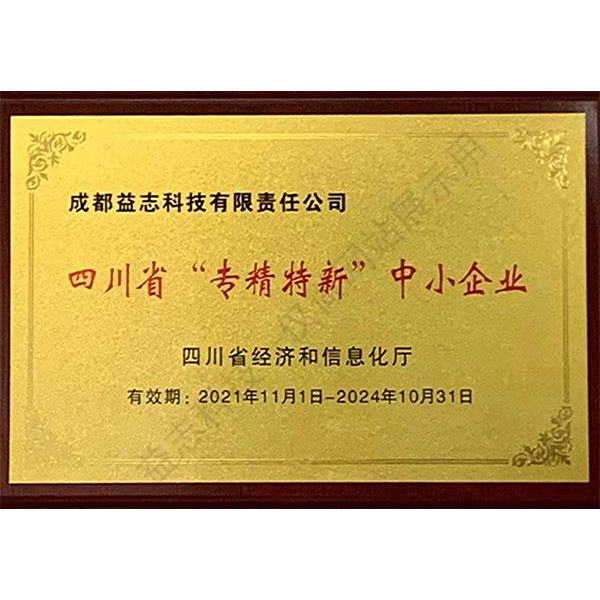
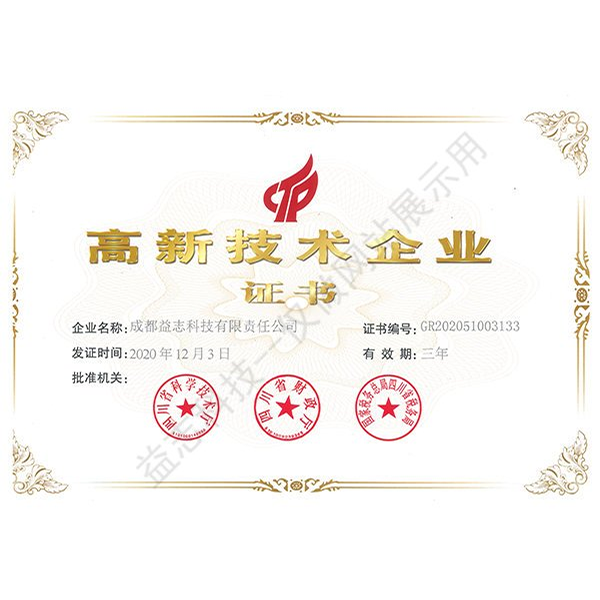
Here it is worth mentioning the experience of colleagues who worked with materials fromChengdu Yizhi Technology Co.. This is not an advertisement, but an observation. They are precisely those who follow the path of deep modification of mineral bases. On their websiteyzkjhx.ruit is clear that the company is positioned as a design institute with a significant authorized capital, which usually indicates investments in R&D. Their product lines include adsorbents based on highly purified layered aluminosilicates, which undergo multi-stage activation. According to reviews from several farms, such products show stable effectiveness comparable to expensive analogues, especially against aflatoxins and fumonisins. Their approach is an example of how the focus can be shifted from ?cheap? for “optimal price and quality?”.
Practical pitfalls and what to look for when choosing
So, you decided to try a more affordable option. What to look for first? Not on pretty graphs, but on in vitro and, more importantly, in vivo test reports. In vitro is the basis. It is good if the tests are carried out not only in a model solution, but in different buffer media that simulate gastric and intestinal juice. This will immediately weed out products that only work “in vitro”.
Be sure to request safety data: content of heavy metals, dioxins. Cheap raw materials are the main source of such risks. I once saw a certificate where lead was at the upper limit of the permissible limit. Technically, it passes. But are you ready to pour this into your food every day? I don't.
And the third point is the consistency of the parties. This is a common headache with budget products. One party works, the other doesn't. Ask the supplier how the uniformity of raw materials and the final product is controlled. If the answers are vague, that's a red flag. Our job is not to experiment, but to get a predictable result.
Personal experience: when is it “cheap?” it turned out to be expensive
I'll tell you another story about a pig farm. The management, succumbing to the general trend, purchased a large batch of very cheap adsorbent based on some kind of “mineral powder”. At first everything was calm. Then problems began with the reproductive cycle of sows: irregular heats, increased idleness. At first they sinned on feed fats and grain. We went through everything. Until we got to the adsorbent. It turned out that, in addition to its weak effectiveness against zearalenone (and it was in that batch of grain), it itself had a high sorption capacity for microelements, especially selenium and zinc, which are critical for reproduction. In fact, we ourselves created their shortage. Losses from lost farrows significantly covered all savings on feed additives. After this, the company adopted a strict rule: any newmycotoxin adsorbent, even the most attractively priced, is first tested in a control group for at least two months with full monitoring of productivity and health.
This incident taught me that the trend towards cheaper prices is an external factor. And our internal task is to consider not the price per ton of the additive, but the overall economics of production. Sometimes paying more for a proven, effective product is the smartest savings.
Results: a trend or a paradigm shift?
So what's going on? I think this is not just a momentary trend. This is a market correction that forces everyone - producers and consumers alike - to become smarter. Manufacturers - to create not just cheap, but technologically advanced and effective products, perhaps on new principles. Consumers - to learn to conduct a competent assessment and not be fooled by the bare price.
The emergence of companies like the one mentioned on the marketChengdu Yizhi Technology Co., Ltd., which invests in research and offers products with a sophisticated mechanism of action in the mid-price segment, confirms this shift. It is no longer “cheap”, but “affordable and technologically advanced”. Perhaps the future lies with such hybrid solutions, where the price is optimized due to scale and production technology, and not due to the quality of raw materials.
Therefore, to answer the question in the title: mass demand for cheap adsorbents is, of course, a trend born of economics. But the market response in the form of technologically advanced, safe and at the same time affordable products is already an innovation. The main thing is not to confuse one with the other and always look at the final cost in calculating the cost of finished products. Everything else is just words and powders.