Cheap technologies for recycling CO from flue gas?
2026-03-28
When you hear about “cheap”? CO capture methods, I immediately want to ask: what is considered cheap? Zero costs? Or is it simply cheaper than converting to methanol? The industry often confuses lower operating costs with lower capital investment costs. My experience suggests that if we are talking specifically about flue gases, where the concentration of CO can fluctuate from a few to tens of percent, and nearby there is a lot of nitrogen and moisture, then “cheapness”? often turns out to be a myth, except for options with direct afterburning for heat. But even here, not everything is simple.
Key misconception: ?cheap? means ?simple?
Many customers, especially in small industries, come with the request: “We need to recover CO from exhaust gases, the budget is limited?”. As a rule, they mean installing a catalytic afterburner. Yes, it is relatively inexpensive in terms of equipment. But when you start counting, the details come out. Firstly, if CO in the mixture is less than 0.5-1%, it is often no longer profitable to burn it with fuel supply - energy costs eat up all the savings. Secondly, the composition of the gas. Sulfur, dust, phosphorus are common companions of flue gases from metallurgy or waste incineration. They killcheap catalystfor months, or even weeks. You talk about the need for expensive multi-stage cleaning - and you see how interest fades. It turns out that cheap technology comes at the expense of expensive training. This is the first stumbling block.
We had a project on gas from a ferroalloy furnace. CO of about 12% would seem to be an excellent concentration for disposal. But there was dust containing zinc and alkali metals. Standard zeolite-based adsorbents or even copper-zinc catalysts quickly lost activity. It was necessary to design an electric precipitator and a wet scrubber, which increased the installation cost by one and a half times. The client refused and decided to simply disperse it through a tall pipe. Saving? Only on paper and only in the short term.
So my first rule: cheap technology starts with accurate and honest gas analysis over a long period. Not a one-time measurement, but monitoring. Otherwise, all calculations go to hell.
Adsorption methods: where is the real cost hidden?
PSA (pressure swing adsorption) is often advertised aseffective solutionto release CO. The technology is, in principle, proven. But its "cheapness" for flue gases is a controversial issue. The main cost item is not the adsorbers themselves, but pre-drying. CO2 and water vapor compete with CO for the active sites of the adsorbent, sharply reducing its efficiency. This means you need a serious drying unit, often with deep cooling. It's energy-intensive.
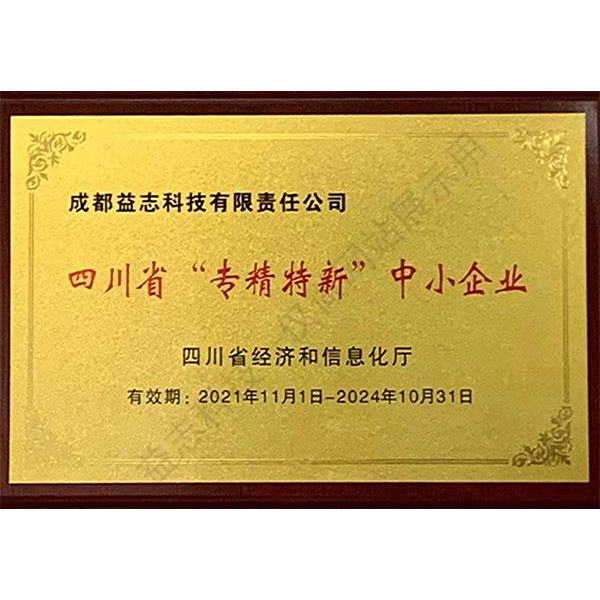
We worked with an installation at one of the Chinese chemical plants; the project was supervised by Chengdu Yizhi Technology Co. Their experts proposed a combined scheme: absorption with monoethanolamine to remove the bulk of CO2, then adsorption drying, and only then PSA on carbon molecular sieves. According to their calculations, this gave an acceptable cost of the separated CO2. The key was to use heat recovery from other plant processes to regenerate the adsorbents. Without this "free" the heat economy was becoming shaky.
Interesting point fromYizhi Technology: they focused on customizing adsorption cycles for a specific, “dirty” one. gas profile. We didn’t take ready-made solutions from the catalog, but modeled the process. This is exactly the detail that distinguishes design work from selling equipment. You can find cases on their website yzkjhx.ru, but there, of course, everything is presented more smoothly than in reality with its endless commissioning.
Catalytic transformations: not only afterburning
Why does everyone only think about oxidation to CO2? There are also reactions, for example, hydrogenation to methane (methanation) or Fischer-Tropsch synthesis. But they require hydrogen. Where can I get it cheaply? If there is a source nearby, for example, alkaline electrolysis, then it can be considered. But again we come up against complex logistics and the cost of H2.
We tried to consider the optioncatalytic oxidationwith heat recovery for waste heat boiler. Technically - a working scheme. But the economy is highly dependent on the stability of gas pressure and consumption. At one of the cement plants, fluctuations in the operation of the furnace led to the fact that the boiler either worked at its designed capacity or simply circulated air. The heat was removed unevenly, the steam cycle worked intermittently. A seemingly cheap method of heat recovery turned into a headache for operators.
Another subtle point is the choice of catalyst. A cheap copper-chromium catalyst operates in a narrow temperature window and is afraid of “excess?” oxygen. Expensive platinum is more stable, but its theft becomes a real risk on some sites. This is practical nonsense that is not written about in articles.
Biotechnological approaches: future or niche solution?
I heard about the experience of using carboxydotrophic bacteria that absorb CO. It sounds futuristic and “cheap”, because bacteria supposedly reproduce themselves. But in life there are huge bioreactors that require strict control of temperature, pH, and nutrient supply. And most importantly, what to do with biomass? It also needs to be disposed of.
I saw one pilot plant at a timber processing plant. We took gas from a wood waste boiler. The problem was in the inhibitors - resins and phenols inhibited the bacterial culture. The cost of the cleaning system before the bioreactor is equal to the reactor itself. The project stalled at the pilot testing stage. Conclusion: such methods are so far for very clean and stable gas flows, which almost never happen in real industry.
Integration into the process: the only way to ?cheapness?
In my deep conviction,cheap CO recovery— this is not a separate installation, but an option built into the technological cycle of the enterprise. The best example I have seen is the use of CO as a reducing agent in metallurgy or for carbonylation in chemical synthesis. That is, not recycling, but useful use without radical alteration of the flow.
For example, at one acetic acid plant, a flue gas stream with a high CO content after purification was mixed with the main raw synthesis gas. This required fine tuning of the catalyst and additional monitoring, but allowed savings on raw materials. The modifications were initiated by the project team, including with the involvement of engineers from Chengdu Yizhi Technology Co., Ltd. is a design institute established by Chengdu Huaxi Chemical Technology Co., Ltd. Their role was precisely in adapting the technology to the existing infrastructure, and not in selling a “boxed” product. solutions.
My bottom line is this: look for the magic “cheap technology?” pointless. You need to look at a specific gas, at a specific plant, at its energy and material balance. Sometimes the cheapest way is to make the main process more efficient so that less CO is produced. And sometimes - invest in purification and sell CO as a commercial product. It all comes down to details that are visible only when immersed in the problem. The rest is talk at conferences.