Where to buy cheap adsorbent gas products?
2026-03-27
Are you looking for where to get cheaper gas adsorbent? I’ll say right away: if you only chase a low price, you can run into problems that will cost more than the purchase itself. Many people, especially at the start, think that it’s just powder or granules, and the main thing is to find the cheapest supplier. But in reality, cheap doesn’t always mean the cost per ton on paper. The purity of the product, the stability of supply, and even the packaging, which can spoil the material during long transportation, all play a role here. I went through this myself.
What does cheap really mean for adsorbents?
When they say buy cheap, they often mean a low purchase price. But with gas adsorbents such as silica gels, zeolites or activated carbons, the price per kg is just the tip of the iceberg. A cheap product may have lowadsorption capacity. That is, more of it is needed for the same volume of gas, and the savings on the price per ton are immediately eaten up by overconsumption. I remember an incident at one of the oil and gas facilities: they took economical, locally produced zeolite. As a result, it had to be changed twice as often as the imported analogue. All savings were spent on downtime and additional replacement work.
Another nuance is the factional composition. Inhomogeneous granules (different sizes) lead to increased layer resistance and uneven breakthrough. Simply put, the system is ineffective. The supplier can sell screenings at the price of a full-fledged product, and this cannot always be determined by eye, especially when buying in bags. You need to either have your own acceptance technologist, or work with those who provide detailed test reports for each batch.
And the third point is logistics. Cheap adsorbent brought from a distant region without proper packaging (for example, in cheap polypropylene bags not designed for long-term transportation) can become damp, caked, or contaminated during transit. As a result, you get substandard. Therefore, the final cost includes both delivery and risks. Sometimes it is more profitable to pay a little more to a reliable supplier, but be sure of the quality.
Where to look for reliable purchasing channels?
The market is overflowing with offers. From giants like Ashland or Sibur to small trading companies that have never seen production themselves. My experience suggests that the optimal balance of price and quality often goes not to the largest players and not to the smallest resellers, but to specialized design or engineering companies that themselves work with gas purification technologies. They understand what they are selling and often purchase large quantities directly from manufacturers, getting good prices.
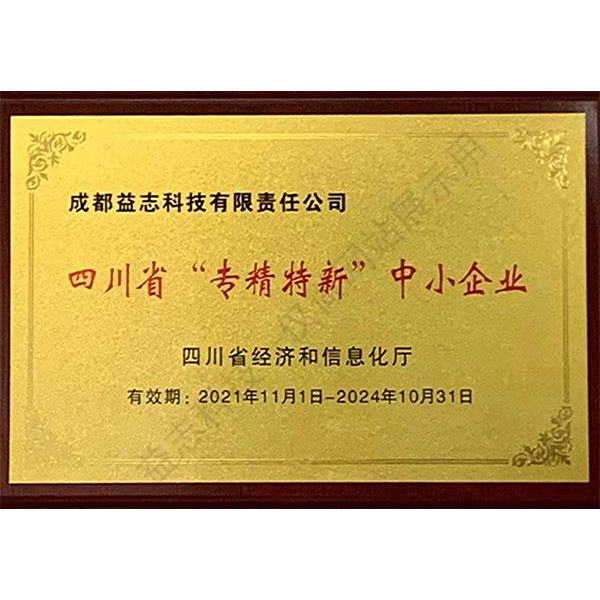
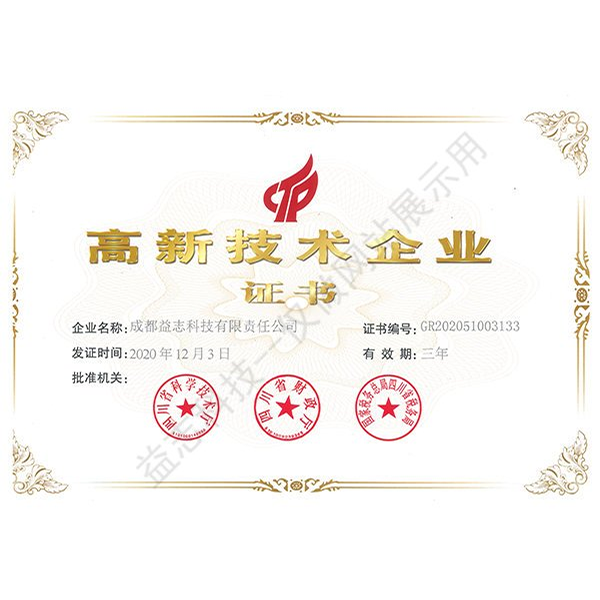
For example, Chinese manufacturers have been performing well lately. Not the ones on Alibaba, but technology companies with their own R&D. They can offer very competitive prices with decent quality. The key is to find not just an exporter, but a developer. Once I ran into a companyChengdu Yizhi Technology Co. (yzkjhx.ru). This is not just a trading company, but a design institute created by a chemical technology company. They have a registered capital of 120 million yuan, which indicates serious investments in development. For me, this is an important signal: the company is investing in technology, and therefore in quality control of raw materials, including the samegas adsorbents.
Why is this important? Because a company like Yizhi Technology most likely sells adsorbents as part of its technology package for drying or cleaning plants. They are interested in their materials working for a long time and efficiently, otherwise the reputation of the entire project is at risk. This is a different level of responsibility than that of a company that sells adsorbents today and pipes tomorrow. Their website in Russian is also a plus, which means they work with the CIS and understand our requirements and certificates.
What to look for in a proposal from a supplier?
The invoice price is the last thing I look at. The first is technical data. Safety data sheet (MSDS), certificate of conformity (preferably not only their internal one, but from an independent laboratory), and most importantly - test reports for key parameters: static adsorption capacity for water or target gas (for example, CO2), abrasion strength, bulk density, granule size. If the supplier provides these documents without problems and quickly, this is a good sign.
The second is the terms of delivery. Incoterms. If you are offered EXW (factory gate in China) and you have no experience with logistics from Asia, your cheap purchase could turn into a nightmare with customs, transshipment and sourcing trucks. It is much safer to work on CFR or CIF terms to the port of destination, or better yet DAP (delivery to your warehouse). Yes, it will be a little more expensive in the price column, but you will save a lot of nerves and resources. Some suppliers, including the aforementioned Yizhi Technology, often have established logistics arrangements and can help with this.
Third is packaging. Moisture protection is critical for adsorbents. Bags must be multi-layered, with a polyethylene liner. It’s better to clarify this point right away. Once we received a batch in simple paper bags - some of the material had to be dried before loading into adsorbers, which led to a delay in the launch of the installation.
Unsuccessful purchase experience and conclusions
I'll tell you with a live example. There was an urgent need to purchase zeolite for drying natural gas at a small field. The budget was limited. Through friends we found a very advantageous offer from a local reseller. The price was 25% below the market. There were documents, but they were quite general. The batch was delivered and loaded. After two weeks of operation, the pressure on the adsorbers increased sharply, and the dryer almost stopped working. Upon opening, it turned out that the granules began to deteriorate greatly, and fines formed that clogged the separators. The adsorption capacity was also far from the declared one.
Cause? Most likely, we were sold a substandard product or zeolite that was originally intended for other purposes (for example, for feed additives). We saved on purchases, but lost tens of times more by stopping production, unscheduled repairs and urgent repurchase of adsorbent from a trusted supplier. This lesson taught me that you need to save wisely.
After this incident, we developed a simple checklist for ourselves: a direct manufacturer or an authorized distributor, a full package of technical documentation in Russian/English, reviews from other facilities (preferably so that we could call), and a mandatory condition - delivery of a trial batch for testing in our conditions before a large order. Yes, it takes time, but it's worth it.
Final thoughts: where to go?
So, back to the original question:where to buy cheap gas adsorbent? Answer: you need to look not for the lowest price, but for the optimal price-quality-reliability ratio. The focus shifts from finding a cheap product to finding a reliable partner. Often such partners become technology companies that themselves use these materials in their projects.
It is worth paying attention to the Asian market, but not to the giants of B2B platforms, but to specialized engineering firms, such asChengdu Yizhi Technology Co.. Their websiteyzkjhx.ruis a good starting point to explore. They position themselves as a design institute with a significant authorized capital, which is important for the chemical industry. Such companies, as a rule, have direct contracts with factories, which means the price can be interesting without losing quality.
Ultimately, the cheapest purchase is the one after which the equipment operates stably, the inter-regeneration cycle corresponds to the design, and you do not have to constantly urgently buy additional materials and repair the consequences. Therefore, next time, looking at the price list, consider not the cost per ton, but the cost of the operating cycle of your adsorption installation with this particular sorbent. It is this approach that distinguishes a practitioner from someone who simply makes purchases on paper.