Cheap adsorbent exporter: innovation?
2026-03-26
When you hear “cheap adsorbent exporter,” the first thing that comes to mind is probably simple resale of standard materials like activated carbon or silica gels. Many in the market still believe that there is no room for innovation, only price and volume. But this is a big misconception. In fact, this term hides a complex layer of work: from searching for raw materials and optimizing logistics to adapting the product to specific, often very stringent customer requirements. And it is here, in these “invisible” ones. details, and that same competitive advantage is born, which can no longer be called simply “cheapness”.
What does "cheap" really mean? in our context
The concept of "cheap" often interpreted too literally. Client from the CIS requestingcheap adsorbent, rarely means a low-quality product. Most often it is a matter of finding the optimal ratio of price/efficiency/service life? for a specific task: industrial wastewater treatment, gas drying, drinking water purification in municipalities with limited budgets. The exporter’s task is not just to offer the most affordable product from the catalog, but to understand the client’s process technology. Sometimes ?cheap? the solution turns out to be expensive due to frequent replacement, while the slightly more expensive but high-capacity material is economically beneficial. This is the first barrier of understanding that needs to be overcome.
From my own experience, I came across a situation where standard coal was offered for cleaning organic vapors. But after analysis, it turned out that the flow contains impurities that quickly poison the pores. ?Cheap? the solution didn't work. Together with the technologists, we had to select an impregnated composition, which, although more expensive to purchase, increased the inter-regeneration mileage several times. The client was satisfied, although the initial request sounded exactly like “we need something inexpensive?”. This transition from a request to a real technical specification is the key work.
Another aspect of "cheapness" — logistics. You can make a good product, but kill it with shipping costs. This is especially trueexporterov working from Asia to the CIS regions. Optimization of packaging (switching from bags to big bags, for example), consolidation of batches, work with terminals - all this directly affects the final price for the customer. Sometimes saving 5-7% on freight is more important than long negotiations on a discount on the material itself.
Innovation: not where you expect it
Talking aboutinnovationin this area, everyone immediately imagines laboratories with nano-materials. Of course, this is interesting, but for the mass market of the CIS countries innovations of an applied and engineering nature are more often in demand. For example, the development of adsorption mixtures (sorbents) for a specific pollutant composition. Or modification of the surface properties of a standard carrier to increase selectivity. This is not a revolution in chemistry, but it is something that solves a specific customer problem and creates added value.
Take, for example, the story of one of our projects for a metallurgical plant in Kazakhstan. The task was to capture mercury vapor. There were few ready-made solutions on the market, and all of them were expensive. Our team, including technologists fromChengdu Yizhi Technology Co., proposed not just to supply a sorbent based on impregnated carbon, but to develop an entire two-stage adsorption scheme with different materials at each stage. This made it possible to use a cheaper media in the first stage (where the load is high), and a more efficient one in the final cleaning. The savings for the plant amounted to about 30% compared to the typical offer of European suppliers. Innovation? For this plant - absolutely.
Innovation often lies in service. Providing detailed calculations of adsorber loading, modeling process dynamics, recommendations for regeneration - this is what distinguishes a supplier from a partner. On the websiteyzkjhx.ruWe try to post not just a catalog, but technical notes and cases. This is not for show. When a client sees that you understand their problem deeper than just “here’s the price per ton?”, trust arises in a completely different way. And this allows us to discuss more complex and interesting projects, where more advanced developments can already be applied.
Failures and lessons: you can’t go anywhere without this experience
Of course, not everything was smooth sailing. One of the most significant failures was connected precisely with the desire to satisfy the request for “cheap”? product. To purify condensate, the gas industry offered an economical zeolite produced locally (for the customer). Laboratory tests were good, but in the field the material began to rapidly lose mechanical strength due to constant adsorption-desorption cycles and the presence of dripping moisture. Dust, increasing pressure drop - eventually the system stopped. I had to urgently look for a replacement and compensate for some of the losses. The lesson was harsh: saving on the quality of the media or on comprehensive testing under conditions as close as possible to real ones always backfires. Now we test any product, even the simplest one, for cyclic stability.
Another lesson is the importance of direct dialogue with technologists on the client side. Once we supplied a large batch of adsorbent for air drying. The material was excellent, but the client complained about insufficient efficiency. It turned out that they loaded it into old adsorbers with damaged distribution grids, causing a short circuit in the flow. The problem was not in the sorbent, but in the equipment. Since then, the standard reminder question in the questionnaire is: “Condition and type of adsorption columns?” This saves you from unfounded claims and helps to offer a real solution, perhaps including minor repairs or changing the loading pattern.
These failures, oddly enough, have become part of our competitive advantage. We've learned to ask uncomfortable questions, be skeptical of requests that are too simple, and always build contingencies into the contract. This is the very “practice” that you cannot read in textbooks.
The role of the design institute: why is it not just a ?supplier?
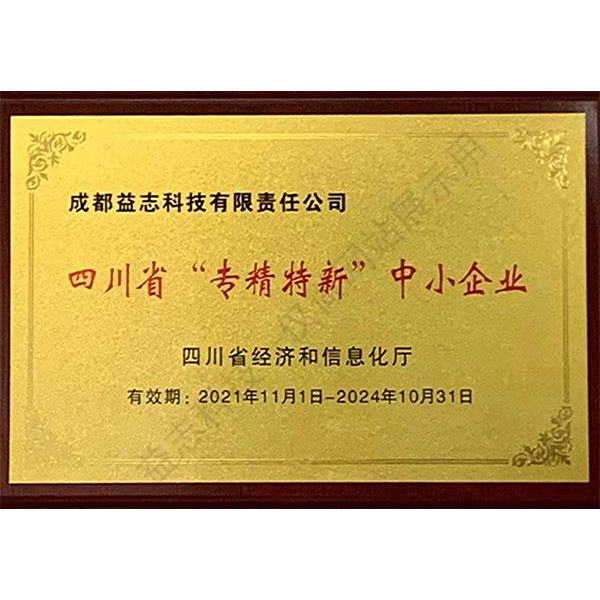
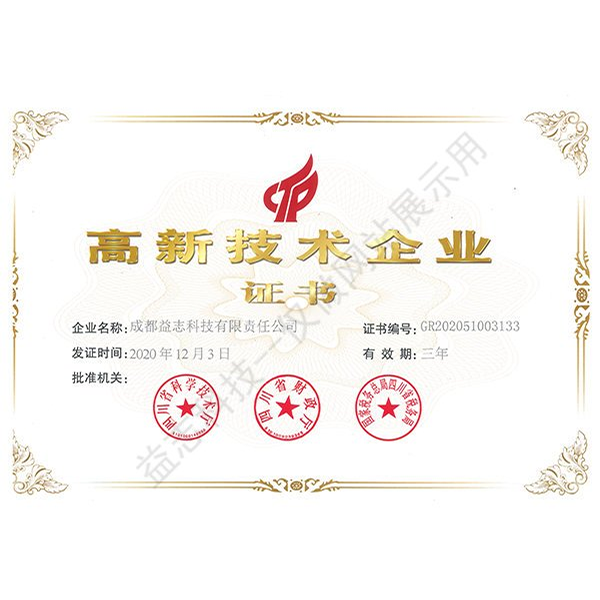
Here it is worth explaining about our structure.Chengdu Yizhi Technology Co., Ltd.is not a trading company. It is a design institute established by the parent company Huaxi Technology. The registered capital of 120 million yuan is not for beauty, it is an investment in research, test benches, and laboratory equipment. When we likeexporterWhen we enter the market, we rely not on the warehouse program, but on engineering potential. This changes the approach radically.
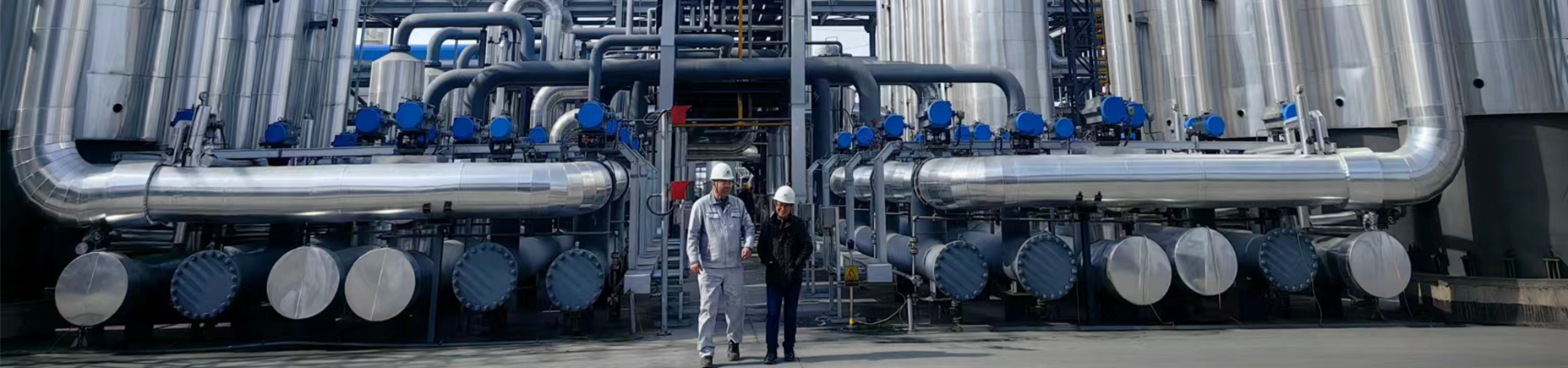
The client comes not for an “adsorbent”, but for a solution to a cleaning problem. We can start with an audit of an existing installation, conduct laboratory tests with pollutant samples, simulate the process and only then recommend a material or even an entire process flowsheet. Sometimes the solution is to combine adsorption with another method, such as membrane separation. The presence of the institute allows such complex things to be considered and proposed.
For example, for a project in Uzbekistan to treat wastewater from phenols, we did more than just select a sorbent. First, samples were taken on site and the full composition, including accompanying salts, was analyzed. Then, in a laboratory in Chengdu, they ran several regeneration cycles of the selected polymer sorbent to ensure its stability. And only after that we prepared a technical and commercial proposal, which included not only the supply of material, but also parameters for designing a regeneration unit. This is a level of trust and responsibility that is valued in the industrial sector.
A look into the future: where the market is heading
If we talk about trends, then the request for “cheap?” the product is not going anywhere, but its content is changing. More and more customers understand the value of Total Cost of Ownership. Demand is shifting towards materials with higher capacity and better recyclability, even if their price per kilogram is higher. This opens the way for more complex products.
The second trend is environmental friendliness and recycling. Spent adsorbent, especially with heavy metals or organic toxicants, is a headache. Materials are being developed and will be in demand that are either easily regenerated on site, or after use can be safely disposed of or even used in other industries (for example, in construction after certain processing). It's not just chemistry anymore, it's a circular economy.
And finally, digitalization. Simple sensors of residual capacity, modeling of layer depletion in real time are still rare for the CIS market, but the demand is already being formed.Exporterof the future, perhaps, will supply not just bags of material, but “adsorption as a service”: material + monitoring system + subscription service. To stay in the game, you need to think about these competencies now. Our institute allows such developments to be carried out not isolated from the market, but in close connection with the real problems of customers. This is probably the main thinginnovation- the ability to adapt deep technological capabilities to the strict requirements of cost and reliability.