Where are cheap tablet adsorbent exporters?
2026-03-26
Finding reliable and at the same time inexpensive suppliers of tablet adsorbents is a task that in reality turns out to be much more difficult than it seems from online queries. Many people immediately rush to look for the lowest price, but this is where the main trap lies.
Price versus specification: where are the real savings?
When they say “cheap”, you need to immediately clarify - for what volume and for what requirements. Cheap tablet adsorbent often means either low bulk density (and you pay for air during transportation) or problems with abrasion resistance. I remember how I once took a trial batch from a new supplier from Asia at an attractive price. The tablets seemed to comply with the specifications, but when unloaded into a silo at the terminal they produced an unacceptable percentage of dust and fines. As a result, the client filed a claim, and the pennies saved turned into reputational costs and re-grading.
Therefore, now I clearly share for myself: if you need an adsorbent for standard gas drying processes, where some variations are acceptable, you can look for cheaper options. But for sensitive catalytic processes, or where precise pore size is important, saving on price per kg can be fatal. You need to look at the total cost of ownership, taking into account consumption and efficiency.
By the way, about pore size. Often in specifications they write ?4-10 ??, but rarely specify the distribution. For inexpensive products, this distribution can be very wide, which directly affects selectivity. So what's ?cheap? the exporter must be ready to provide not just a quality certificate, but detailed data on nitrogen adsorption, for example. If such data is not available or obtaining it causes difficulties for the supplier, this is a red flag.
Geography of supplies: not only China, but also hidden logistics hubs
Of course, the first thing that comes to mind is Chinese manufacturers. There are many of them, prices are competitive. But ?cheap? does not always mean profitable if you consider logistics. Sending a container from the inland provinces of China, say, from Sichuan, to the port of Tianjin or Shanghai is already a significant cost item, which is included in the FOB price. Sometimes it is more profitable to work with companies that have their own logistics facilities or long-term contracts with carriers.
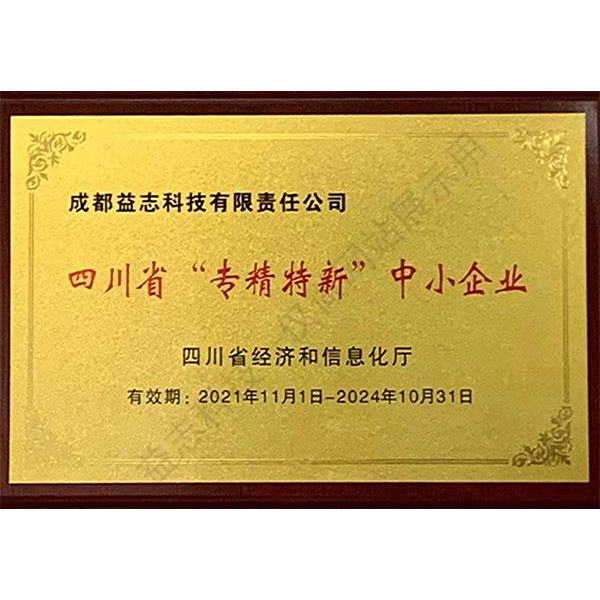
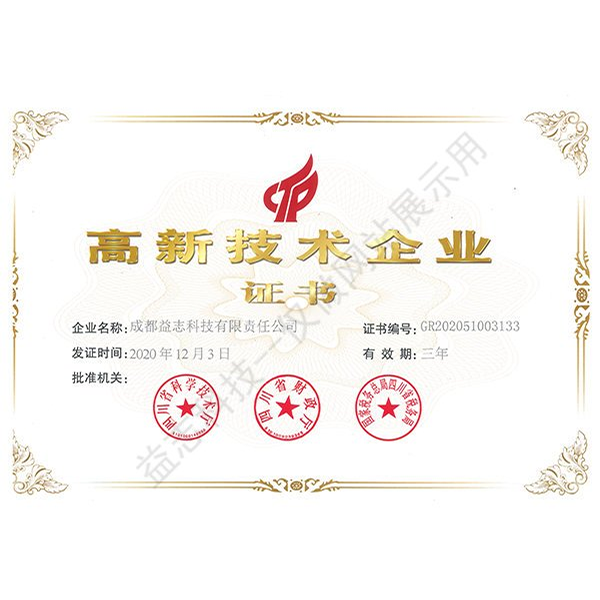
For example, I met a design company at workChengdu Yizhi Technology Co.(their website ishttps://www.yzkjhx.ru). This is an institute created by a chemical technology company with a significant authorized capital. Such organizations are often not direct manufacturing giants, but act as engineering and export hubs. Their advantage is that they can put together the optimal solution for a project by combining products and, due to the volume of projects, obtain good conditions from factories. Their price may not be the lowest on paper, but they often undertake the optimization of turnkey delivery, which ultimately reduces overall hassle and risks.
It is also worth looking at exporters from other regions, such as India or Middle Eastern countries, who are re-exporting Chinese products. Sometimes their CIF prices at the destination port are more interesting due to established sea routes. But there is a risk here - the chain is longer, and it is more difficult to control the quality of raw materials.
Selection criteria: what to look for besides the price list
So, I found several potential exporters with good prices. What's next? I am requesting not just a commercial proposal, but a complete package: factory audit report (preferably from an independent body), detailed COA for the last few batches, conditions for conducting and paying for an inspection at the factory before shipment. If the company refuses or delays in providing it, they will be eliminated immediately.
A very telling moment is the reaction to a customization request. Let's say you need non-standard packaging (big bags with a special valve) or adding a moisture indicator. An inexpensive supplier who deals only with conveyor products will most likely refuse or charge a huge premium. And more flexible exporters, even if their base price is slightly higher, can accommodate without a significant increase in price. This indicates an established relationship with the plant and customer focus.
Another practical tip is to be sure to ask for a production video. Not a beautiful advertising video, but live filming of the tablet pressing, drying, and packaging area. You can understand a lot from the state of the equipment and the organization of the process. Once, based on this video, I noticed that the workers in the workshop did not use gloves when in contact with the product - questions arose about compliance with basic GMP standards, and the deal was abandoned.
Failure experience and conclusions
I had one painful experience. We found an exporter through a B2B platform. Prices were 15% below the market, all documents were in order, they gave us a virtual tour of the plant via Skype (as it later turned out, it was not their plant). A trial batch was shipped. The adsorbent arrived, according to basic tests in the laboratory - normal. But when they put it into production, the efficiency dropped by 30% compared to the previous supplier. It turned out that to reduce the cost, they used a lower quality binder, which degraded at operating temperatures. The legal proceedings were long and futile - the contract was drawn up with clauses that allowed the supplier to evade liability.
The main conclusion: I saved on complex laboratory testing in an independent center before concluding a contract - I lost many times more. Now such a check is a mandatory item in the budget of any new contract, even with the “cheapest” one. supplier. This is an item you can’t skimp on.
This incident also taught me the importance of verifying the actual legal entity and its history. Now, if I see a company like ?XX Technology Co., Ltd.?, created by a large manufacturer, like the sameChengdu Yizhi Technology Co.(a subsidiary of Huaxi Technology), this is more trustworthy. They have a parent company reputation to uphold and serious assets. Risking all this for the sake of a one-time scam with a batch of adsorbent is unlikely.
Working with "gray" channels and alternatives
There is talk in the industry about the so-called “gray” ones. supplies - when a product is purchased from a large factory and resold through a chain of intermediaries without unnecessary documents. The price can be tempting. But I basically avoid such schemes. In addition to legal risks, the traceability of raw materials is completely lost. If an incident occurs at the facility related to the quality of the adsorbent, all responsibility will fall on you, and you will have to prove something to the supplier from the “gray” company. zones will not be possible.
Sometimes a cheaper alternative may not be to find a new exporter, but to renegotiate the contract with the current one. For example, agree on an annual volume with phased shipments instead of one-time purchases. Often suppliers are ready to give a significant discount for guaranteed volume and prepayment. Or switch to deliveries in soft containers (big bags) instead of bags, if the infrastructure allows - this can reduce the cost of packaging and loading and unloading operations.
In the end, returning to the original question - where is it cheap? Cheap - where there is a transparent chain, technical expertise to accurately determine the required specifications, and a willingness to invest in verification before large deliveries begin. The most expensive adsorbent is the one that does not perform as expected. Therefore, my advice is: look not just for a low-price exporter, but for a technology partner who understands your process and is willing to take responsibility for their product. Sometimes such a company may not be the first on the list when searching for “cheap tablet adsorbent”, but in the long run it will be the most economical option.