Cheap CO2 recovery from smoke?
2026-03-26
When you hear about cheap CO2 recycling, the first thing that comes to mind is just another marketing ploy. Everyone wants a simple and inexpensive solution, but in reality these words usually hide either immature technology or a complete disregard for capital and operating costs. Having worked on capture projects myself, I’ll be honest: cheap almost never means effective in the long term, especially when it comes to complex gas mixtures such as flue gases. But certain approaches can reduce costs if all input parameters are correctly assessed and do not strive for universality.
What's behind the smoke and why it's important
Smoke is not just CO2. This is a cocktail of N2, O2, water vapor, SOx, NOx, fly ash and a dozen other impurities, the concentration of which depends on the fuel and combustion mode. The CO2 concentration in such a stream rarely exceeds 10-15%, which immediately puts an end to many cheap methods designed for pure or concentrated streams. The main cost item is not so much the CO2 binding chemistry itself, but gas preparation: cleaning, drying, compression. Ignoring this stage means dooming the system to rapid failure, for example, due to catalyst poisoning or corrosion.
I remember one project at a small thermal power plant where they tried to use membrane separation without proper SO2 removal. The membranes failed within six months, and the cost of replacement wiped out all the expected savings. Conclusion: cheapness at the design stage results in multiple costs later. You need to look at the full life cycle, not the price tag of the equipment.
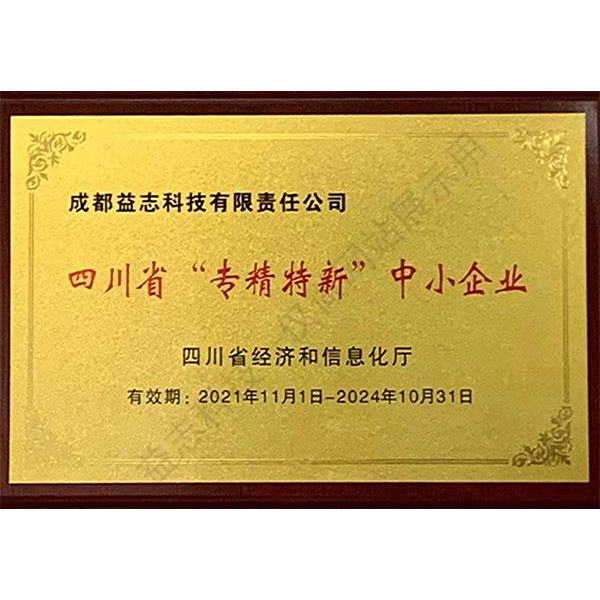
Here it is worth mentioning the approach of some design institutes that specialize in complex solutions. For example,Chengdu Yizhi Technology Co.(their website ishttps://www.yzkjhx.ru) positions itself as an institute created for the implementation of technological projects. In their practice, judging by open data, the following principle is often found: first, a deep audience for a specific emission source, and then the selection or development of technology. This is reasonable. They do not sell a boxed solution for all occasions, but work according to the specific conditions of the customer, which can ultimately reduce overall costs.
Where should the captured CO2 go? A question of profitability
Actually, recycling is the key word. If the CO2 is simply buried, then it is a net cost. For the process to pay off at all, there needs to be a market or useful application locally. The most obvious routes are dry ice production, greenhouse use, injection for oil recovery (EOR), or the synthesis of chemicals such as urea. But each route has its own limitations in terms of volume, cleanliness and logistics.
In my opinion, the most realistic scenario for many enterprises is use in their own technological cycle. For example, if a plant produces carbonates or bicarbonates, then the captured CO2 becomes a raw material, not a waste. But here again the question of purity arises. Chemical synthesis often requires CO2 with an impurity content of less than 0.5%. Achieving such purity from flue gas is a non-trivial and expensive task.
There was an experience with a mini-factory for the production of soda. We counted on cheap CO2 utilization from our own boiler house. But after calculating the cost of purification to the required condition, it turned out that it was cheaper to buy liquid carbon dioxide from a third-party supplier. The project was canceled. This is a typical mistake - not calculating the chain to the end, to the final product.
Technologies that claim to be cheap
If we put science fiction aside, what are people really looking at today? Firstly,amine scrubbing- a classic of the genre. It is not new, but is constantly being optimized: new amines are appearing that are more resistant to impurities and require less energy for regeneration. It cannot be called cheap due to high energy costs, but for large sources this is often the optimal balance of reliability and cost.
Secondly,adsorption on solid materials(MOF, zeolites, activated carbon). The main advantage here is potentially lower energy consumption for desorption, for example, by vacuum or temperature change (TSA/VSA). But the materials are expensive, and their capacity and selectivity under real smoke conditions can drop sharply. I saw an experimental installation using zeolites - after a month of operation on gas from a coal boiler, the efficiency dropped by 40% due to pores being blocked by sulfur residues and moisture.
Thirdly,mineralization— binding of CO2 into carbonates using waste (slag, ash). Sounds ideal and cheap: waste + CO2 = useful product. But the kinetics of the process is very slow, large areas are required, and the final product - the same carbonate - has a meager cost. The economics only add up if there are fines for CO2 emissions and fees for waste disposal. For now, this is more of a niche solution.
Where to look for savings? Experience from practice
True savings come not from magical technology, but from integration and synergy. The first is the use of low-grade heat. Regeneration of the amine solution requires energy. If the same plant has waste heat (for example, from cooling equipment), it can be used for heating, reducing external energy costs.
The second is avoidance of excessive cleaning. CO2 with a purity of 99.9% is not always needed. For some applications, such as greenhouse fertilizer, certain impurities are acceptable. You need to clearly know the consumer’s requirements and not overpay for an unnecessary degree of purification. This seems obvious, but at the design stage it is often forgotten, setting standard parameters.
Third, modularity and scalability. Sometimes it is cheaper to install several small modular installations at different smoke sources than to run gas pipelines to one centralized one. This reduces infrastructure costs and allows the system to be launched in stages. Similar modular approaches are sometimes offered by companies likeChengdu Yizhi Technology Co., which operate as a design institute, their strength is in adapting standard solutions to a specific site and its infrastructure limitations.
Conclusions: is there such a thing as cheap recycling?
In short, no, it doesn’t exist. There isoptimizedandrational disposal. Its cost can be reduced by 20-30%, and sometimes more, if the entire cycle is carefully analyzed: from the composition of the flue gas and the available resources (heat, waste, space) to the requirements for the final product and logistics. The race to be cheap on paper almost always leads to failure.
The most important thing is to start not with the choice of technology, but with a deep technical and economic analysis of your particular facility. Without this, any talk about cost is guesswork. You need to calculate CAPEX and OPEX for specific conditions, and not take average numbers from advertising brochures.
And lastly: the world is changing. Prices for quotas are rising, new subsidies are appearing, and technologies are developing. What was unprofitable five years ago may become viable tomorrow. Therefore, the key skill is not to find a ready-made cheap solution, but to be able to flexibly design a system to suit changing economic and regulatory conditions. And this is precisely where specialized design institutes help, whose job is not to sell equipment, but to create working and economically viable technological chains.