Where is adsorption activated carbon cheap?
2026-03-26
Cheap is not about the price tag, but about the cost of the cycle. If coal turns to dust after two regenerations, its initial price is no longer important.
What is hidden behind the word "cheap"? on the market
They often call and simply ask: “Where can I buy cheap activated carbon?”. They mean, of course, the low price per ton. But here is the first stumbling block. Coal and coal are different. The same oneadsorption activated carbonfor gas purification or solvent recovery is one story, but for water purification it’s another story. Pores, ash content, mechanical strength - everything is different. And the price, accordingly, too. A cheap option for water may turn out to be absolutely useless in an adsorber for toluene, money down the drain.
I have seen many times how they bought “economical”? coal in granules for the VAU system. It seems to fit the specifications. And after a month or two, the pressure in the column grows by leaps and bounds. You open it up and there are fines and dust, the granules could not withstand the cyclic loads and collapsed. Savings on material resulted in a production stop for unscheduled replacement. That's all the cheapness is.
Therefore, my first advice: forget about just “cheap”. Formulate the problem: for what medium, what impurities, what temperature, pressure, is subsequent regeneration necessary. Then the search will narrow down to adequate offers.
Sources: from giants to niche suppliers
Large international brands, of course, maintain their brand and price. The quality is stable, but you pay a lot for this stability and documentation. For large-scale, critical projects - it is often justified.
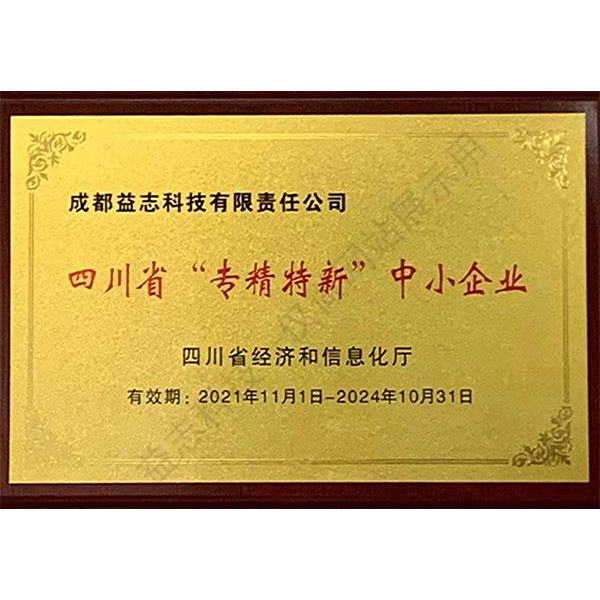
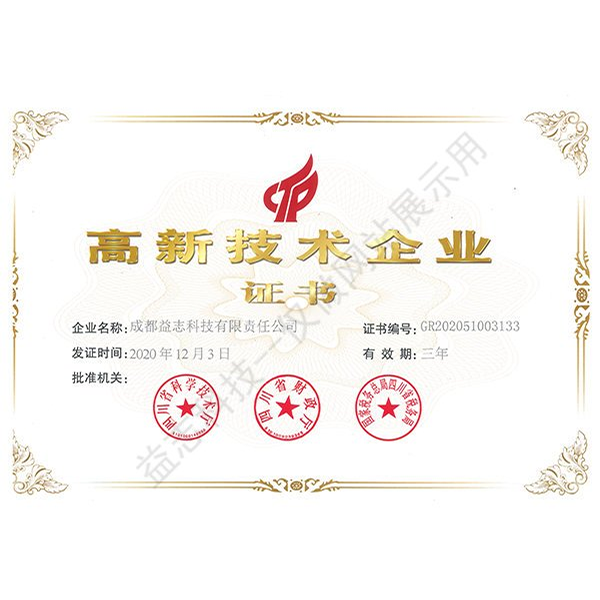
But there are other players. For example, Chinese manufacturers. The stereotype here that everything is cheap and of poor quality has not worked for a long time. Yes, you need to choose very carefully. But some companies there have reached a serious technological level. They can often provide just the balance of price and quality that many are looking for. I worked, for example, with materials from Chengdu Yizhi Technology Co. - this is their Russian-language portalhttps://www.yzkjhx.ru. These are not just traders, but an engineering institute created by a chemical company. They have their own R&D and can customize them to suit the task. From experience, they did a good job with carbon for specific organic vapors, especially in terms of the adsorption capacity to price ratio.
Another way is to look for manufacturers of raw materials (coconut shells, coal) and those who are directly involved in activation. Sometimes you can go to a factory that makes a good product, but is not promoted in our market. Prices can be reasonable. But there are risks in terms of logistics and the need to carry out a full cycle of testing the samples yourself.
Evaluation criteria: what to look at besides the price list
So, you have received commercial offers with seemingly suitable prices. What's next? You request not only technical specifications, but also test reports. Preferably not according to GOST standards (they are often outdated for such materials), but according to methods close to your processes. For example, not just “iodine value,” but adsorption isotherms for your target substance or its analogue.
Mechanical strength is a key parameter that many people miss. Ask about the abrasion indicator? or “for crushing?”. Cheapactivated carbonoften ?soft?. It looks great in a laboratory flask, but in an industrial apparatus it turns into sludge.
Be sure to request samples. Not to put it on a shelf, but to conduct your own, albeit simplified, tests. I sifted it, tapped it on the table in a sieve, and looked how much dust was formed. I filled it with my model solution or let it pass through steam and looked at the dynamics. This will weed out frankly weak candidates.
Logistics pitfalls and hidden costs
It seems that we have found the ideal option - the price per kg is 30% lower than the market price. Joy until the logistics bill arrives.Adsorption carbon— the material is voluminous, not the heaviest, but takes up a lot of space. Shipping by sea from Southeast Asia can kill all savings, especially for small quantities. You need to calculate the cost CIF (to the port) or DAP (to your warehouse). Sometimes it is more profitable to buy from a local distributor with a markup, but without the headaches of customs and transshipment.
Another hidden item is recycling. If coal becomes a hazardous waste after use (for example, it has adsorbed heavy metals or persistent organic compounds), the cost of its disposal can be many times higher than the original price. Sometimes it is worth considering slightly more expensive, but on-site regenerated options, if such an option exists.
Personal experience and unsuccessful attempts
I had a project to capture alcohol vapors. The client demanded to minimize costs. Through friends we found a supplier from the region who offered coal of its own production. at a ridiculous price. They gave me samples - in the laboratory the iodine value was even higher than stated. We decided to take a chance and purchased a trial batch.
We installed the adsorber and started it up. The first cycle works. After the first thermal regeneration with steam, there is a sharp drop in efficiency. They opened it. Some of the granules sintered into a monolith, some crumbled. It turned out that the raw materials and the activation process were such that the coal could not withstand thermal shock. I had to unload everything and install material from a trusted supplier. The savings resulted in losses for dismantling, disposal and downtime. This lesson is well remembered: the stingy pays twice, especially when it comes to technological materials.
After this incident, for critical tasks I always consider suppliers with a full cycle and technical support, like the same institute Chengdu Yizhi Technology Co., Ltd. By the way, they have a registered capital of 120 million yuan, which indirectly indicates the seriousness of their intentions and capabilities for R&D. You can discuss with them not just “give me some coal?”, but specifically the parameters for the task, and they can suggest or modify something. It's more expensive than buying it secondhand, but it's more reliable.
Final search vector
So where is it cheap? Answer: where the seller understands your technology and can offer a product with optimal properties, and not just the cheapest one available. The price per ton is just one line in the calculation.
Concentrate on finding specialized manufacturers or engineering companies that work with adsorption. Explore their websites, e.g.yzkjhx.ru, see if there are project descriptions, technical articles. This speaks of expertise. Request samples and TEST them under conditions as close to yours as possible.
Consider the total cost of ownership: material price + logistics + installation/backfill + possible regeneration + disposal. It often turns out that ?expensive? Carbon with high strength and capacity, which lasts 3 times longer and is regenerated 10 times, ultimately costs several times less per cycle. This is the number you need to strive for. What you need to look for is not a low price, but high efficiency at adequate costs. This will be real savings.