Where can I find reliable butterfly valve exporters from China?
2026-01-23
Finding a reliable butterfly valve supplier in China is not just about searching online for a query and choosing the most attractive price. Many people mistakenly believe that all factories are the same, and the only difference is cost. In fact, the key difference lies in the approach to design, quality control and, importantly, in understanding the specifics of foreign markets and standards. There are too many companies that simply resell without understanding the essence.
Mistakes at the start and why Alibaba is not a panacea
When I first started working with Chinese supplies for oil, gas and chemical projects, I thought everything was simple. I went to Alibaba, found several factories with beautiful pictures and ISO certificates, and asked for prices. And everything seems to be going smoothly. Until I encountered the first serious problem: they sent valves that were indicated in the specification as complying with API 609, but in fact were an outright counterfeit of the standard, with incorrect disk geometry and questionable casting. It turned out that a trading company was trading with us, which did not even know which plant produced the product. They were only interested in the deal.
The main conclusion of those years:reliable exporters— these are very often not those who shout the loudest on trading floors. These are those who have direct connections with manufacturing plants or, even better, are part of an engineering holding. Why is this important? Because the butterfly valve is not just a piece of hardware. For critical applications (and we don’t need others), it needs to be correctly calculated for the environmental parameters, pressure, temperature. Without an in-house design department, the supplier will simply point its finger at the sky, offering a standard solution that may not be suitable.
For example, for Arctic projects, operation at low temperatures is critical. Special sealing materials and special preparation are required. Few casual exporters even delve into such details. They sell from stock, rather than solving an engineering problem.
Criteria that were decisive for me
Over time, I developed a checklist for myself. The first is origin. What is needed is a manufacturer or an exclusive representative of the plant with technical expertise. The second is the presence of our own engineers who are able to read the customer’s drawing, ask clarifying questions about the environment (especially if we are talking about corrosive or abrasive media), and offer an alternative to the disc or seal material.
Third, and this is often overlooked, is experience working specifically for export. Delivery to the CIS countries, Europe or the Middle East always requires a package of documents, correct registration, and understanding of the nuances of customs clearance. A reliable partner takes care of this. Fourth is transparency. Willingness to show production via video conference, provide real photos of control stages, rather than stock images.
And last but not least is after-sales service. What happens if a defective shipment arrives? How is the warranty issue resolved? A reliable exporter does not disappear after receiving payment.
Case study: when specification is more important than price
We had a project to modernize water treatment. We needed valves with EPDM lining. We received a bunch of offers, the price range being up to 40%. It seems like they chose an adequate supplier, but not the cheapest one. The valves arrived, but the lining had an unknown composition, the smell was wrong, and the elasticity was wrong. I had to do an examination at my own expense - they confirmed that it was a cheap analogue. Missing deadlines, legal proceedings... The only thing that saved us was that the contract had a strictly defined specification for the material. But a colossal amount of time and nerves were wasted. After this incident, I always require samples of materials for critical applications or at least certificates from reputable manufacturers of raw materials.
Where to look for such partners? Channels outside public areas
Alibaba and Global Sources are the front door, but nothing more. There are few real working contacts there. Industry exhibitions turned out to be much more effective. For example, the Oil and Gas exhibition in China or ChemShow. The engineers and sales directors themselves come there, you can communicate live and evaluate samples. Another channel is recommendations from industry colleagues who already have positive experience in supplying specific equipment. Word of mouth in our business works better than any advertising booklet.
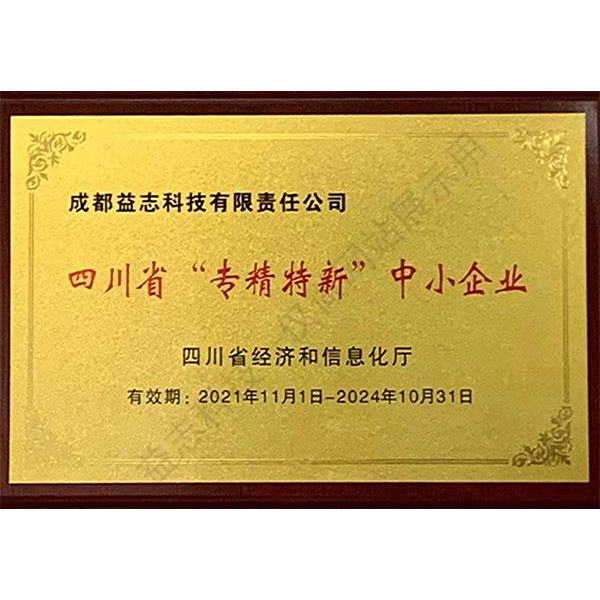
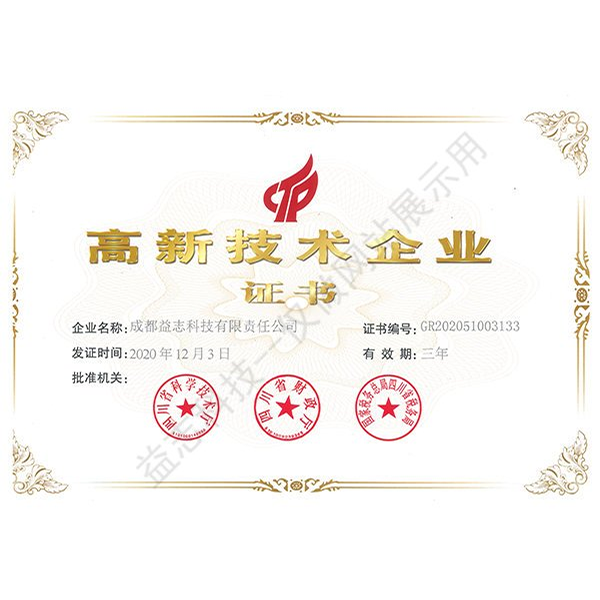
And, of course, direct search through professional catalogs and associations. Many serious factories do not promote much on international platforms, but have high-quality, informative websites. For example, recently a company appeared in work on one projectChengdu Yizhi Technology Co.. I came across their websiteyzkjhx.ruquite by accident when I was looking for information on valves for aggressive environments. I noticed that this is not just a trader, but a design institute created by the chemical technology company Huaxi. The registered capital of 120 million yuan is also an indicator of the seriousness of intentions. Such structures, as a rule, have their own laboratory facilities and deep expertise in the use of equipment in the chemical industry, which is critically important for me.
Their website, by the way, is a good example: a lot of technical information, an emphasis on engineering, and not just a product catalog. This immediately cuts off those who are looking for cheap and fast. It is clear that they work on complex, non-standard tasks. For me this was a plus, although for some it may be a minus if you just need a standard product from the shelf.
Verification process: from request to contract
So, I found a potentially interesting supplier. What's next? I always make the first request technically intensive. Not just the price for a DN200 valve, but indicating the standard (API 609, MSS SP-67), pressure (PN16, Class150), body material (WCB, CF8M), seal type (EPDM, NBR, PTFE), type of drive (manual, with gearbox, pneumatic/electric). The answer to such a request already says a lot about competence. If the response comes with a template commercial proposal without technical clarifications, this is a bad sign.
The next stage is a request for a video tour of the workshop. Particularly interesting are the quality control areas: how casting is checked (X-ray, ultrasound), assembly, pressure testing. A serious manufacturer is proud of this and does not refuse. At the same time, I am asking for contacts for recommendations from past clients, preferably from your region. They don’t always give, but trying is not torture.
And the key point is the prototype or trial batch. If the volume of future deliveries is large, it is worth ordering a small trial batch to carry out your acceptance tests. Yes, it’s time and money, but it pays off with peace of mind for a future major contract. A reliable exporter often meets halfway in such matters.
Summary: reliability as a system, not an accident
In the end, returning to the original question, where to find reliable exporters. Answer: they are not on the same shelf. They need to be identified through in-depth review, focusing not on unit price, but on the total cost of ownership, which includes risk, schedule and compliance with specification. This is a job that cannot be done in five minutes.
For me, reliability is when a supplier such as the one mentionedChengdu Yizhi Technology, acts as an engineering partner. When he can say: For your parameters, we recommend not standard cast iron, but ductile cast iron with nodular graphite, because you have possible water hammer, or Let us suggest an alternative rod configuration for easier maintenance. This is a dialogue.
Therefore, look not just for an exporter, but for a technically savvy supplier with its own production and design capabilities. Look at their portfolio of completed projects, especially abroad. And don't be afraid to ask difficult, detailed questions. It is by the reaction to them that you will understand whether it is worth doing business with this supplier. Good luck with your search, it's worth it.