Chinese butterfly valves: innovation and reliability?
2026-01-23
A question that constantly comes up in conversations with customers and colleagues. Some immediately frown, saying that Chinese means it’s unreliable, just the price. Others, more curious, ask: What is actually there? They say it's not the same now. About ten years ago, I myself belonged to the first category, until one project forced me to reconsider my views. This is not about blind faith, but about the specific evolution of the product. And the key here is not Chinese in general, but who makes them and how. Because the range, I will say this, from outright rubbish to solutions that can easily work in critical areas for ten years if they are correctly selected and installed. Let's understand without big words, with examples and, more importantly, with pitfalls.
Where does skepticism come from and what has changed?
Historically, the reputation has been damaged, and rightly so. Early deliveries in, say, the mid-2000s often suffered from two things: inconsistent materials and disc/seat geometry issues. We received a shipment of what appeared to be GGG-40 cast iron according to the passport, but in reality it was fragile and had shells. Or the disk seemed to be centered, but at the first serious water hammer it began to jam. This gave rise to the main headache - unpredictability. You were never sure that two seemingly identical bolts from the same box would perform identically.
The shift began when large Chinese export manufacturers began investing in their own foundries and CNC machines. Not all, of course. But those who wanted to enter the markets of the EAEU or Europe quickly realized that without certificates according to API 609, ISO 5211 and, critically, without control at every stage, there was nothing to do. Now the gap between a garage factory and a serious enterprise is colossal. The latter often involve European engineers to audit processes. I saw this at the site of one plant near Chengdu: their line for processing polymer-coated seats was cleaner than in some of our workshops.
By the way, about polymers. Here the Chinese often follow the path of innovation, sometimes even too aggressively. They offer exotic seal compositions for everything. My experience: for standard environments (water, steam, mildly aggressive chemicals), their EPDM or NBR is often quite adequate and withstands the stated cycles. But as soon as we talk about specific hydrocarbons or temperatures under 200°C, then it is necessary to require test reports and it is better to use proven brands like Chemraz or Kalrez. We tested a valve with a unique Chinese seal for hot oil - after six months it began to leak. We returned to the standard configuration from a well-known brand - it works.
Where is innovation real and where is marketing?
Three things are most commonly cited as innovation: disc design, sealing system, and materials. The disc has an interesting story. Many European manufacturers have been using a standard design for decades. Chinese engineers, not bound by such traditions, often experiment with the profile to improve hydraulic resistance and reduce torque. I have seen models where the disk has an almost aerodynamic profile - and indeed, on large diameters DN400 and above, the flywheel spins noticeably easier. But the question is the durability of such a profile during cavitation - there is little data yet.
The real innovation that I appreciate is the integration of a rod position indicator or even a simple open/close sensor directly into the gearbox design or housing. Not as a separate expensive option, but by default. For automated process control systems this is a huge plus. UChengdu Yizhi Technology Co., for example, this is often found in the line for the chemical industry. You go to their websiteyzkjhx.ru, you look at the specifications and see that a positioner or at least a limit switch is included in the base. This suggests that they are designing the valves with automation requirements in mind, and not as a separate mechanical unit.
But be careful with nano-coatings and super-alloys. These are often just fancy words for standard 304 or 316 stainless steel. It would be innovative if they mass-provided duplex steel or Inconel at a competitive price. So far this is rare. Their strength lies in optimizing the production of standard grades, which gives a price advantage without sacrificing quality. That is, innovation is in the process rather than in the material.
Reliability: what is tested in the field
Any engineer will tell you: the reliability of the valves is determined on the pipeline, and not in the passport. And here, Chinese shutters have their own typical diseases that you need to know. The first is the quality of processing of the bearing seats and the stuffing box seal on the rod. It happens that the shaft is perfect, but the boring in the housing has a micron misalignment. This leads to accelerated wear of the stuffing box and leakage after a couple of years of intensive use. Upon acceptance, we now always ask for control protocols for these specific dimensions.
The second point is assembly. Sometimes, in pursuit of speed, they do not tighten the tightening torque of the nuts on the same rod or skimp on grease for the bearings. The result is play or creaking. My colleagues and I have developed a rule: before installation, we partially disassemble any Chinese valve, especially a large one (if the design allows it), check the lubrication and reassemble it using our own technical process. This adds a day to installation, but eliminates unscheduled stops. After such fine-tuning, they serve no worse than many European analogues.
And the third, most important point is testing. A serious manufacturer will always provide a video or photo report from the test bench: crimp testing of the body, test for tightness of the shutter in both directions. If they don't give you this, it's a red flag. Some factories, like the same design instituteChengdu Yizhi Technology, created on the basis of Huaxi Technology, even offer the customer’s inspector to visit the factory for acceptance testing. This is a strong move that immediately separates the players from the resellers.
Case: chemical production and selection errors
I’ll tell you about a specific incident about five years ago. We needed DN150 butterfly valves for the supply line of a weak acid solution. Temperature up to 90°C, pressure 10 bar. We decided to save money and took the best Chinese valves lined with improved Teflon. According to the passport - perfect. After 8 months, problems began: the lining in the contact area with the seat began to peel off, and a leak appeared. We took it apart and saw that the lining was not applied using the full coating method with mechanical engagement, but was simply stretched and glued. It would be suitable for static conditions, but not for constant disk friction.
After this incident, we began to dig deeper into lining technology. It turned out that advanced Chinese manufacturers are just switching to the rotational molding or injection method, creating a monolithic coating without seams. This is the very practical innovation that increases reliability. But we must look for it. As a result, for the same line they found a replacement from another supplier - with a solid-lined disc and seat. They have been working for four years without any complaints. Conclusion: you cannot choose only based on the durability rating of the material. The technology for applying this material is an equally important criterion.
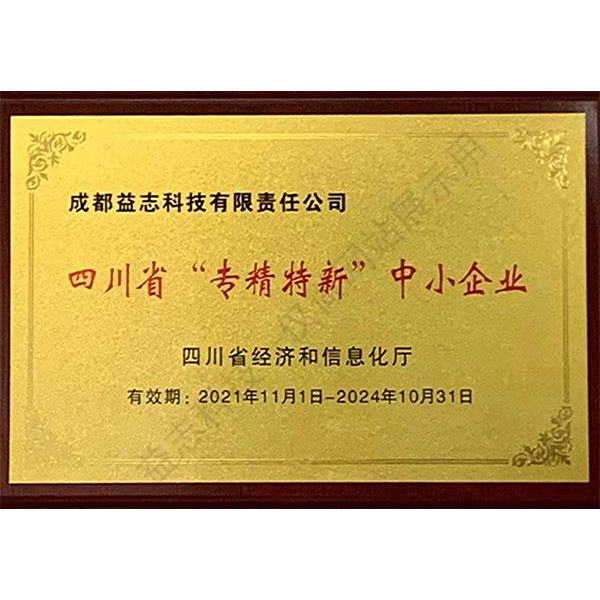
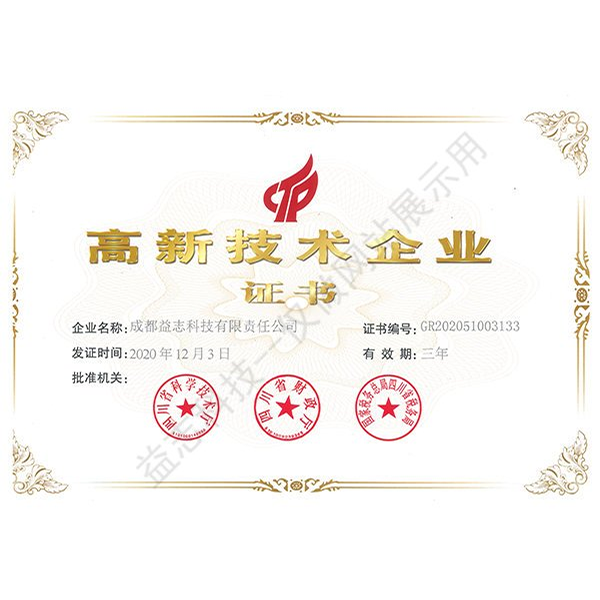
It is in such niche applications (chemistry, food industry, pharmaceuticals) that the company’s specialization is important. If a company positions itself asdesign institute with registered capital of 120 million yuan, like Yizhi Technology, this hints at having its own engineering capabilities to develop solutions for a specific environment, and not just trading in hardware. This changes the dialogue with the supplier radically.
Results: when to look towards China
So, after all, innovation and reliability? Yes, but selectively. Innovation is often present in the form of design improvements to reduce the cost of ownership (the same easy ride) or the integration of useful options. Reliability is achievable but not guaranteed by default for any manufacturer. It is the result of your verification work as an engineer.
It is worth considering Chinese butterfly valves when: 1) There are clear, verifiable specifications and you are willing to spend time analyzing production and testing. 2) The project is sensitive to budget, but not to the criticality of the node (for example, on auxiliary lines). 3) You have found a manufacturer with a proven history of working on similar projects and are ready for the fine-tuning stage.
Don't expect miracles from them with materials. It is worth waiting for the optimal price-functionality ratio for standard and moderately complex tasks. And the main thing is to stop thinking in terms of Chinese vs European. Think in terms of a specific plant with specific processes and evidence of quality. Then the discussion about innovation and reliability will move from the plane of myths to the plane of engineering calculations. And this, ultimately, is the only correct approach to any fittings, no matter where they come from.