Chinese actuated valves: innovation?
2026-01-24
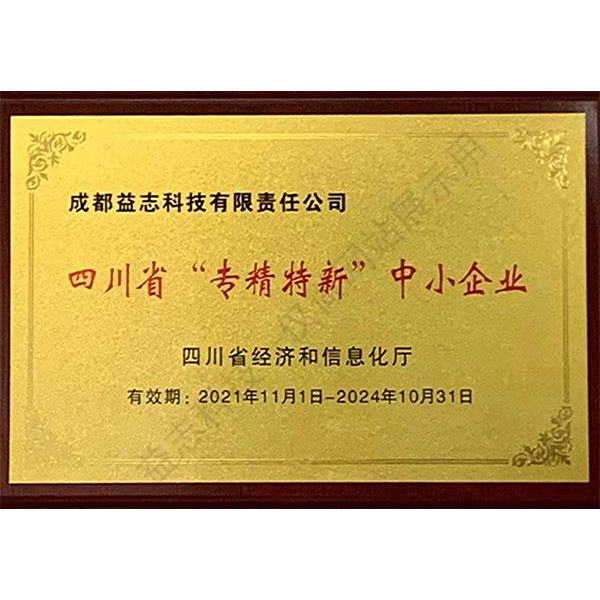
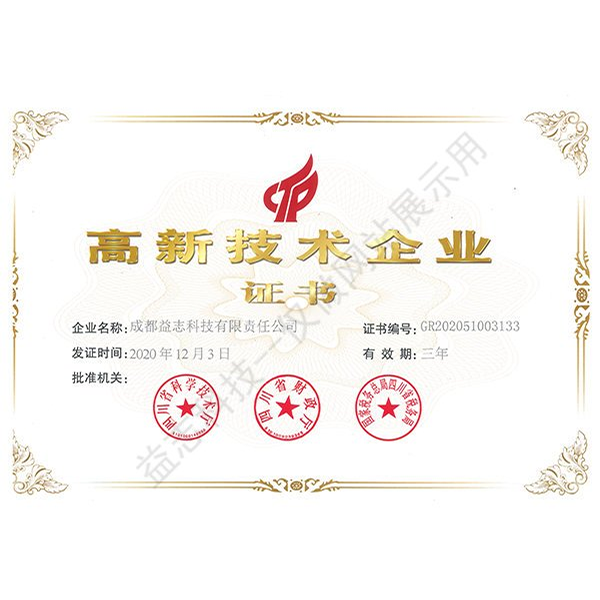
When you hear “Chinese actuated valves?”, the first reaction of many is skepticism. They say, what could be innovative there? Copies, cheap assembly, reliability problems. I myself thought so about ten years ago, until I came across a project where we decided to try to supply equipment from Chengdu Yizhi Technology Co. on one of our installations. Their websiteyzkjhx.ru, looked, frankly, not very impressive by the standards of that time. But the company description says “design institute, registered capital 120 million yuan?” — there was some serious request. We decided to dig deeper. And this is where the fun began.
From stereotypes to a specific plant
The main stereotype is that only the simplest fittings are made in China. This hasn't been the case for five years now. We are not talking about the “noname” market, but about companies like Yizhi, which were initially created as engineering divisions of large holdings, in their case Huaxi Technology. Their approach is not just to sell a shutter, but to solve a problem. They have their own design school, and you can feel it.
I remember that at the first negotiations they did not immediately go to the catalogue. At first they bombarded us with questions: the environment, cycles, differences, installation nuances, what problems there were with the previous fittings. I got the impression that I was speaking not with the sales manager, but with the chief engineer of the site. This was the first signal that there might be more to it than just an assembly.
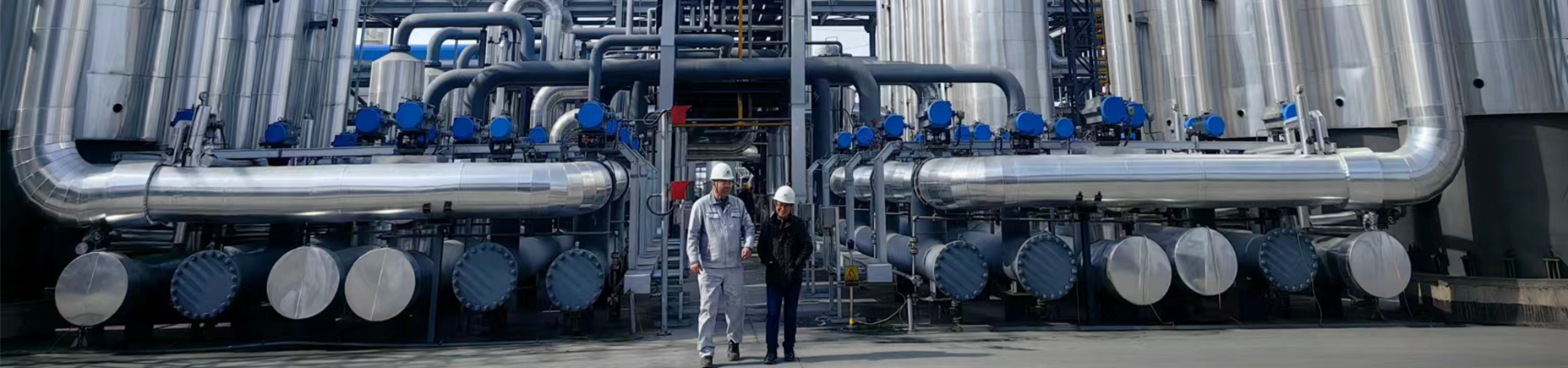
Their key field is preciselydrive valvesfor complex environments. Not ball valves for water, but solutions for chemistry and energy, where precision control and durability are needed. They do not hide the fact that many things began with the study and adaptation of Western models, but adaptation is not copying. This is processing for other materials, other testing standards, often to meet the customer’s more stringent budgetary limits.
Where is “innovation” hiding? In details and materials
Innovations here are rarely breakthrough, like the invention of a new operating principle. More often it is a set of improvements that together produce a reliable product. Chinese manufacturers at Yizhi level have a strong point in working with materials and coatings. They have access to a strong metallurgical and chemical base within the country (not for nothing that their parent company Huaxi is a chemical technology company).
For example, the issue of seals. For aggressive environments, standard EPDM or NBR is not always suitable. They offered custom solutions based on fluorine rubber (FKM) with modifications, and not just as an option from a catalog, but could justify the choice of a specific brand of rubber for our environmental composition. The rationale was not marketing phrases, but durability test reports. This is already a level.
The second point is the drives. There is often a weak point here: either they increase the price for a European drive, or they install a weak local one, which fails. Yizhi has taken the path of developing its own drive lines or close alliances with several proven manufacturers. Their engineers talked about torque tuning, anti-jam protection, and how their disc and stem design reduces load on the actuator. These are technical nuances that you see only during a detailed analysis or, alas, in the event of a breakdown.
Example with ?hot? replacement
We had a case at the facility - the drive mechanism on the valve responsible for supplying the reagent failed. Stopping the line means huge losses. We contacted Yizhi, they just had a similar model in stock, but with a different flange standard. Within 24 hours, their engineers sent a diagram of the transition unit and a 3D model for testing during installation. The parts were made in-house and brought with the team. The replacement did not take place in an hour, of course, but within the acceptable downtime. What struck me was not the speed, but the willingness to solve a non-standard problem, and not just sell a new product. After that, to their words about “engineering support?” began to be treated differently.
Failures and lessons: not everything is smooth
Of course, there were some problems. One of our first orders was a batch of valves for circulating water with abrasives. They were supplied with seals, which, as it turned out later, were “optimized?” under milder conditions. Six months later, leaks began. Our complaint was received normally: they admitted an error in the recommendations for materials, replaced the entire batch of sealing units at our own expense, and provided extended reports on tests of new rings.
This is an important point. Innovation is not only about success, but also about speed and adequate response to failure. Many suppliers (not only Chinese) in this situation begin to drag their feet or blame it on improper operation. There was a clear engineering analysis here. It turned out that their standard tests did not fully simulate our specific suspension composition. We have improved the methodology. This kind of feedback is a valuable asset for them.
Another lesson is logistics and documentation. Sometimes the accompanying documents arrived with errors in batch numbers or with delays. There was also confusion with certificates - for example, a certificate for the material, and not for the finished product. I had to strictly control it. Now looking at their websiteyzkjhx.ru, I see that the documentation section has become more structured. Apparently they are working on the bugs.
Competition with European brands: what's the focus?
They are not trying to be a cheap copy of Burkert or GEMü. Their niche is to offer 80-90% of the functionality and reliability of a top brand for 50-60% of the price. But the key is flexibility. A European manufacturer often says: “Here is our catalogue, here are the standard terms?” A Chinese engineering supplier such as Chengdu Yizhi is more likely to ask: “What do you need to change to suit your task?”
This may be a non-standard stroke of the rod, a special coating of the internal cavity, or a specific configuration of position sensors. And the production time for a prototype or modification can be several times shorter. For projects where the equipment is not standard, this is a decisive factor.
Their weakness, which they themselves admit, is the brand. They will have to prove their reliability in each new project for a long time. Strength lies in the speed of development. Technical solutions that go through a long cycle of approvals in the West can be introduced into the next batch. This is both a risk and an opportunity.
So is this innovation?
If by innovation we mean only revolutionary technology, then probably not. They did not invent any breakthrough in the principle of shutter operation. But if you look at it more broadly, there is innovation in the business model, in the approach to the client, in the speed of adapting products to specific, often complex, conditions.
They take known engineering solutions and bring them to a workable state under tight cost conditions. Sometimes this leads to failures, but often it leads to the creation of a completely competitive product. Their design institute is not just a sign. This is a structure that allows you to quickly translate a request from the field into changes in the design.
Should Chinese actuated valves be considered as an option? If the project is budget-friendly and the conditions are standard, you can look at simpler suppliers. But if the task is complex, the environment is aggressive, the budget is limited, and an engineering dialogue is needed, then companies like Chengdu Yizhi Technology Co. are serious players. Their ?innovation? — in the way of existing in the market: to be not a factory, but an engineering partner who learns quickly. And in our business, this is sometimes more valuable than a big name with a long history, but a clumsy structure.