Chinese cast iron valves: innovation?
2026-01-24
When you hear this combination - “Chinese cast iron valves?” — the first thought for many, even in the industry, often comes down to price. They say it’s cheap and cheerful, but if we talk about innovation, it’s somewhere at the level of finishing or packaging. I myself thought so for a long time, until I had to get heavily involved in supplies for an old chemical plant near Nizhny Novgorod. There the rethinking began.
From stereotype to specific object
The customer needed valves for areas with saturated solutions, not the most aggressive, but with constant “open-close” cycles. European variants “bite” budget-wise, the Chinese ones caused a skeptical smile among the technologists. We decided to take a risk, but not blindly. They began to dig deeper, not limiting themselves to catalogues.
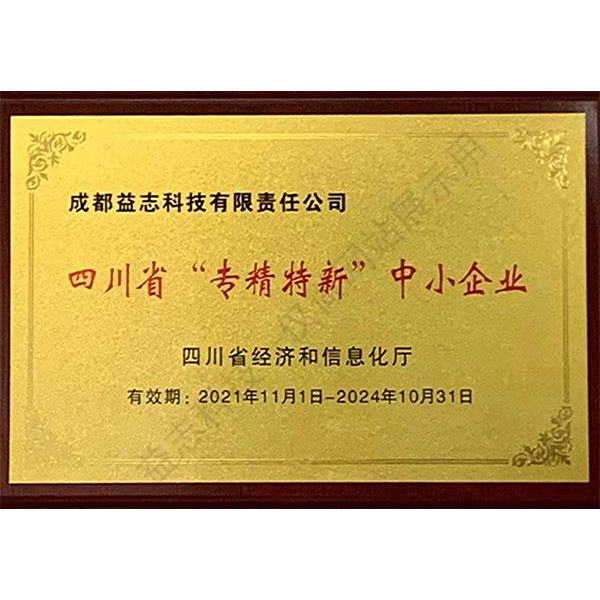
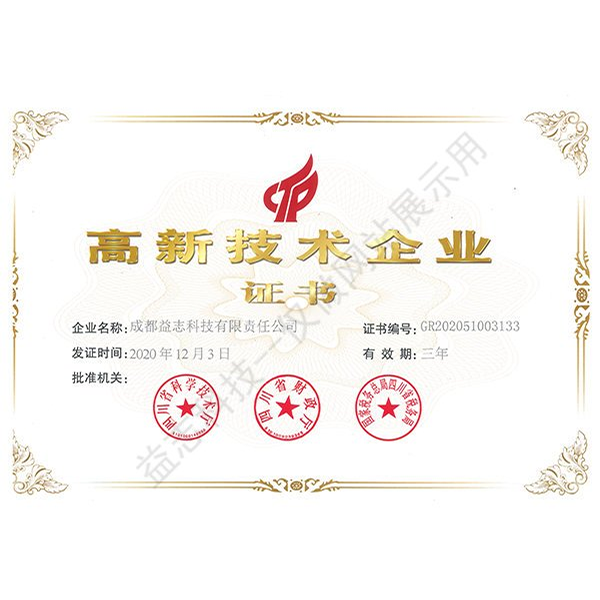
An interesting thing came to light. Many manufacturers in China, especially those working on the domestic energy or chemical market, have long moved away from simple sand casting. We're talking about companies likeChengdu Yizhi Technology Co.is not just a plant, but an entire design institute created by a large chemical holding. Go to their websitehttps://www.yzkjhx.ru— and you see not just a price list, but calculations for different environments, wiring diagrams, emphasis on testing. The registered capital is 120 million yuan - this also says something, the numbers are not for show.
But here's the key: their ?innovation? often it is not about inventing a new alloy (although they work with materials), but about precisely “sewing on” product to process. For example, the same valve with a cast iron body, but with a special coating on the stem and seals, which they select for the customer’s specific environment. You won’t find this in a standard catalog - this is engineering.
Where is the know-how? Not where they are looking
We often look for a revolution in design, but it is in progress. One of the most revealing moments is casting quality control. Previously, the scourge was hidden defects: shells, heterogeneity of structure. Nowadays, advanced industries use radiographic inspection not selectively, but for all critical products. This is not an innovation on a global scale, but for the mass segment it is a serious step.
Another point is the processing of seating surfaces and assembly accuracy. I saw how a valve was tested for leaks on a bench. Not just with water under pressure, but with cyclic loads that simulate real work. And if there is a leak, they don’t “squeeze” it. on the spot, but they take it apart and see where exactly the geometry “floats?” This is already a production culture.
And this is where those who chase only a low price often fail. You take a sample from a factory that does not invest in such control - it seems to be the same on the outside, but after six months it begins to leak along the rod or the wedge does not fit tightly. ?Innovation? in this context, this is the ability to consistently produce a reliable series, and not a one-off masterpiece.
The price of the issue: when savings lead to costs
The story of that plant near Nizhny Novgorod is instructive. We supplied a batch of valves from a trusted supplier associated with the sameChengdu Yizhi Technology. The price was higher than that of "nonames" with Alibaba, but lower than European ones by 40-50%.
At the installation stage, the first problem arose - the flanges. According to the drawings, everything seems to be standard, but when connecting to our pipelines, additional adjustment of the gaskets was required. It's a small thing, but we wasted time. This is a common problem: even good Chinese manufacturers sometimes make tolerances according to their internal standards, which do not fit perfectly with our GOSTs or EN. You need to be prepared to adjust.
However, after launch, the equipment has worked for three years without any complaints. But on the neighboring site, where the foreman saved money and bought “analogs”? through an intermediary without technical support, after a year problems with jamming began. They opened it and it turned out that the stuffing box material was not suitable for the environment, although the passport stated universal use. Saving the situation ended up costing more than the initial price difference.
Engineering as a hidden service
This is perhaps the main shift that I have observed in the last five years. Previously, you sent technical specifications and they sent you a commercial proposal and a catalog. Nowadays, you can get full consultation from advanced manufacturers, especially such institutes and factories.
You send them the parameters of the environment (composition, temperature, pressure, cycling), and in response you receive not just “suitable/not suitable?”, but recommendations: “For your case, it is better to take not a standard epoxy coating, but fluoroplastic spraying on the wedge, because you may have abrasive inclusions. And we offer an option with an extended rod for your well? This is no longer trading in hardware, this is participation in design.
On their websiteyzkjhx.ruthis is clearly visible - sections with technical support, a library of materials. The company positions itself precisely as an engineering center, which is logical, given its origins from the chemical technology company Huaxi Technology. They think not in details, but in technological lines.
So is this innovation?
If by innovation we mean a breakthrough technology that changes everything, then probably not. A valve remains a valve, cast iron remains cast iron.
But if we look more broadly - as at the introduction of modern control methods, digitalization of casting processes (CAD/CAE systems for modeling gating systems are already the norm), development of engineering services and adaptation of products to specific, increasingly complex tasks, then the answer will be positive.
Chinese manufacturers, especially the high-end ones, are no longer just copyists. They have learned to systematically ensure quality and offer added value in the form of technical solutions. Their ?innovation? - in efficiency and flexibility. For us, as practitioners, this means one thing: now we need to approach the choice not according to the principle “Chinese means cheap?”, but thoughtfully, asking for details, checking certificates for exactly the specification that is needed, and giving preference to those who are ready to conduct a dialogue. Like the same guys from Chengdu. This is perhaps the main conclusion. Not in enthusiastic slogans, but in the ability to get a predictable result for a reasonable price. And this is sometimes the most valuable innovation in our work.