Cheap acid regeneration: how does it work?
2026-03-23
This is a topic around which there is so much talk and just as much misunderstanding. Everyone wants cheap, but many are still convinced that “cheap regeneration?” is a synonym for low-quality or artisanal. In reality, it all comes down not to cutting corners, but to a smart approach to the process and choice of technologies. Let me give myself a few thoughts from practice.
What is actually hidden behind the “cheapness”?
When a client asks to “do it cheaper,” the first thing that comes to an experienced engineer’s mind is not what cheap reagent to buy, but how to optimize the entire cycle. Often the high cost lies in losses: heat loss, loss of concentration, incomplete use of reagents. Here, for example, is the classic regeneration of hydrochloric acid from waste pickling solutions. If you simply neutralize and dispose of it, it is a pure expense. And if you implement an installation with membrane electrolysis or even a simpler evaporation scheme with heat recovery, the cost of a cubic meter of reduced acid drops significantly. But the equipment needs to be properly selected and calculated.
This is often where the first stumbling block arises. Many technologists, especially in small industries, are afraid of complex installations. It seems easier to purchase new acid. But when you consider not only the price per ton, but also logistics, storage, problems with waste disposal (and environmental fines are now a separate expense item), the picture changes. Cheapness is achieved not by saving on materials, butregenerationas a way to close the technological cycle by turning waste into raw materials. This is a systems approach.
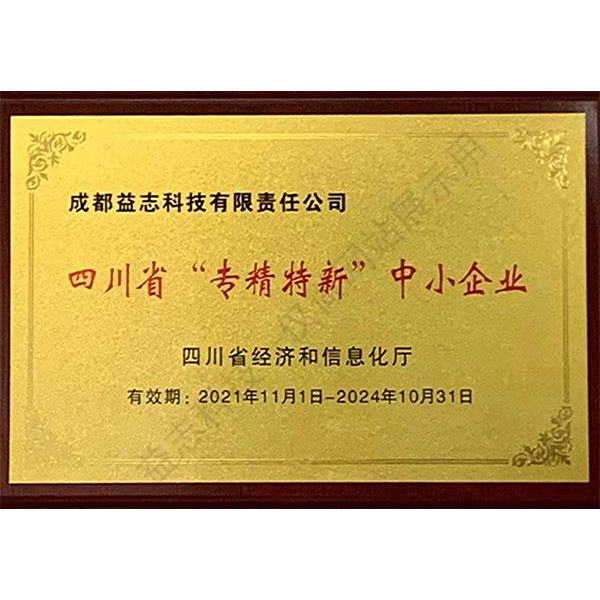
Let me give you an example from practice. At one of the metalworking plants the task was to reduce the cost of the etching process. We looked at different options, including fromChengdu Yizhi Technology Co.(their website, by the way,https://www.yzkjhx.ru, it is useful to look at to understand the scale of the projects - this is a design institute with a significant authorized capital, operating since 2013). Their specialists did not just offer a ready-made “box”, but began with an audit: they measured the exact concentrations, temperatures, and volumes of wastewater. It turned out that it is possible to do without an expensive imported membrane by choosing a domestic analogue for pre-concentration that is more advantageous in terms of the balance of parameters. The key was in the details.
Technologies that work, not just exist
Speaking about specific methods, one cannot simply list “diffusion dialysis, ion exchange, evaporation?”. This is in any textbook. It is important to understand where things take root. Diffusion dialysis, for example, is good for removing metal ions from acids. Cheap to operate? Yes, except for the frequent replacement of membranes due to improper pre-clarification of the solution. I saw a situation where, due to suspended solid particles, the membranes clogged in a month instead of the planned two years. Cheap regeneration has turned into endless waste. This means that the filtration stage is not secondary, it is critical for the cost of the entire cycle.
Ion exchange resins are also a double-edged sword. Yes, they allow you to finely purify the acid, but the regeneration of the resins themselves requires alkalis and water, again we get waste water. There is no completely closed cycle. Therefore, methods are now often combined. Let's say, first, rough concentration by evaporation (using waste heat from another process), then additional purification. This is the onecheap acid regeneration- through integration into the general energy and material scheme of the workshop.
An interesting case was with sulfuric acid in chemical production. It would seem that the process is known everywhere. But when they started counting, it turned out that the main overexpenditure was for heating. We looked at the heat flows throughout the area and found a waste heat source of about 90°C. It was redirected not to cooling, but to heating the solution supplied for regeneration. Savings on energy resources amounted to 40%. This is real cheapness. It requires not the purchase of a magical device, but thoughtful engineering.
Where is the catch? Mistakes and miscalculations
While talking about successes, we must not forget about failures. They are more instructive. Once they introduced a system based on vacuum evaporation. All calculations were perfect, the equipment was of high quality. But they did not take into account the fluctuations in the composition of the initial runoff. The incoming waste was not from one process, but from three different sites. As a result, the concentration of organic impurities turned out to be higher than expected in the project. Foaming began in the evaporator, followed by intense corrosion due to side reactions. It was necessary to urgently build in an additional unit for distilling light fractions. The payback period for the project has tripled.
Hence the conclusion: anyacid regenerationIt begins not with drawings, but with strict input control and, more importantly, with agreements with technologists of adjacent areas. We need to standardize the flow as much as possible. Or build into the system greater flexibility and performance reserves in case of peak or non-standard loads. A cheap project is often the simplest and most predictable project possible. And predictability is ensured by the stability of the source data.
Another common pitfall is underestimating the cost of maintenance. You can buy an inexpensive unit, but if cleaning it requires the daily labor of two workers, and replaceable elements (filters, gaskets) are rare and expensive imports, then all the savings are eaten up in the first year. Therefore, now in good projects, like the same Chinese institutes likeChengdu Yizhi Technology Co., the emphasis is on modularity and accessibility of the service. Their approach, judging by the projects, is to create a system with an understandable and inexpensive life cycle, even if the initial investment is slightly higher.
Equipment and materials: what you shouldn’t save on, and where you can
This is probably the most painful question. My principle: never save on anything that comes into direct contact with an aggressive environment and whose failure will stop the entire line. These are seal materials, membranes (if any), pH and concentration sensors. Installing a cheap sensor that will “lie” can lead to damage to an entire batch of regenerated acid or to excessive consumption of reagents. But what you can and should look for options on is construction materials for external casings, reserve tanks (can be used, but tested), piping systems. Sometimes, instead of expensive AISI 316 stainless steel, enameled steel or even special polymers are sufficient for some areas.
I remember a project where the customer insisted on full imported equipment. The estimate was cosmic. We managed to convince him to use domestic evaporators (based on drawings, by the way, similar to those used by Huaxi Technology), but with imported control automation. The system came out 30% cheaper, and has been working for the fifth year without any complaints. The automation accurately doses, monitors, and the “iron”? - heats and evaporates. It fulfills its function. Here lies the secret: to separate where you need “brains”, and where you need just reliable “muscles”.
Regarding the reagents for the regeneration itself (the same alkalis for washing or precipitants) - the field for maneuver is huge. Often, not pure reagents are used, but waste from neighboring industries. For example, milk of lime from another site for neutralization. But this requires careful calculation of chemistry, so as not to end up in the sediment that is not what is needed, or to introduce new harmful impurities. The job is for a competent chemical technologist, not for an estimator.
A look into the future: where is ?cheap? regeneration
Now the trend is not even individual installations, but digital twins and predictive analytics. It sounds complicated, but in practice this means the following: the system, based on data from a year of operation, itself suggests when it is better to start the regeneration cycle in order to use the night electricity tariff, or predicts when the efficiency of the membrane will decrease. This is the next level of savings. Cheapness through smart management.
There is also an increasing focus on hybrid systems. It’s not just about regenerating acid, but at the same time extracting valuable metals from wastewater. Then income from the sale of metal salts (even in small quantities) can partially or fully offset the operating costs ofacid regeneration. This is no longer a cost, but an investment in raw materials. Such complex solutions are precisely the area of activity of large design institutes that see the entire cycle.
Ultimately, answering the question “how does it work?” — this works through the rejection of stereotyped thinking. There is no one magic technology. There is a deep analysis of a specific production, the courage to combine methods, attention to little things (which later turn out to be not little things) and a pragmatic choice of equipment. Cheap doesn't mean bad. Cheap means smart, without extra costs, with an understanding of every penny in the process. And this is perhaps the most interesting engineering problem in this area.