Cheap nitrogen production by adsorption?
2026-03-23
- Adsorption vs. Cryogenic: not only the price per kilogram
- Key component: not sieves, but valves and controls
- Cleanliness is the main cost parameter
- Energy: where to look for reserves
- Case from practice: when is it ?cheap? turned into a long-term construction project
- Results: so what does “cheap production” mean?
When you hear “cheap nitrogen”, you immediately think of PSA. But cheap is a flexible concept. Many customers want a cheap installation, and then pay for electricity and repairs for years. Or vice versa - they overpay for a “sophisticated” one. a system that does not need all its functions. Let's figure out where the real savings are and where it's just marketing.
Adsorption vs. Cryogenic: not only the price per kilogram
Comparing these technologies only based on the cost of gas at the outlet is a mistake. A cryogenic plant gives 99.999% purity easily, but its ?appetite? in kilowatts is huge, and she doesn't like frequent stops. Adsorption unit, the same PSA, more flexible. It can be started in half an hour, stopped overnight, and it will forgive load fluctuations. But its main enemy is humidity and oil in the incoming air. I installed a cheap filter - and that’s it, the carbon molecular sieves begin to “crumble?” in a year instead of ten. Savings at the design stage result in replacement of the adsorbent, which costs half the price of a new installation.
Here is a real case: at one food factory they ordered the “cheapest?” PSA-nitrogen station. Purity was needed at 99.5% for packaging. After 8 months, productivity dropped by 30%. It turned out that the compressor was not properly dried, and the sieves were “damp”. We had to install an additional refrigerated dryer and change part of the load. The final cost of the system increased by 40% of the original. Cheap production? The question is rhetorical.
Therefore, when talking about cost, you need to consider the full life cycle: capital costs (CAPEX), energy consumption, maintenance, adsorbent life. Sometimes it is more profitable to take a unit that is 20-30% more expensive, but with more efficient valves and a control system that optimizes purge cycles. Saving on air for regeneration can provide up to a 15% reduction in energy costs. This is aboutcheap nitrogen production.
Key component: not sieves, but valves and controls
Everyone is talking about molecular sieves (CMS). Yes, they are important; their capacity and selectivity determine the dimensions of the adsorbers. But the heart of the PSA is the pneumatic valves and control program. I have seen installations where there are cheap valves with a service life of 2-3 million switchings. With a cycle of 60 seconds, they fail after a couple of years of intensive use. Replacement means stopping production. Expensive valves with ceramic seats last many times longer. Or here’s the controller: if it just “counts?” fixed cycle time, and does not adapt to pressure, temperature and required cleanliness, then the installation constantly consumes excess air and energy.
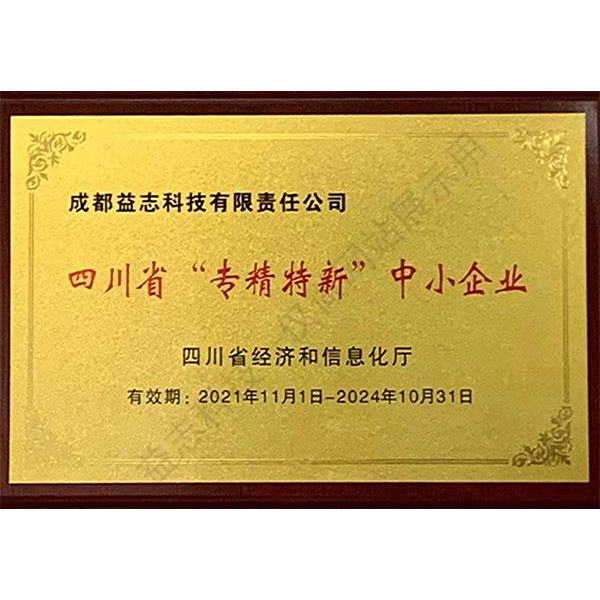
One of our partners, a design instituteChengdu Yizhi Technology Co.(their website isyzkjhx.ru), it was an interesting approach. They didn’t just sell installations, but first did a detailed audit of the plant’s needs. How much nitrogen is actually needed per hour, how does consumption change during the day, what is the pressure in the network. It often turned out that it was possible to install not one large station, but two smaller ones operating in cascade, which gave significant savings in partial load mode. This is engineering, not just selling hardware.
Therefore, when you are offered a “cheap PSA?”, ask immediately: what valves, who makes the controller, what control logic? If the answers are vague, this is a reason to be wary.
Cleanliness is the main cost parameter
The dependence is simple: the higher the purity, the more expensive the production of each cubic meter. To obtain 99% purity, certain conditions are required (pressure, cycle time, adsorption/regeneration ratio), and for 99.9%, different, less effective ones are required. After 99.99% the cost curve shoots up almost vertically. Many technologists simply “drive” nitrogen is 99.5% and diluted to the required conditions, which is often more economical than trying to immediately obtain 99.9% from the adsorber.
The chemical plant required 99.999% nitrogen for inertization. At first they tried to achieve this with highly purified PSA alone. It worked, but the energy consumption was prohibitive. Then they used a hybrid scheme: first-stage PSA up to 99.9%, and then additional purification using a catalytic deoxidizer. Total costs decreased by 25%. This relates to the question of what is “cheapness?” is often an optimal combination of technologies, rather than one magic setup.
An important point: passport cleanliness and real cleanliness are two big differences. The installation can produce 99.5% at the outlet of the adsorber, but if the pipelines are old and there are leaks, then at the point of consumption it will already be 98%. This is often forgotten. It is necessary to place the analyzer not at the station exit, but directly in front of the critical device. This is also money.
Energy: where to look for reserves
The main cost item is compressed air. Therefore, the most direct way tocheap nitrogen— an efficient screw compressor with a frequency drive and a good air preparation system (filters, dryers). They often save on a dehumidifier and install a cheap refrigeration one. It gives a dew point of +3°C, and for a long life the CMS needs at least -20°C, or better yet -40°C. As a result, the compressor runs idle, compressing and drying excess moisture, which a cheap dehumidifier cannot remove. The sieves become damp, the pressure in the columns increases, the cycle is shortened - a vicious circle and excessive energy consumption.
Another reserve is warmth. The adsorption process is exothermic, and desorption is endothermic. In large installations, this heat can be controlled by heating the regeneration flow or, conversely, cooling the adsorber. But in small and medium-sized installations, rarely anyone bothers with this - it’s too difficult and expensive to implement. Although for large projects, where we are talking about thousands of cubic meters per hour, such heat exchange systems pay for themselves in 2-3 years.
Practical advice: always request a detailed calculation of the specific energy consumption (kWh/Nm3 nitrogen) not under ideal conditions, but at 70% and 50% load. It is in these modes that many cheap installations begin to “sag?” in terms of efficiency.
Case from practice: when is it ?cheap? turned into a long-term construction project
There was a project at a metallurgical plant. Nitrogen was needed for purging, the purity was modest - 98%. Buyers chose the cheapest offer on the market. The installation was installed and launched. A month later, problems began: a drop in productivity, pressure surges. Specialists arrived, opened the adsorbers - and there was a mess. It turned out that the supplier saved on fine oil pre-filters by supplying only coalescent ones. Oil particles passed through and became tightly coked on the molecular sieves due to pressure changes. It was impossible to restore the download.
The story ended with a trial and the purchase of a new installation, but from a different supplier. Production downtime cost tens of times more than the 15 thousand dollars saved on filters. This example illustrates well that reliability and correct configuration of auxiliary equipment are an integral part of the concept of “cheapness”. in the long term.
Sometimes it is better not to even buy, but to lease the installation with full service. The company pays a fixed amount per cubic meter of nitrogen, and all maintenance, repairs and efficiency issues fall on the contractor. For many medium-sized enterprises this is the “cheapest” one. and a hassle-free option. By the way, such services are also offered by engineering companies like the one mentioned above.Chengdu Yizhi Technology Co.who lead the project from audit to service.
Results: so what does “cheap production” mean?
To summarize, cheap nitrogen production by adsorption is not the minimum price in the catalog. This is the optimal total cost of ownership (TCO) over 5-10 years. This includes: a reasonable initial price, low and stable energy consumption, long service life of consumables (sieves, valves, filter elements), minimal maintenance requirements and high system availability.
This is achieved not by magic, but by competent engineering: the correct selection of all components for the specific conditions of the customer, high-quality installation and commissioning, as well as clear operating regulations. Saving on one thing (for example, on a drying system) means obviously increasing costs in another area (on replacing the adsorbent).
Therefore, my main advice: look not just for an equipment supplier, but for a partner who is ready to delve deeply into your technological process and offer a balanced solution. Sometimes it will be a simple standard PSA, sometimes it will be a hybrid system, sometimes it will be a rental. The key to saving is to adequately assess real needs and avoid redundant features that you will have to pay for in subsequent years. That, in fact, is all philosophy.