China: leaders in the export of argon purification plants?
2026-03-22
When you hear this question, the first thought is yes, of course, China supplies tons of them all over the world. But if you dig deeper, as often happens in our field, everything is not so clear. Many people immediately imagine giant factories and standard modules coming off the assembly line. However, real leadership, in my opinion, is determined not only by volumes, but by the ability to solve complex, non-standard tasks, which require not just the supply of hardware, but engineering for a specific customer process. This is where the fun begins.
From ?boxes? to comprehensive solutions
Previously, about ten years ago, Chinese exports in this niche really largely came down to the sale of more or less standardized equipment. This worked in certain markets where price was a key factor. But the world is changing, the requirements for the purity of argon, especially in semiconductors or high-grade metallurgy, are becoming more stringent. The client doesn’t just needargon purification plant, and the guaranteed output result is a certain dew point, oxygen and nitrogen content.
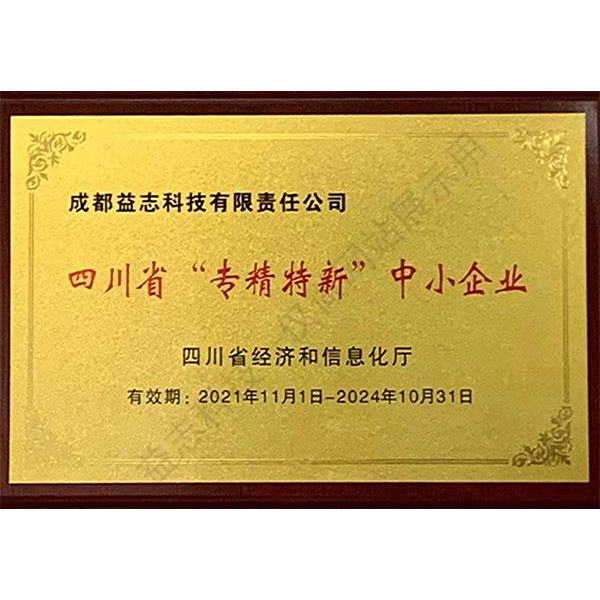
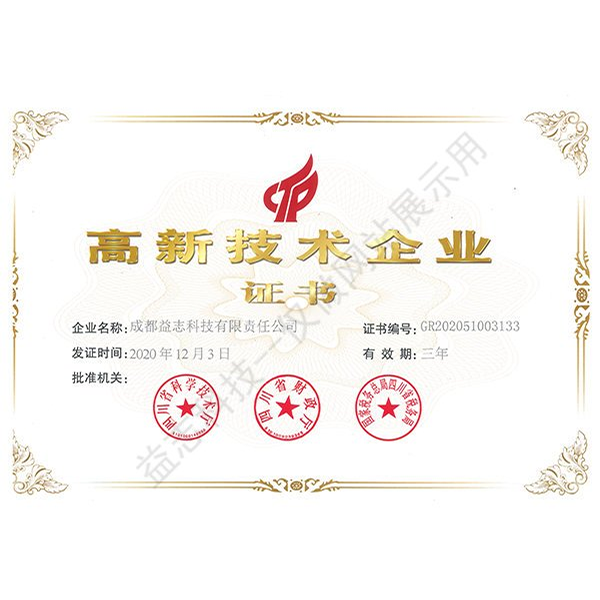
This is where many Chinese players, who grew from simple manufacturers into design institutes, began to break ahead. I take, for example, Chengdu Yizhi Technology Co. Their websiteyzkjhx.ruis not just a catalogue. It is clear that the company was created by Huaxi Technology precisely as a design institute with a serious authorized capital. This is an important signal. They don't just sell, they calculate the process. In my practice, there was a case when one plant in the CIS required integration into an existing line with strict restrictions on dimensions and compatibility with their instrumentation system. The standard solution was not suitable. We worked with engineering teams that were ready to model the process and redesign the construct.
This transition is key. Leadership now means exporting not equipment, but technological solutions. Chinese companies have learned how to do this, often relying on the huge domestic market as a testing ground. I saw how installations developed at Chinese steel or solar factories were then adapted to European standards and supplied, for example, to Eastern Europe.
Where are the pitfalls?
It’s impossible to say that everything is perfect. In pursuit of a contract, some, especially less experienced suppliers, are still guilty of reselling ready-made modules without in-depth analysis. I remember a story that ended in court: they installed an argon purification plant in a special metallurgy workshop, but it did not achieve the required productivity at peak loads. This is because they did not take into account the real fluctuations in the composition of the raw materials at the input. The client thought that he was buying “turnkey”, but received only a device that needed to be modified on site on his own.
Another common problem is the “black box?” in terms of automation and software. It would seem like a modern control panel, touch screen. But when a failure occurs, it turns out that the control algorithms are proprietary, access to deep settings is closed, and the support service is located 5 hours away in time. This irritates customers beyond belief. Now more advanced exporters, realizing this, have begun to offer more open protocols or localized service support.
And, of course, logistics and after-sales service. Installing the installation is half the battle. Ensuring timely delivery of spare parts (the same zeolite adsorbents, specialized valves) is already a sign of the maturity of the supplier. Having a real, rather than virtual, office or warehouse in the region where you operate is a huge plus. This is what distinguishes a temporary worker from someone who is committed to working for a long time.
Case: adaptation for ?local? conditions
I’ll tell you using a real example, without names. There was a project in Central Asia - modernization of a gas separation plant. A system for purifying argon from residual nitrogen and oxygen was required, but taking into account the fact that the power supply at the facility was unstable, and the qualifications of local personnel... let's say, required maximum simplification of operation.
The Chinese contractor (I won’t name it, but it was a company of the level of Chengdu Yizhi Technology - a design institute with capital) offered not just its standard two-column installation with pressure swing adsorption. They included a larger buffer tank in the project, which allowed the system to “wait it out?” short-term shutdowns without resetting the cycle. In addition, they completely redesigned the operator interface, making it as visual as possible, with icons and step-by-step instructions in the local language. And most importantly, we conducted a three-week training not in China, but right on site.
This is the same added value. Installation may have cost 15-20% more than a basic option from a competitor. But she actually solved the client’s problem, and did not create new ones. After launch, the system reached parameters faster than the estimated time, and what’s important is that it’s still working. For me, this is an indicator: a leader in exports is one who sells not hardware, but performance and reliability in specific, sometimes far from ideal, conditions.
Technological nuances that decide everything
If you step away from business and dig into technology. Increasingly, the demand is not for classic PSA (pressure swing adsorption) installations, but for hybrid circuits. Let’s say preliminary catalytic removal of oxygen, then drying, then fine purification from nitrogen. Chinese engineering companies here are actively experimenting with combinations of adsorbents, trying to increase the life of cartridges and reduce energy consumption.
I saw interesting developments in the use of special zeolite molecular sieves, doped for selective capture of nitrogen from argon. This makes it possible to significantly reduce the size of the installation with the same productivity. But there are also risks - such a specific sorbent may be sensitive to impurities that would not be critical in another process. Therefore, without serious input analytics of raw materials, such advanced solutions can become a headache.
Another point is analytics. A modern installation is unthinkable without built-in continuous monitoring of dew point and the content of key impurities. Here, Chinese manufacturers often take the path of integrating proven imported sensors (for example, European) into their control system. This is a reasonable compromise between reliability and cost. Because your own analytics, if they are not verified in the long term, are the first candidate for refusal and distrust on the part of the client.
Looking Ahead: What Will Define Leadership Tomorrow?
Based on what I see, the future lies in digitalization and service. Already, leading suppliers are offering not just equipment, but connection to their platforms for remote monitoring and predictive analytics. You can monitor the degree of depletion of the adsorbent, predict the need for maintenance, and adjust parameters remotely. For international exports this is invaluable.
But herein lies the challenge. Are customers, especially in countries with strict cybersecurity requirements, ready to allow a Chinese supplier into their industrial network? This issue remains to be resolved, perhaps through the creation of neutral, localized servers for data collection.
And one last thing. Sustainable leadership, in my opinion, will come from those who can close the loop. That is, not only putargon purification plant, but also offer services for the disposal or regeneration of used adsorbents, and the modernization of previously supplied systems. The market is maturing, and players who see the client as a long-term partner, rather than a one-time transaction, will ultimately remain at the top. Chinese companies, with their flexibility and ability to quickly scale engineering, have every chance of doing this. But the path from the largest exporter of equipment to the undisputed technology leader, trusted with the most complex tasks, is still a road to be covered. And judging by the dynamics, they are actively moving along it.