China: argon purifiers - new technologies?
2026-03-22
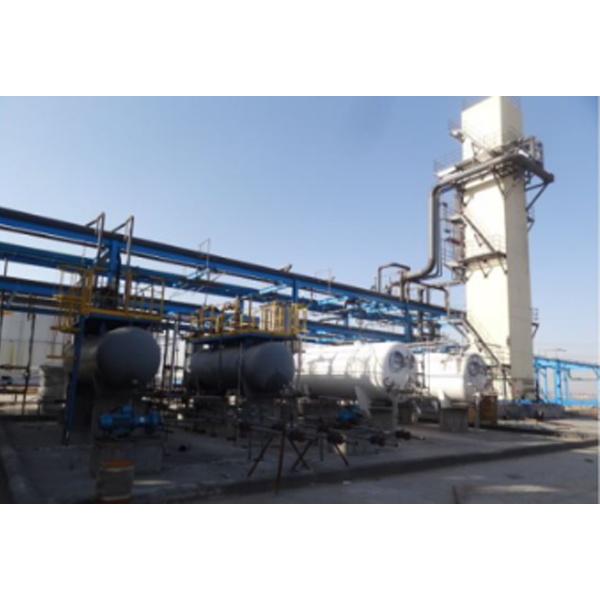
Here’s what’s interesting: when they talk about China and “new technologies?” in gas purification, many are immediately waiting for some kind of breakthrough know-how, such as nanofilters or plasma discharges. But often the reality is much more prosaic and, frankly, more effective. Let's take the sameargon purifiers. Not argon itself, of course, is an inert gas, but the technologies for its production, purification and use in high-precision production. Here China is moving not so much through radical inventions, but through deep optimization of known processes - adsorption, low-temperature rectification - and their adaptation to specific, often very large-scale tasks. And most importantly, through the integration of the entire cycle: from the design of installations to their integration into existing production lines. This is not about “making a new filter”, but about how to make the entire system work stably, cheaply and with a guarantee for that very “five nines”? cleanliness. And this, perhaps, is their “new technology?” - in systems engineering.
Where does argon need special purity, and why is it difficult?
If you take the steel industry or the production of polysilicon for solar panels, the requirements for the purity of argon are prohibitive. The slightest admixtures of oxygen, nitrogen, moisture lead to defects. And the classic problem: you can make a laboratory installation that produces an ideal gas, but scale it up to flows of thousands of cubic meters per hour, and so that it also works for years in a workshop with its vibration, temperature changes... That's another story. Many European suppliers offer excellent equipment, but often - as if “in a vacuum”, without a full understanding of the customer’s entire technological chain. Chinese engineers, especially from applied institutes, often “grow up?” from these industries themselves. They know that the reality is that the site may not have perfectly trained personnel, that energy is becoming more expensive, and that a technician may miss a scheduled adsorbent replacement. And they design with this knowledge.
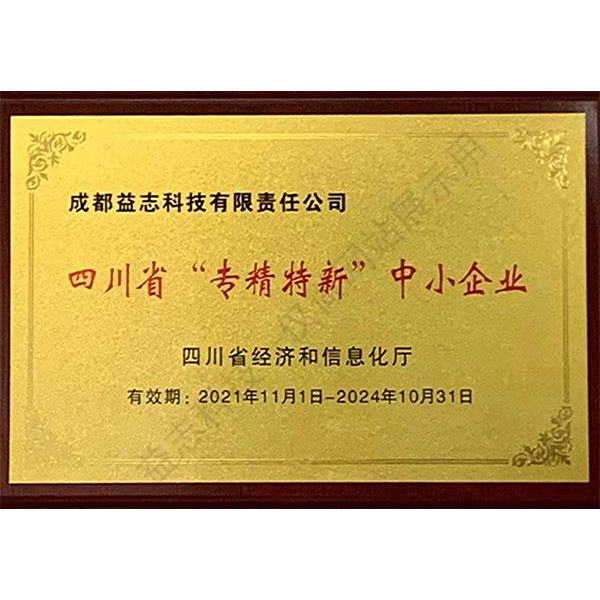
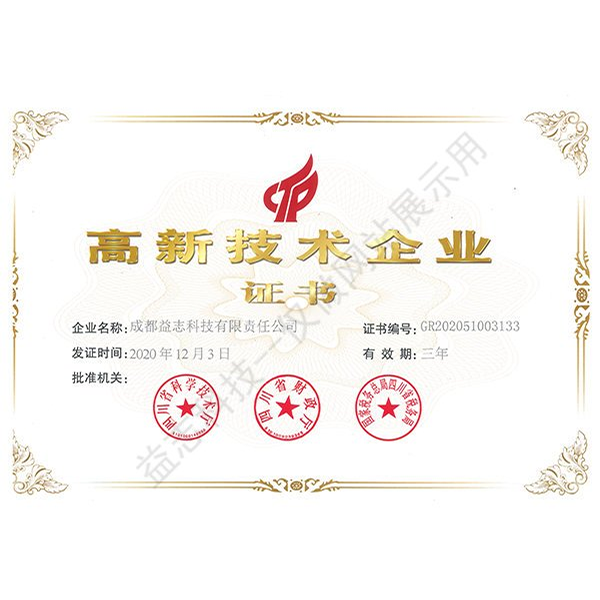
Here, for example,Chengdu Yizhi Technology Co.— their websiteyzkjhx.rushows this approach well. This is not just a hardware manufacturer, but a design institute created by a large technology company. Their description directly states: registered capital 120 million yuan, founded in 2013. Such institutes often operate as engineering centers for large industrial holdings. They solve not the abstract problem of “purifying argon,” but a specific one: integrating a purification unit into an existing high-purity silicon production line in order to minimize pressure losses and ensure uninterrupted supply. Their ?technology? - in this comprehensive solution.
In practice, this results in nuances. For example, in pre-drying and CO2 removal schemes. Adsorbents with different particle size distributions are often used to extend the cycle and reduce shock loads on the main separation unit. This is not new in principle, but the subtlety lies in the calculations for a specific gas mixture, which may differ at each plant. I have seen projects where, due to underestimation of fluctuations in the composition of raw argon from the mixing unit, adsorbers failed twice as quickly as expected. In such cases, Chinese colleagues often offer a more flexible monitoring system and, importantly, a more modular design of the adsorbers themselves - so that replacement of units can be carried out faster, without stopping the entire line.
Equipment: not a revolution, but an evolution of reliability
If you look at the key components - adsorbers, distillation columns, heat exchangers - you will not find fundamentally new materials or designs. The emphasis is on something else: on quality of workmanship (which used to be a weak point), on the unification of components to simplify maintenance, and on energy efficiency. For example, in low-temperature units, panel heat exchangers of our own production have now become almost a standard, which are more efficient than the classic “pipe in pipe”. at high flows. Saving on cooling energy is a serious argument for the customer.
Another point is automation. Not the one with a bunch of unnecessary sensors and a complex interface, but the one that really protects against the human factor. I saw one installation where a simple but ingenious algorithm was implemented for alternating operation of adsorbers with adaptation to the actual load. The system itself learned from cycles and extended the life of the adsorbent, predicting the need for replacement. Nothing super complicated, but the practical benefits are enormous. This is the same “new technology?” in an applied sense, intelligent control of old, proven physical principles.
By the way, about failures. There was experience with the supply of a compact argon purification plant for experimental production. The Chinese manufacturer (I won’t name it) saved a lot on materials for internal lines and used regular stainless steel instead of electron-polished one. The result is an increased content of metal impurities in the final product. I had to redo it. But what is significant: the response was quick, the problem was recognized and the unit was replaced at our own expense. Now many serious players, the sameChengdu Yizhi Technology, have long been working on a full cycle of quality control, from raw materials to testing the finished installation under load. It is more expensive, but it kills such risks in the bud.
Market and niches: where Chinese solutions are no longer competitive
It is obvious that their strength lies in large-scale projects for their own industry: metallurgy, renewable energy sources, electronics. Where large volumes, fast commissioning times and an optimal price/reliability ratio are needed. They benefit from deep integration: one holding company can unite a polysilicon manufacturer, an institute that designs gas treatment for it, and a plant that makes adsorbents. The speed of decision making and data exchange is colossal.
But there are more interesting niches. For example, cleaning and recycling of argon at welding stations at large automobile plants. The task is to collect, purify and return expensive gas to the cycle. European systems are often redundant and expensive for such tasks. Chinese engineers have proposed modular, scalable solutions where you can start with one post and increase power. The key was to simplify the cleaning technology - not to “five nines”, but to a level sufficient for welding, but with huge savings on gas costs. This is a typical example of an applied approach: the technology is not the most advanced in a scientific sense, but is ideally tailored to a business problem.
They enter the international market, such as Russia or Southeast Asian countries, with just such a case: “We will make you not just a purifier, but a system that will pay for itself in N years by saving gas and energy?” And they back it up with a full package: design, installation supervision, training, spare parts supply. For many growing businesses, this is critical.
What's in the bottom line? Technology as a service
So, returning to the main question: yes, China has new technologies in the fieldargon purifiers. But they lie not in the area of discovering new physical principles, but in the area of engineering, integration and service. This is technology as a reliable, predictable and cost-effective turnkey service.
The main trend that I see is a movement from the sale of equipment to the sale of a guaranteed result: “so many cubic meters of gas of such and such purity per hour, at such and such operating costs?” This requires enormous responsibility and experience from the supplier. And this is where structures such as the mentioned design institute come to the foreChengdu Yizhi Technology Co.. Their capital and connection with the parent chemical technology company are not just numbers in the description, but a guarantee that the project is backed by a serious scientific and technical base and experience of real industrial applications.
Therefore, if we assess the prospects, then, I think, the future lies in further hybridization: classical, proven cleaning methods will be complemented by increasingly smart systems of digital control, predictive analytics and remote service. And China is in a very strong position here, because it has powerful production, a huge domestic market for testing, and already established engineering schools that think in applied rather than abstract categories. The novelty lies in this systematic, pragmatic approach to seemingly long-known things.