Cheap use of adsorbents: how?
2026-03-24
This is a question that is often asked, but rarely fully understood. Many people immediately think about the price per kilogram on the stock exchange, and that’s all. But in reality, “cheap?” - this is about the total cost of the cycle, and not about the price tag on a piece of paper. Otherwise, everyone would simply buy the cheapest activated carbon and be happy. But they are not happy, because then it turns out that it needs three times more, changed twice as often, and disposal turns into a separate headache. Let's understand it without gloss.
Where does “cheapness” come from?
The first and main point is the source. You can't talk aboutcheap use of adsorbents, without understanding what exactly you are adsorbing. Cleaning solvent vapors from paintwork materials is one thing, but purifying water from traces of phenols is quite another. In the first case, you can really save on the material by taking, for example, inexpensive zeolite or even using certain production facilities, if you’re lucky. But this is a double-edged sword: the adsorption capacity will be lower, which means the load will have to be changed more often. If you consider the savings on purchases, add the costs of frequent stops, logistics, and disposal. Sometimes it goes to zero or even minus.
We had experience at one of the component factories. They tried to replace expensive imported coal for capturing acetone vapors with a more affordable local analogue. The price per ton is beautiful. But the dynamic capacity turned out to be 40% lower. As a result, the adsorption cycle was halved, regeneration was turned on more often, and energy consumption for desorption increased. The savings on material were “eaten up?” operation for six months. We returned to the old supplier. It's a classic mistake to not count a full cycle.
Another point is geometry and fraction. Granular, extruded, powdered. Powder is often cheaper, but its use requires special filter presses, more pressure, and higher risks of breakthrough. For a stationary adsorber in a production line - only granules of a certain size. And here the temptation often arises to buy “almost the same”, but with a wider factional composition. Cheaper. And then you get increased hydraulic resistance of the layer, channels, uneven development and, as a result, premature penetration of the pollutant. Repairs and downtime will cost more than the entire load.
Regeneration is where the dog is buried
True savings begin where the adsorbent can be regenerated. Reusable. But even here, not everything is simple. Thermal regeneration of the same activated carbon is an energy-intensive process. You need a furnace with precise control of temperature and atmosphere, otherwise the coal will simply burn out or lose capacity. If the volumes are small, building your own regeneration plant is unprofitable. It is sometimes cheaper to recognize the adsorbent as a consumable and dispose of it. But here environmental standards and the cost of disposal as waste of a certain class come into force.
An interesting case was with silica gel for drying gas. New material is expensive. But it can be regenerated by simply blowing it with heated air, almost on the spot. They thought: if you take an expensive one, but with the possibility of 50 regeneration cycles without a critical loss of efficiency, then the cost of one drying cycle turns out to be several times lower than when using a “disposable” one. cheap analogue. But again, you need to have the opportunity for this regeneration on site: a compressor, a heater, a place. In cramped areas, this option is eliminated.
Therefore, speaking aboutcheap application, we need to clearly differentiate: are we talking about CAPEX (capital costs) or OPEX (operational costs)? Often management wants to save on purchases (CAPEX), and the unit operating the plant then pays for years with high OPEX. We need to strike a balance. Sometimes it is better to invest in a more expensive but selective adsorbent that will work longer and regenerate more efficiently.
Non-obvious costs: logistics and preparation
Few people consider how much delivery and loading/unloading costs. Let's take the same activated carbon. He's fragile. During inactive transfer and filling into the adsorber, a lot of fines and dust are formed. This dust, firstly, is lost (you paid for coal, not dust), and secondly, it clogs the distribution grids and increases the pressure drop. You have to either sift the material (an additional operation), or put up with losses and frequent washings. Cheap coal often has lower mechanical strength and is more susceptible to abrasion. Savings at the procurement stage turn into ongoing minor maintenance costs.
Another story about preparation. Some adsorbents, especially newer synthetic zeolites or polymer sorbents, are supplied “ready to use”. Others, especially natural materials (bentonites, some clinoptilolites), may require additional activation on site - washing, calcination. This is again equipment, energy, time. If this is not done, their capacity will be far from the rated value. In specifications and price lists, this need is often written in small print or not written at all. Do you buy ?cheap? material, and then you spend money on polishing it.
Case: when is it ?cheap? doesn't mean ?bad?
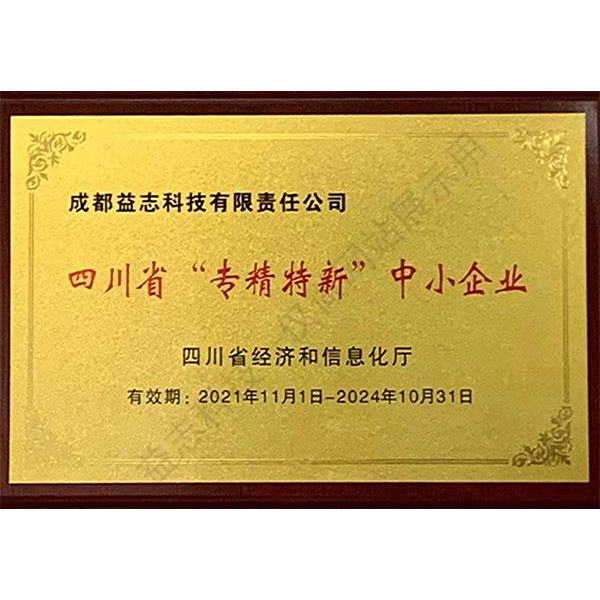
But there are also successful examples. I recall a project to purify wastewater from heavy metal ions. The task was specific: to reduce the content to MPC with a minimum budget. Expensive ion exchange resins were not affordable. We worked with Chinese partners, in particular, we studied proposals fromChengdu Yizhi Technology Co.(their website isyzkjhx.ru). They are positioning themselves as a design institute created by Huaxi Technology, with a serious authorized capital, which hints at research capabilities, and not just trading.
Their engineers proposed not a standard solution, but a customized one. Instead of an expensive imported sorbent based on titanium dioxide or something similar, they analyzed our wastewater composition and proposed a modified inexpensive aluminosilicate carrier impregnated with a specific reagent. In essence, they did an “addressed” one. adsorbent. Its price per kilogram was 3-4 times lower than the previously discussed options. But the key was not the price tag, but the estimated service life and the possibility of 10-fold regeneration under mild conditions (washing with medium-concentration acid).
We took a test batch. An important point: they didn't just sell bags of powder. A detailed test report was provided on our real wastewater (samples were taken), adsorption kinetics graphs, recommendations for filtration speed and layer height. This is already the level of technological support. Implemented. The result is cleaning up to standard, the cost of the cycle is 60% lower than according to the initial estimates with “promoted” brands. The waste material was disposed of as non-hazardous waste. Here it is -cheap application, achieved not through quality, but through competent selection and engineering. Websiteyzkjhx.ruin this case, it was simply an entry point, and the value was created by their technologists who delved into the problem.
Conclusions that cannot be called conclusions
So how? There is no universal recipe. ?Cheap? - it's always a system. This is an analysis of the full life cycle of a load: purchase, delivery, loading, operation (taking into account real, not rated capacity), regeneration/disposal. You can and should save at any of these stages, but not to the detriment of others. Sometimes what helps you save is not the search for the cheapest material, but the search for a competent supplier-technologist who will offer not a product, but a solution tailored to your conditions.
Often the savings reserve lies in optimizing the process itself. Maybe there is no need to adsorb everything, but it is worth using preliminary rough cleaning using another, cheaper method (settling, separation)? To relieve the expensive finishing adsorber. Or play with the modes - temperature, flow rate. Sometimes a small change in parameters allows you to increase the operating time of the layer by the same 20-30%, which is equivalent to reducing the cost of the adsorbent.
The main thing is not to get hung up on the price per ton. This is just one line in a long equation. You need to consider everything, right down to the cost of storing bags in a warehouse. And be ready to experiment. Not all of them will be successful, as in our story with acetone. But without this, you won’t gain the very experience that allows you to distinguish a truly profitable offer from just a low price. And yes, cooperation with specialized engineering companies, like the aforementioned Chengdu Yizhi Technology, often opens up opportunities for optimization that you wouldn’t even think about just flipping through catalogs.