Cheap water adsorbents: export trends?
2026-03-24
When you hear “cheap adsorbents?”, the first thing that comes to mind is activated carbon for pennies or maybe some kind of natural zeolite. But in exports, especially to growing markets like the CIS or Southeast Asia, everything is not so straightforward. Many people mistakenly believe that it is “cheap?” - this is a synonym for “low quality”, and this is where the main trap lies. In fact, the trend has shifted towards the optimal ratio: not the lowest price, but maximum efficiency per unit of cost. Clients now ask not just “how much does a ton cost?”, but “how many cubic meters of water will this ton clean and after how many months will regeneration be required?”. This is a key shift that we experienced in our own supplies.
What is the market really looking for?
Previously, the scheme was simple: request, commercial offer, shipment. Now the dialogue begins with a technical audit. A potential buyer, say, from Kazakhstan, engaged in wastewater treatment at a metallurgical plant, sends the parameters of his water - not just the total salt content, but a full range of impurities, from heavy metal ions to organic matter. And here it turns out that his is “cheap?” the option is not standard granular coal, but perhaps a modified aluminosilicate or even waste from certain industries that has undergone activation. The price per kilogram may be higher, but the consumption is several times less, and the problem of recycling saturated sorbent is less acute. This is no longer a product, but a turnkey solution.
We once worked on a project for a textile mill in Uzbekistan. Initially, the client wanted the ?most affordable? sorbent for dyes. They began to believe that cheap powdered coal required huge volumes, a complex dosing system and frequent replacement. As a result, after a trial batch and tests, we agreed on a more expensive, but specific polymer sorbent with ion-exchange properties. Its efficiency on target pollutants was higher, its service life was longer, and its total annual operating costs were lower. The client was satisfied, but the path to this decision was not easy - convincing pilot tests were required directly at their production site.
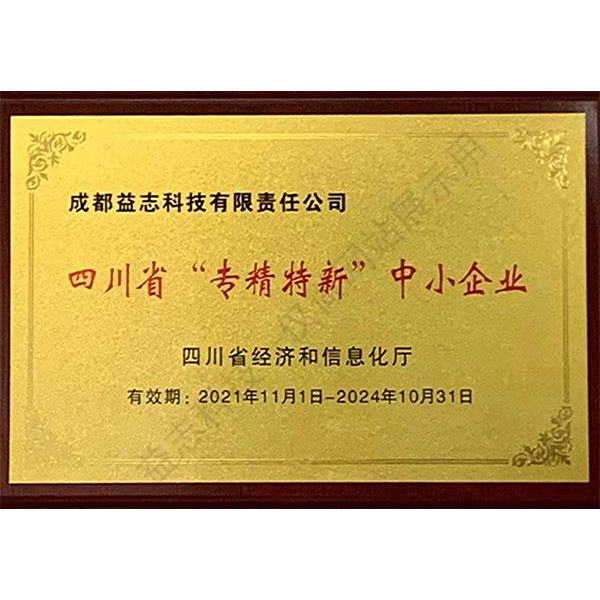
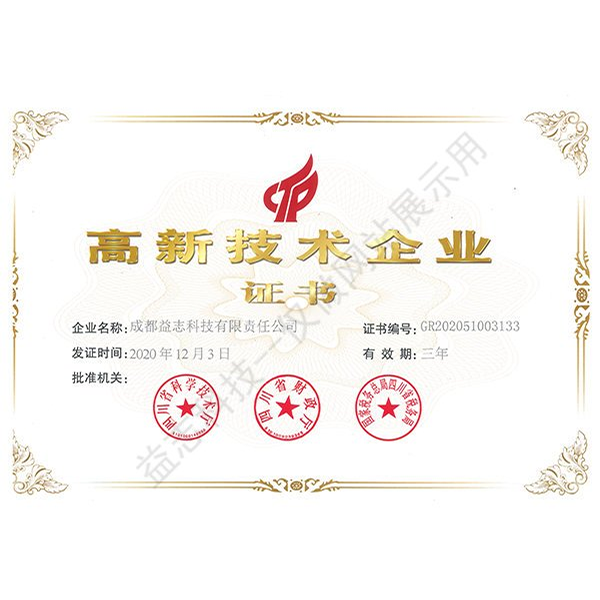
Hence the main trend: the market is segmented. There is demand for truly low-grade, bulk adsorbents for coarse pretreatment, but it is stagnating. The “smart cheap” segment is growing. materials - those that are created from available raw materials (for example, agricultural waste, slag) through inexpensive but effective modification technologies. Their export attractiveness lies in their unique technical specifications. You can’t just dump a price list on the website. It is necessary to show cases, test reports, and be able to adapt the composition. This is exactly how it works, for example,Chengdu Yizhi Technology Co. (https://www.yzkjhx.ru). This is not just a supplier, but a design institute with serious authorized capital, created by a chemical technology company. Their approach is deep engineering for a specific task, which precisely meets the request for an adequate cost of the life cycle of the sorbent, and not for its initial price.
Logistics pitfalls and ?hidden? costs
Speaking of cheapness, we must not forget about delivery. It would seem that it’s so difficult? Pack it in big bags and take it. But here's the real story: we shipped a batch of zeolite in 25 kg bags. Client in Belarus. When I arrived, everything was fine. The second batch - and there was high humidity, some of the bags caked, and lumps appeared. Claim. It turned out that the batch was stored in an intermediate warehouse in a port near St. Petersburg for a week in an unheated room. The sorbent is hygroscopic. The losses are ours. Now we specify in the contract not only the terms of transportation, but also the maximum terms and conditions of transit storage. Is it ?cheap? sorbent? Its final cost for us after this incident increased by 15 percent.
Another point is packaging. For really cheap, powdery materials, bags are the standard. But some markets, especially in the EAEU, are tightening requirements for dust during unloading. For one customer, we had to switch to valve bags with a dust suppression system. This is an increase in price. But without this, fines from local environmentalists are on the buyer’s side, which kills all the benefits from the low price of the product. Sometimes you have to offer two packaging options with different prices, explaining the risks.
Customs clearance is a separate matter. HS codes for adsorbents can be interpreted differently depending on the composition and form. An incorrect code means delays, additional checks, and even increased fees. Once they tried to smuggle in a batch of modified clay as “natural clay”. (code is cheaper). We were refused release and the product was frozen for a month. As a result, they paid both the duty for the correct code and the fine for storage. ?Cheap? the product became more expensive again. Now we always agree on codes in advance with the broker on the importer’s side, sometimes we even attach a decoding of the composition with a reference to GOST or international standards to the invoice. It's a routine, but you can't live without it.
Competition: not only price, but speed and flexibility
Not only Chinese manufacturers, but also local, Russian, and Kazakh ones are now active in the CIS market. Their main advantage is proximity and the absence of customs barriers. Our answer is not so much dumping as efficiency in non-standard situations. Your local factory may not have the required modification or volume in stock. And here, thanks to cooperation with such technologists asChengdu Yizhi Technology Co., it is possible to produce a trial batch relatively quickly (in 2-3 weeks) to meet specific requirements. Their status as a design institute with a capital of 120 million yuan indicates a strong research base, which is a powerful argument for many technical directors.
I remember a case: a chemical plant in Russia urgently needed a sorbent to capture vapors of a specific organic solvent. The locals offered only standard solutions. We contacted the technologists and proposed an option based on coking waste that had undergone additional processing. We made calculations and provided data on similar applications. And we won the contract, although our price per ton was higher. The key was understanding the chemistry of the process and the willingness to offer a custom solution. This is the same "cheapness" in the long term - when one correctly selected material solves the problem, saving on subsequent stages of cleaning or disposal.
However, flexibility has its limits. There were also failures. Somehow they took on a request from Armenia for an ultra-cheap sorbent for filters in household water purification systems. What was needed was a material with a certain granulometry and, critically, a stable pH so as not to alkalize the water. We found a manufacturer and made a test batch. According to our tests, everything is ok. Shipped. A month later - a complaint: the pH is creeping up. It turned out that the problem was the instability of raw materials from the manufacturer itself, from batch to batch. I had to apologize, return the money, and lose the client. Conclusion: for ?super-cheap? The product needs ten times more quality control. Sometimes it’s easier and more honest to say that below a certain price threshold you cannot guarantee stable parameters.
Looking to the future: which way is the wind blowing?
To summarize, the trend towards “cheap adsorbents” is being transformed into a trend towards “cost-effective adsorption solutions”. This means that the focus will be on composite materials, where a cheap base (clay, ash, slag) is activated or modified by a small amount of a more expensive but highly effective component (oxide nanoparticles, polymer coatings). The export of such products is already an export of technology, not raw materials. Companies that have invested in R&D are leading here.
The second direction is sorbents with on-site regeneration function. The cost of the initial load may be higher, but the ability to reuse (even with a 10-15% drop in efficiency per cycle) dramatically reduces the cost of ownership. This is more difficult to promote and requires training of customer personnel, but this is the future for industrial applications. We are already seeing an increase in such requests from large enterprises.
And finally, the environmental factor. Increasingly, requirements include a clause on the disposal of spent sorbent. ?Cheap? a sorbent, which after use becomes hazardous waste of class 3-4, loses all its attractiveness. Therefore, there are many materials currently in development that are biodegradable or can be safely disposed of (for example, after curing). The demand for them will only grow, and their “cheapness” will be assessed taking into account the entire chain - from production to disposal. Export contracts will accordingly become more complex, including sections on environmental responsibility. You need to be prepared for this.
Final considerations for the practitioner
So what to sell? There is no universal answer. You also need to have simple, volume positions in your portfolio for markets where the main criterion is the price per ton here and now. But the main growth and margins, in my opinion, will be in the engineering solutions segment. Here it is important not just to have a business card website, but a platform where you can conduct a dialogue: publish technical notes, analyze cases (including unsuccessful ones), show the selection process. How does it do, for example,Chengdu Yizhi Technology Co.on their website - they position themselves as an engineering company, which immediately cuts off casual buyers who are simply looking for “cheap”, and attracts serious partners.
For me personally, the main lesson of recent years is to stop being afraid of the word “more expensive”. in negotiations. You need to be able to reasonably explain why our product, even if its price per kg is higher, will end up being cheaper. This requires a deep dive into the client’s problem, a willingness to make test shipments, and sometimes even go to the site. It's harder than selling bags at price. But this is precisely what creates long-term relationships and sustainable business against the backdrop of general instability.
In general, the export of cheap adsorbents is no longer about “cheap”. This is about a smart, technological, informed decision, where price is only one of many factors. And those who continue to work the old fashioned way, simply sending out commercial proposals with numbers, risk remaining on the sidelines of this complex but interesting market. You have to think, try, make mistakes, try again and always keep your finger on the pulse of technology, even if you are selling a seemingly simple powder.