Cheap tablet adsorbent: innovation or trend?
2026-03-23
Here again everyone is talking about cheap pills. At every corner there is a “breakthrough”, a “new formula”, “an absolute analogue of the expensive ones”. But in fact? Often just pressed clay under the brand name activated carbon. But demand creates supply, and the market is flooded with these products. I wonder where the real innovations in the field are?tablet adsorbent, and where is just skillful marketing that exploits the desire to save money? I'll try to figure it out based on what I saw myself.
What's behind the low price?
When you see a price tag that is several times lower than the market average, the first question is raw materials. Classic activated carbon made from coconut shells or wood has its own cost. If the product is cheap, mineral adsorbents such as montmorillonite are often used. Its effectiveness is specific, it may be suitable for heavy metals or some toxins, but the porosity and surface area are not comparable to coal. It's not always a bad thing, but it's a different product. The problem is that on the packaging they simply write “adsorbent”, without going into details.
The second savings item is activation and granulation technology. True steam or chemical activation is an energy-intensive process. Simplification leads to a decrease in adsorption capacity. I saw batches where the tablets simply crumbled in my hands due to poor pressing. The client then complains about “muddy water?” in the glass after drinking it is just dust from low-quality pressing. And this is not a question of efficiency, but of basic quality control.
And the third point is additives. In order for the tablet to keep its shape, binders are needed. In expensive varieties these can be safe polymers, in cheap ones they can be starches or even substances that nullify adsorption properties. It turns out that you pay for a tablet, half of which is ballast. In one of our projects, we analyzed just such a sample from East Asia. The results for the adsorption of methylene blue were disastrous, although the specifications stated high values.
Case: when is it ?cheap? does not mean ?ineffective?
However, you shouldn’t discount everything. Sometimes under the brand namecheap adsorbentcan promote truly successful technological solutions that have reduced costs without losing key properties. A striking example is working with modified natural zeolites. Their deposits are found in many regions, processing is relatively inexpensive, and selectivity for certain ions (for example, ammonium) can be higher than that of coal.
I remember collaboration with one institute that was specifically engaged in the optimization of such compositions. They did not pursue the universality of “absorb everything,” but deliberately worked on a formula for specific applications - for example, for water purification in industrial cycles or as an additive in feed for farm animals. There, the price per kilogram was really attractive, and the effectiveness for the target pollutants was confirmed. The key was honest positioning.
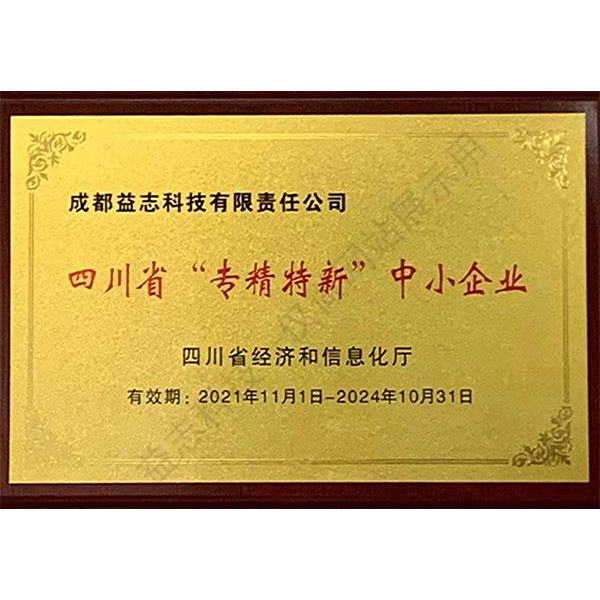
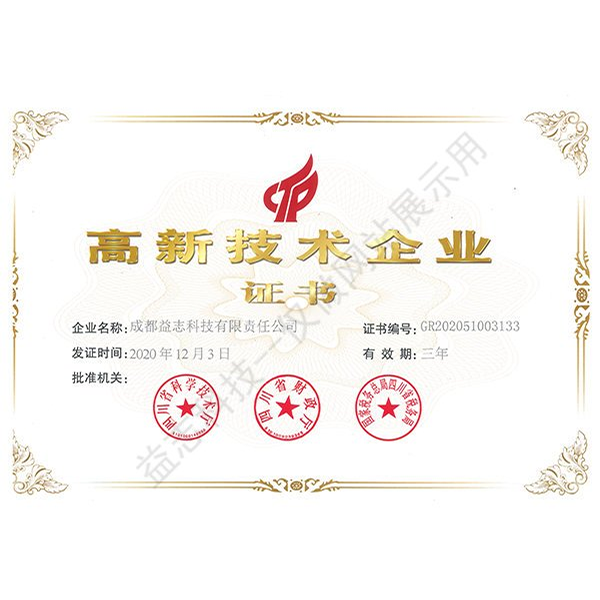
It is worth mentioning here aboutChengdu Yizhi Technology Co.. On their resourceyzkjhx.ruIt can be seen that the company created with the support of Huaxi Technology operates as a design institute. This is an important point. Such structures are often not engaged in the mass production of the cheapest product, but in the development and adaptation of technologies to meet the customer’s needs. Perhaps their approach totableted adsorbents- this is not about a price race, but about finding the optimal ratio through R&D. The registered capital of 120 million yuan also indicates serious investment in research, not just in production lines.
Failures and lessons: what should not be repeated
I had experience when they tried to localize the production of inexpensive tablets for one regional project. The idea was to use local raw materials - peat. Theoretically, after processing it should have shown good results. In practice, it’s a nightmare with parameter stability. One party works, the other doesn't. The moisture content of the raw materials, the ash content, the content of humic acids - everything “floated”. The tablets were either not molded, or, on the contrary, they were like stone and did not “work”.
The main conclusion then: cheapness at the raw material stage can lead to enormous costs at the control and rejection stage. The client needs a predictable result, not a lottery. I had to close this line. It's a common mistake to trycheap adsorbent, ignoring the difficulties of standardizing natural materials.
Another lesson is packaging. It would seem like a small thing. But cheap polymer blisters or cans without a proper barrier to moisture led to the fact that the tablets became damp in the distributor’s warehouse. An adsorbent that itself absorbs moisture from the air is nonsense. Its capacity for the target contaminant dropped significantly. This way they saved pennies and lost their reputation.
Trend or promising direction?
Nowadays the fashion is for everything “eco” and ?detox? spurs the market. The demand for budget solutions is huge, especially in the segment of dietary supplements and household water products. This is definitely a trend. But a trend is a temporary thing. Will these products still be on the market in 5-10 years? It depends on whether manufacturers can shift their focus from price to value.
Innovation here is seen not in creating an “even cheaper pill”, but in smart specialization. For example, an adsorbent with pre-programmed? pores to specific pesticide molecules. Or combined tablets, where one component binds heavy metals and the other binds organic toxins, and all this with controlled release kinetics. This would be an innovation, even if the cost would be higher than that of pressed clay.
Work in this direction is underway. If you look at the portfolio of projects of institutes like the one mentionedChengdu Yizhi Technology Co., then we can assume that their activities are connected precisely with such complex solutions. A design institute with solid capital is often about developing next-generation technologies, and not about copying existing ones. Perhaps the future lies in hybrids: a relatively inexpensive base (the same modified mineral) plus innovative surface modification or structuring.
Final thoughts: what to look for as a professional
So what's the bottom line? When you evaluate anothercheap tablet adsorbent, you can’t look only at the price and loud statements. It is necessary to request test reports not for general indicators, but for specific target substances for which the product is tailored. Look at the stability of parameters from batch to batch (this can be seen from the COA - certificate of analysis).
It is important to understand the raw material base and production technology. If the manufacturer isn't willing to disclose this, that's a red flag. And, of course, looking at the packaging and storage conditions is an indicator of attitude towards the product.
Personally, I don't think cheap pills are always a bad thing. This is a challenge for the industry. They expose the problems of excessive pricing in some markets and force us to look for new, more rational technological paths. The question is whether a particular product is the result of such innovative optimization or simply a consequence of cheaper quality. The difference between them is like between a breakthrough and a marriage. And this difference, fortunately, can still be seen if you dig a little deeper than the advertising brochure.