Cheap adsorbent: where to buy products?
2026-03-27
Are you looking for a cheap adsorbent? I’ll say right away: if price is the only criterion, prepare for disappointment. Many, especially at the start, chase the lowest number in the price list, and then get problems with efficiency or sudden “extra expenses”. for logistics. Cheap does not always mean profitable. Let's look at where you can actually find a balance between price and quality, and what to look for other than the price per kilogram.
What is hidden behind the word “cheap”?
Look, the adsorbent market, especially for industry, is very heterogeneous. Under ?cheap? the offer can be anything: leftovers from a batch, a product with an expiring shelf life, low sorption capacity, or simply substandard. I myself once bought a batch of modified zeolite backfill at an attractive price. In the laboratory, the samples showed the norm, but in real conditions at the gas drying installation it “sat down” twice as fast as stated. Savings on purchases resulted in downtime and frequent replacement. Conclusion: the cheapness must be justified.
Often a low price is a consequence of simplified activation technology or low quality raw materials. For example, the same activated carbon. You can take a cheap one, based on coal, with a low iodine level. For simple tasks, say, eliminating odors in a warehouse, it may be fine. But for fine purification of reagents or in pharmaceuticals it is absolutely useless. Here you need to consider the cost not per ton, but per unit of efficiency.
Another point is packaging and packing. 25 kg bag ?from the factory? will always be cheaper than the same product packaged in 1 kg packages in a retail chain. But where will you find a use for 25 kg of adsorbent if you need to test the material or carry out minor work? This is a dilemma. Sometimes it is more profitable to buy more expensive, but exactly as much as you need, than to store a bag for six months in the corner of the workshop.
Where to look: purchasing channels and their pitfalls
Classic - direct deliveries from factories. It would seem ideal: minimum markup, technical conditions can be agreed upon. But it's not that simple. Many large factories work only with wholesalers or under long-term contracts. Try to order 200 kg of silica gel from them - most likely they will send it to dealers. And this is the first allowance.
Online platforms and specialized sites. There is everything here, from Alibaba to niche portals. The risk is to run into a reseller who does not really know the specifications of the product. I have seen cases when under the brand namecheap adsorbentsold screenings of activated carbon for filters, which were not certified for the food industry at all. It is important to check not only the price, but also the documentation: quality passports, certificates, test reports. If the seller does not provide them or does so reluctantly, this is a red flag.
Local distributors and engineering companies. This is where the golden mean often lies. They take care of logistics, customs clearance (if the product is imported), and they usually have warehouse balances that can be purchased at a good price. Moreover, they can be consulted technically. For example, if you considerproductsfor a wastewater treatment system for oils, a good supplier will ask about the pH of the environment, temperature, pollutant concentration - and select the best option, and not just sell the first one available.
Case: working with a design institute
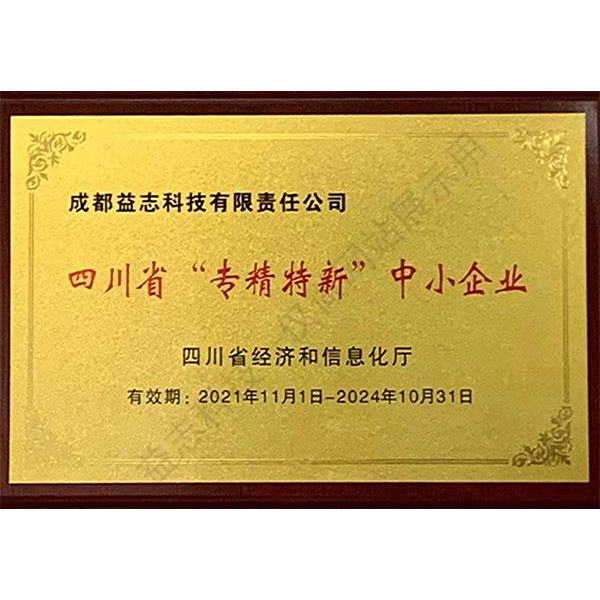
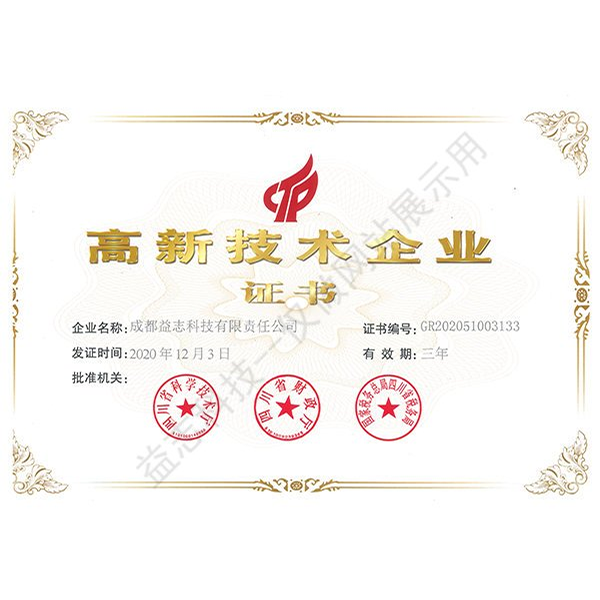
I'll tell you with an example from practice. It was necessary to select an adsorbent for deep drying of the refrigerant in one production facility. We went through several options on our own, but either the price was exorbitant or the delivery time was 3 months. A colleague recommended contacting a specialized design institute that deals with complex solutions. Worked with Chengdu Yizhi Technology Co. is just a design institute created by a chemical company. Their website -yzkjhx.ru— became the starting point.
What is important: they are not just salesmen. They have a registered capital of 120 million yuan, which shows serious resources, and they operate as an engineering unit. In a dialogue with their technical specialists, we discussed not just “where to buy?”, but precisely the process parameters: the dew point that needs to be reached, the pressure in the system, the possibility of regeneration. They proposed not standard silica gel, but a modified aluminosilicate with a certain pore size. The price per unit was higher than the market average, but they also provided an estimate that due to twice the inter-regeneration mileage, the total costs for the year would be lower.
This is a telling moment. Sometimes the way tocheap(in the long term) lies through the initial investment in consultation and proper selection. Purchasing from such institutes or their associated trading companies is often not just a purchase of material, but part of a technological solution. For complex problems this is the only correct way.
What to look for in the specification besides price
So as not to make a mistake, even when choosingadsorbentfor the promotion, you need to read the registration certificate. The first is the sorption capacity for a specific substance. Carbon for solvent vapor recovery and water purification are different products, even if they look the same. The second is mechanical strength (abraison hardness). A weak adsorbent will quickly wear out in a fluidized bed or adsorber, turning into dust that clogs communications. Repairs will cost more than all the savings.
Third is humidity. Unscrupulous suppliers sometimes sell under-dried products. You pay for water. This is especially true for zeolites and silica gels. Acceptance by weight is not an indicator; you need to require data on moisture content. There was a story when they brought us a batch where, in fact, 8% of the weight was water. After recalculation ?to dry product? the price no longer seemed low.
And the last thing is the size of the granules and particle size distribution. If the passport says 2-4 mm, but the bag contains half of the dust and granules of 1 mm, this is a defect. Uneven backfilling leads to channeling in the apparatus, reducing efficiency and increasing hydraulic resistance. All these are hidden losses.
Final Thoughts: Search Strategy
So where is it anyway?buyoptimal? There is no universal answer. For one-time, simple tasks, you can take a risk and search on large marketplaces, carefully filtering sellers by reviews and requiring samples for tests. For ongoing, technologically important needs, build a relationship with either a direct manufacturer or a trusted distributor who provides technical support.
You should not ignore such structures as the mentioned Chengdu Yizhi Technology Co., Ltd. For complex projects, their approach as a design institute that can analyze the entire chain is often the most cost-effective in the long run. Their website is a good example of a resource where information is presented not as in an online store, but with an engineering slant, which already cuts off casual buyers and hints at seriousness.
Ultimately, ?cheap? - this is when a product performs its function within the stated period without unexpected costs. Therefore, the best tactic is to clearly define the task, collect data on the process, request proposals from several types of suppliers (manufacturer, distributor, engineering firm) and compare not just the numbers in the commercial proposal, but the full cost of ownership, taking into account the resource, logistics and risks. Sometimes a 10% gain on the price of a material turns into a 50% overrun on operation. This is the main lesson.